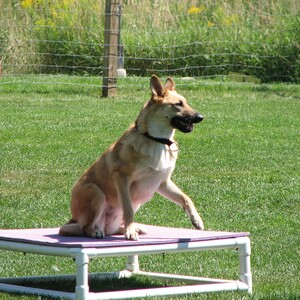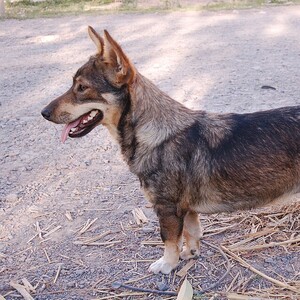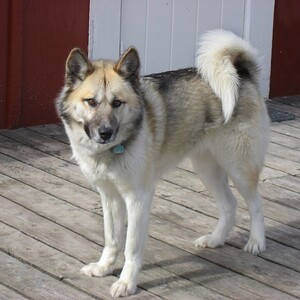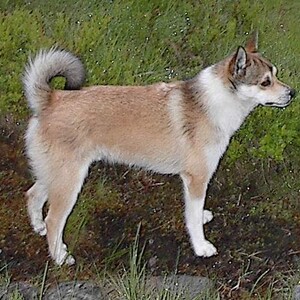
West Siberian LaikaCharacteristics, history, training and care
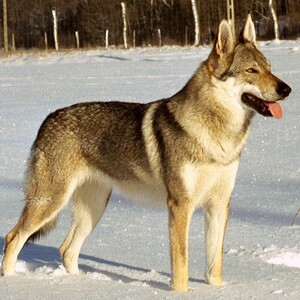
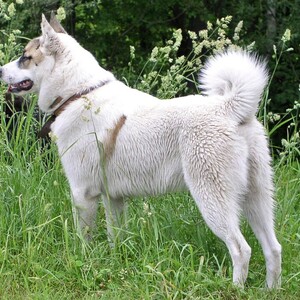
West Siberian Laika. · PrzemekL / Wikimedia Commons, public domain. Cropped and resized.
The West Siberian Laika (Zapadno-Sibirskaya Laika) is a Nordic hunting spitz from the forests of the Urals and Siberia, bred from the dogs of the Khanty and Mansi peoples. The FCI standard says it is now the most widespread hunting breed in Russia and describes it as balanced and vigorous, with an excellent nose, passionate about hunting, equally good on birds and fur-bearing animals, self-confident and wary of strangers.
Quick facts
| Common name | West Siberian Laika (Zapadno-Sibirskaya Laika) |
| Scientific name | Canis lupus familiaris |
| Country of origin | Russia |
| Official recognition | FCI, definitively since 3 June 1980 (group 5, Nordic hunting dogs; standard no. 306) |
| Lifespan | No published data for the breed; large breeds usually live 10–13 years |
| Size (males) | 55–62 cm at the withers |
| Size (females) | 51–58 cm at the withers |
| Coat type | Double: dense, harsh, straight topcoat, soft, woolly undercoat |
| Common colours | Grey, red, fawn, reddish brown, white or white with patches |
| Energy level | High |
| Suited to an apartment? | No |
| Temperament | Balanced, vigorous, keen, self-confident |
| Tendency to aggression | Low; wary of strangers |
| Good with children | No specific data |
| Good with other animals | Poor with small animals; hunting instinct |
| Genetic predispositions | No breed-specific diseases are known |
- Primary category:Dog breeds
- Explore this animal's categories:
History and origin
The FCI standard says it is a native Russian breed from the forests of the Urals and of Western and Eastern Siberia, selected from the hunting dogs of the Khanty and Mansi peoples. At the beginning of the 20th century, Russian cynologists drew up the first standards for the Mansi (Vogul) and Khanty (Ostyak) Laikas. In 1947, these close relatives were merged into a single breed, and the standard of the West Siberian Laika was approved in 1952.
Wikipedia says the Second World War interrupted breeding for a while; it resumed systematically in 1946, when the breed began to take on its modern form. The standard says it is found in all the forested areas of Russia, from Karelia to Kamchatka.
How the breed developed
- Beginning of the 20th century – The first standards for the Mansi and Khanty Laikas.
- 1947 – The two are merged into a single breed.
- 1952 – The standard of the West Siberian Laika is approved.
- 3 June 1980 – The FCI recognises the breed.
Breed rating
| Feature | Stars |
|---|---|
| Training and intelligence | ★★★☆☆ |
| Easy to train | ★★★★☆ |
| Intelligence | ★★★☆☆ |
| Independence | ★★★☆☆ |
| Stubbornness | ★★★★☆ |
| Behaviour and temperament | ★★★☆☆ |
| Affectionate with family | ★★★★☆ |
| Friendly with children | ★★★★☆ |
| Good with other dogs | ★★★★☆ |
| Good with cats and other animals | ★★★☆☆ |
| Loyalty | ★★★★★ |
| Tendency to be aggressive | ★★☆☆☆ |
| Tendency to bark | ★★★★★ |
| Needs and care | ★★★☆☆ |
| Shedding | ★★★★☆ |
| Needs frequent grooming | ★★★★☆ |
| Activity and lifestyle | ★★★☆☆ |
| Energy level | ★★★★☆ |
| Daily exercise needs | ★★★★★ |
| Suited to apartment life | ★★★★☆ |
| Health and longevity | ★★★☆☆ |
| Life expectancy | ★★★★☆ |
| Predisposition to genetic diseases | ★★☆☆☆ |
| Working abilities and uses | ★★☆☆☆ |
| Good hunting dog | ★★★★★ |
| Good companion dog | ★★★★★ |
Indicative rating: 5 stars means the highest level. The breed has no AKC profile, so the rating is based on the FCI standard.
Physical characteristics
The standard describes it as a medium to large, solid, strong and well-built dog, with a lean, wedge-shaped head that looks like an equilateral triangle when seen from above.
General appearance
The coat is double: a dense, harsh, straight topcoat and a well-developed, soft, plentiful, woolly undercoat. On the shoulders and neck the hair is longer and forms a collar, and on the cheeks it forms whiskers.
| Feature | West Siberian Laika |
|---|---|
| Size | Large |
| Height at the withers | males: 55–62 cm; females: 51–58 cm |
| Coat | Double, with a collar |
| Colour | Grey, red, fawn, white |
| Tail | Curled |
| Type | Hunting spitz |
The standard accepts grey with reddish brown, red with reddish brown, grey, red, fawn and reddish brown in all shades, as well as pure white or white with patches of these colours.
Training and socialisation
The standard describes it as balanced and vigorous, with a highly developed sense of smell and feel for game, an attentive and strong passion for hunting, equally good on birds and fur-bearing animals, self-confident and wary of strangers.
It is an independent working dog that needs an active owner, socialisation and plenty of recall practice.
Tips for effective training
- Practise the recall. Its hunting instinct is strong.
- Give it a job. It was bred for hunting.
- Socialise it early. It is wary of strangers.
- Keep it on a lead. It runs after small animals.
Activity needs and lifestyle
It is a hardy hunting dog, made for the forests of Siberia, and needs plenty of exercise every day, ideally out in nature.
| Activity | How often | Why it matters |
|---|---|---|
| Long walks in nature | daily | Stamina |
| Hunting or tracking | weekly | Instinct |
| Running in a fenced area | several times a week | Energy |
Tips for a balanced life
- Best suited to hunters.
- It copes very well with cold.
- Brush it often when it sheds.
Care and health
Coat and skin care
The double coat should be brushed once a week, and much more often during the moult, when the undercoat comes out in large amounts.
Common health problems
No health studies have been published for the breed and no specific diseases are known. As with any active hunting dog, it is worth watching out for:
| Condition | Description | Common symptoms |
|---|---|---|
| Hip dysplasia | The hip joint forms incorrectly and, over time, arthritis develops | Limping, difficulty getting up or jumping, hip pain |
| Hunting injuries | The usual risks of hunting | Cuts, limping |
Other care
- Check it for injuries after hunting.
- Check for ticks after outings.
- Go for yearly check-ups.
Diet and nutrition
An active hunting dog needs good-quality food, adapted to its workload and the season.
Tips for a healthy diet
The table gives a starting estimate, calculated with the formula from the Merck Veterinary Manual. The first two calorie columns show the calories per day for a healthy adult dog. The last column shows what this means in dry food with 3,500–4,000 kcal per kilogram.
| Dog's weight | Calories per day (neutered) | Calories per day (not neutered) | Dry food per day (approximate) |
|---|---|---|---|
| 18 kg | 980 kcal | 1,100 kcal | 240–310 g |
| 22 kg | 1,140 kcal | 1,280 kcal | 280–370 g |
| 26 kg | 1,290 kcal | 1,450 kcal | 320–410 g |
- Adjust the portion to its level of effort.
- Do not let it run straight after a meal.
- A dog is at the right weight when you can feel its ribs under the coat without pressing hard.
Foods to avoid
Some human foods are dangerous for dogs: chocolate, coffee, grapes and raisins, onions, garlic, xylitol (a sweetener used in chewing gum), macadamia nuts and alcohol.
Reproduction and development
Physical and emotional maturity
In dogs, sexual maturity usually comes between 6 and 12 months, but in large breeds it can be delayed until about two years. The body also reaches its adult form later than in small breeds.
Mating and pregnancy
Pregnancy lasts about 63 days, counted from ovulation. Mating a female on her first heat is not recommended. The FCI standard requires that only healthy dogs of typical breed appearance are used for breeding.
Caring for the puppies
In large breeds, a litter has around 7 puppies on average. Socialisation starts in the first weeks: gentle handling, everyday noises and new people.
Interesting facts
- The most widespread in Russia. The standard calls it the most widespread hunting breed in Russia.
- Made from two breeds. The Mansi and Khanty Laikas were merged in 1947.
- From Karelia to Kamchatka. It is found in all the forests of Russia.
- Whiskers. The hair on its cheeks forms whiskers.
- Birds and fur. It hunts both equally well.
Frequently asked questions
What does it hunt?
Both birds and fur-bearing animals.
How big does it get?
Males measure 55–62 cm, females 51–58 cm.
What colours does it come in?
Grey, red, fawn, reddish brown, white or white with patches.
Is it suited to flat life?
No; it needs a lot of space and exercise.