Icelandic SheepdogCharacteristics, history, training and care
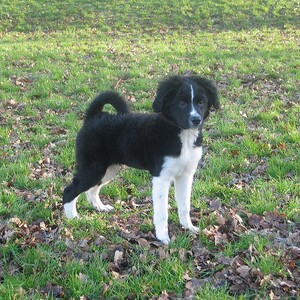
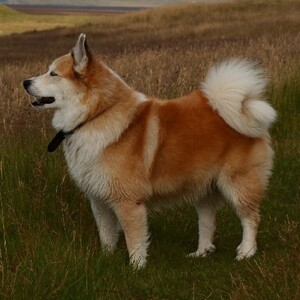
Icelandic Sheepdog. · Zonjah / Wikimedia Commons, CC BY-SA 3.0. Cropped and resized.
The Icelandic Sheepdog is a Nordic herding spitz, slightly under medium size, with erect ears and a curled tail. It descends from the dogs the Vikings brought to Iceland between 870 and 930 and is the only dog breed native to Iceland. It is cheerful, friendly, inquisitive, playful and confident, with a gentle nature.
Quick facts
| Common name | Icelandic Sheepdog (Íslenskur fjárhundur) |
| Scientific name | Canis lupus familiaris |
| Country of origin | Iceland |
| Official recognition | FCI, definitively since 17 July 1972 (group 5, Nordic watchdogs and herders; standard no. 289); AKC, since 2010 |
| Lifespan | 12–14 years, according to the AKC |
| Size (males) | ideally 46 cm at the withers; about 14 kg (AKC) |
| Size (females) | ideally 42 cm at the withers; about 11 kg (AKC) |
| Coat type | Double, thick, very weatherproof; short or long |
| Common colours | Fawn and red, greyish, chocolate brown, black, always with white |
| Energy level | High |
| Suited to an apartment? | Can adapt, with plenty of exercise |
| Temperament | Cheerful, friendly, inquisitive, playful, confident, gentle |
| Tendency to aggression | Very low |
| Good with children | Very good |
| Good with other animals | Good |
| Genetic predispositions | Hip and elbow dysplasia, luxating patella |
- Primary category:Dog breeds
- Explore this animal's categories:
History and origin
The FCI standard says the Icelandic Sheepdog descends from the dogs brought by the first Viking settlers (the years 870–930). The dogs became indispensable for rounding up livestock and for daily farm work. Wikipedia says it is the only dog breed native to Iceland and one of the few breeds whose ancient origin is documented both archaeologically and in writing.
At the end of the 19th century, plague and distemper wiped out more than 75% of the breed, and importing dogs into Iceland was banned. The breed came close to extinction again at the end of the 20th century. In 1994 the Icelandic Parliament decided that it is part of the country's cultural heritage and must be protected as a national breed.
How the breed developed
- 870–930 – The Vikings bring the dogs to Iceland.
- 1755 – Buffon publishes an engraving of the “dog of Iceland”.
- Late 19th century – Diseases wipe out more than 75% of the breed.
- 17 July 1972 – The FCI recognises the breed.
- 1994 – Parliament declares it part of Iceland's cultural heritage.
- 2010 – The AKC recognises the breed.
Breed rating
| Feature | Stars |
|---|---|
| Training and intelligence | ★★★★★ |
| Easy to train | ★★★★★ |
| Intelligence | ★★★★★ |
| Independence | ★★★☆☆ |
| Stubbornness | ★★★☆☆ |
| Behaviour and temperament | ★★★★☆ |
| Affectionate with family | ★★★★★ |
| Friendly with children | ★★★★★ |
| Good with other dogs | ★★★★☆ |
| Good with cats and other animals | ★★★☆☆ |
| Loyalty | ★★★★★ |
| Tendency to be aggressive | ★☆☆☆☆ |
| Tendency to bark | ★★★★☆ |
| Needs and care | ★★★★☆ |
| Shedding | ★★★☆☆ |
| Needs frequent grooming | ★★☆☆☆ |
| Activity and lifestyle | ★★★★☆ |
| Energy level | ★★★★☆ |
| Daily exercise needs | ★★★★☆ |
| Suited to apartment life | ★★★☆☆ |
| Health and longevity | ★★★★☆ |
| Life expectancy | ★★★★☆ |
| Predisposition to genetic diseases | ★★☆☆☆ |
| Working abilities and uses | ★★★★☆ |
| Good herding dog | ★★★★★ |
| Good companion dog | ★★★★★ |
Indicative rating: 5 stars means the highest level. It is based on the ratings the American Kennel Club gives the breed and on the FCI standard.
Physical characteristics
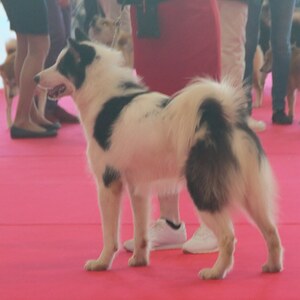
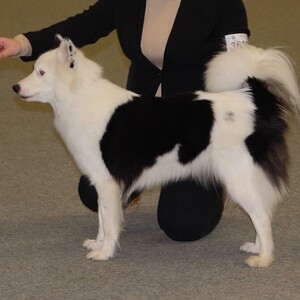
The standard describes it as a Nordic herding spitz, slightly under medium size, sturdy, with erect ears and a curled tail. Seen from the side, the body is rectangular. Males and females differ clearly.
General appearance
The expression is gentle, intelligent and happy, and its bearing confident and lively. Wikipedia says it often has double dewclaws on the hind legs. The AKC says it always seems to be smiling.
| Feature | Icelandic Sheepdog |
|---|---|
| Size | Medium to small |
| Height at the withers | males: ideally 46 cm; females: ideally 42 cm |
| Weight | about 11–14 kg |
| Coat | Double, short or long |
| Ears | Erect |
| Tail | Curled, bushy |
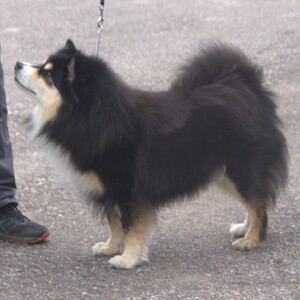
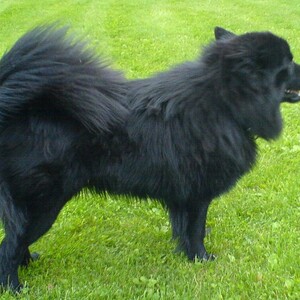
The standard accepts fawn and red in various shades, from cream to reddish brown, greyish, chocolate brown and black. The main colour is always accompanied by white markings.
Training and socialisation
The standard describes it as a hardy, agile herding spitz that barks, which makes it very useful for driving sheep. It is very alert and announces visitors without being aggressive. It is cheerful, friendly, inquisitive, playful and confident, with a gentle nature.
The AKC says it is lively, intelligent and eager to please, so it trains easily. It does not respond well to harsh corrections and loves to be the centre of the family's attention.
Tips for effective training
- Use only gentle methods. The AKC says it does not respond well to harshness.
- Work on the barking. It barks to drive the flock and to announce visitors.
- Keep it close to the family. It loves to be the centre of attention.
- Try dog sports. Obedience, herding, tracking, agility.
Activity needs and lifestyle
The AKC says it loves outdoor activities and is a great companion on long walks and hikes. Moderate daily exercise, walks and play, keeps it healthy and happy.
| Activity | How often | Why it matters |
|---|---|---|
| Long walks or hikes | daily | It loves the outdoors |
| Play | daily | It is playful |
| Dog sports | weekly | Mental activity |
Tips for a balanced life
- It copes very well with cold and wind.
- In summer, give it shade.
- It suits families with children very well.
Care and health
Coat and skin care
The AKC says the double coat sheds quite a lot, especially twice a year. A weekly brush, daily during the moulting season, removes the dead hair.
Common health problems
The AKC says Icelandic Sheepdogs are generally very healthy, but they can be prone to:
| Condition | Description | Common symptoms |
|---|---|---|
| Hip dysplasia | The hip joint forms incorrectly and, over time, arthritis develops | Limping, difficulty getting up or jumping, hip pain |
| Elbow dysplasia | The elbow joint develops incorrectly and arthritis appears | Limping on the front legs, especially after exercise |
| Patellar luxation | The kneecap slips out of place | Suddenly holds a hind leg up for a few steps, then uses it again |
Other care
- Check the ears regularly.
- Brush its teeth often.
- Trim the nails, including the double dewclaws.
Diet and nutrition
The AKC recommends food suited to the dog's age and activity level, with fresh water always available.
Tips for a healthy diet
The table gives a starting estimate, calculated with the formula from the Merck Veterinary Manual. The first two calorie columns show the calories per day for a healthy adult dog. The last column shows what this means in dry food with 3,500–4,000 kcal per kilogram.
| Dog's weight | Calories per day (neutered) | Calories per day (not neutered) | Dry food per day (approximate) |
|---|---|---|---|
| 11 kg | 680 kcal | 760 kcal | 170–220 g |
| 12 kg | 720 kcal | 810 kcal | 180–230 g |
| 14 kg | 810 kcal | 910 kcal | 200–260 g |
- Give it its food in two meals a day.
- Training treats count towards the daily portion.
- A dog is at the right weight when you can feel its ribs under the coat without pressing hard.
Foods to avoid
Some human foods are dangerous for dogs: chocolate, coffee, grapes and raisins, onions, garlic, xylitol (a sweetener used in chewing gum), macadamia nuts and alcohol.
Reproduction and development
Physical and emotional maturity
In dogs, sexual maturity usually comes between 6 and 12 months. Most breeds become adults at around 13–15 months.
Mating and pregnancy
Pregnancy lasts about 63 days, counted from ovulation. Mating a female on her first heat is not recommended. The FCI standard requires that only healthy dogs of typical breed appearance are used for breeding.
Caring for the puppies
In dogs, a litter has 5–6 puppies on average, and the number rises with the size of the breed. Socialisation starts in the first weeks: gentle handling, everyday noises and new people.
Interesting facts
- The Vikings' dog. It descends from the dogs the Vikings brought to Iceland.
- National heritage. The Icelandic Parliament protects it as a national breed.
- Double dewclaws. It often has two dewclaws on each hind leg.
- It barks at work. Barking helps it drive the sheep.
- A “species” in 1788. Gmelin even classified it as a separate species, Canis islandicus.
In popular culture
Iceland's cultural heritage
Wikipedia says that in 1994 the Icelandic Parliament (Alþingi) decided that the Icelandic Sheepdog is part of the country's cultural heritage and must be protected as a national breed. As early as 1755, the naturalist Buffon published an engraving of the “dog of Iceland”.
Frequently asked questions
Where does the Icelandic Sheepdog come from?
From Iceland; it descends from the dogs brought by the Vikings.
How big does it get?
Males ideally measure 46 cm and females 42 cm; they weigh about 11–14 kg.
Is it a family dog?
Yes. It is cheerful, friendly and very good with children.
How long does it live?
The AKC gives 12–14 years.