NewfoundlandCharacteristics, history, training and care
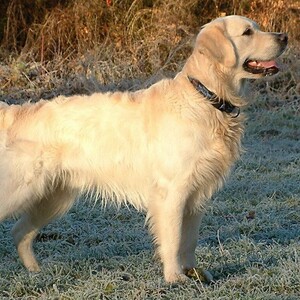
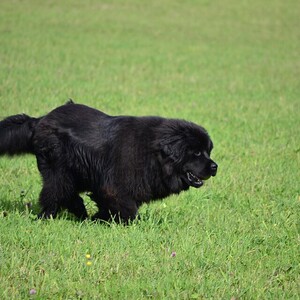
Newfoundland. · Hartmann Linge / Wikimedia Commons, CC BY-SA 4.0. Cropped and resized.
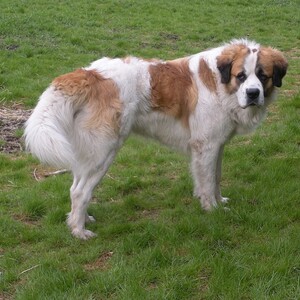
The Newfoundland is a giant, massive and powerful dog with a double, water-resistant coat, black, brown or white and black. It comes from the island of Newfoundland, where it hauled heavy loads on land and worked in the water as a lifeguard. The standard describes it as gentle, serene, dignified and joyful.
Quick facts
| Common name | Newfoundland |
| Scientific name | Canis lupus familiaris |
| Country of origin | Canada |
| Official recognition | FCI, definitively since 4 August 1954 (group 2, molossoid breeds, mountain type; standard no. 50); also recognised by the AKC |
| Lifespan | 9–10 years, according to the AKC |
| Size (males) | on average 71 cm at the withers; about 68 kg |
| Size (females) | on average 66 cm at the withers; about 54 kg |
| Coat type | Double, water-resistant, of medium length |
| Common colours | Black, brown, white and black |
| Energy level | Moderate |
| Suited to an apartment? | No |
| Temperament | Gentle, serene, dignified, joyful |
| Tendency to aggression | Very low |
| Good with children | Very good, according to the AKC |
| Good with other animals | Very good, according to the AKC |
| Genetic predispositions | Hip and elbow dysplasia, heart disease, cystinuria |
- Primary category:Dog breeds
- Explore this animal's categories:
History and origin
The FCI standard says the breed developed on the island of Newfoundland from local dogs and from the big black “bear dog” brought by the Vikings after the year 1100. With the European fishermen, other breeds helped to shape it, but its essential traits remained.
When the colonisation of the island began in 1610, the Newfoundland dog already largely had its present form and behaviour. These traits helped it withstand the extreme climate and the sea, hauling heavy loads on land or working as a lifeguard in the water.
How the breed developed
- After the year 1100 – The Vikings bring a big black dog to the island.
- 1610 – Colonisation begins; the breed already has its present form.
- 1766 – “Newfoundland dog” appears in Joseph Banks's journal, according to Wikipedia.
- Early 19th century – The dog Seaman accompanies the Lewis and Clark expedition.
- 4 August 1954 – The FCI recognises the breed.
Breed rating
| Feature | Stars |
|---|---|
| Training and intelligence | ★★★☆☆ |
| Easy to train | ★★★☆☆ |
| Intelligence | ★★★★☆ |
| Independence | ★★☆☆☆ |
| Stubbornness | ★★★☆☆ |
| Behaviour and temperament | ★★★★★ |
| Affectionate with family | ★★★★★ |
| Friendly with children | ★★★★★ |
| Good with other dogs | ★★★★★ |
| Good with cats and other animals | ★★★★☆ |
| Loyalty | ★★★★★ |
| Tendency to be aggressive | ★☆☆☆☆ |
| Tendency to bark | ★☆☆☆☆ |
| Needs and care | ★★★★☆ |
| Shedding | ★★★☆☆ |
| Needs frequent grooming | ★★★☆☆ |
| Activity and lifestyle | ★★★☆☆ |
| Energy level | ★★★☆☆ |
| Daily exercise needs | ★★★☆☆ |
| Suited to apartment life | ★☆☆☆☆ |
| Health and longevity | ★★☆☆☆ |
| Life expectancy | ★★★☆☆ |
| Predisposition to genetic diseases | ★★★☆☆ |
| Working abilities and uses | ★★★★☆ |
| Good rescue dog | ★★★★★ |
| Good companion dog | ★★★★★ |
Indicative rating: 5 stars means the highest level. It is based on the ratings the American Kennel Club gives the breed and on the FCI standard.
Physical characteristics
The standard describes it as a massive dog with a powerful body. The AKC says a male can reach 68 kg and 71 cm, and that it has a majestic head and a soft, soulful expression.
General appearance
The double coat is water-resistant: the topcoat is moderately long and straight, and the undercoat soft and dense, thicker in winter. The hair on the head, muzzle and ears is short and fine; the legs are feathered, and the tail is covered with long, dense hair.
| Feature | Newfoundland |
|---|---|
| Size | Very large |
| Height at the withers | males: on average 71 cm; females: on average 66 cm |
| Weight | males: ~68 kg; females: ~54 kg |
| Coat | Double, water-resistant |
| Head | Massive |
| Drooling | Very heavy |
The accepted colours are black, white and black, and brown. Black is the traditional colour. The white and black variety is of historical importance to the breed; the AKC says it is named after the painter Edwin Landseer, who made it famous.
Training and socialisation
The standard says its expression shows benevolence and softness. It is dignified, joyful and creative, known for its exceptional gentleness and serenity.
The AKC says the puppy is sociable, intelligent and curious, never shy or aggressive. Daily contact with people is absolutely essential, and early socialisation and puppy classes are recommended.
Tips for effective training
- Keep it close to the family. The AKC says it needs people every day.
- Go to puppy classes. As an adult, it will be very strong.
- Let it swim. It has natural lifesaving abilities.
- Keep a towel to hand. It drools a lot.
Activity needs and lifestyle
The AKC says it is a versatile dog, equally good on land and in water. It needs at least half an hour of moderate exercise a day. It should live indoors with its family, but it enjoys outdoor activities.
| Activity | How often | Why it matters |
|---|---|---|
| Moderate walk | at least 30 minutes a day | Health |
| Swimming | whenever possible | A water dog |
| Light draught work | occasionally | A former draught dog |
Tips for a balanced life
- It needs a house with a yard.
- In summer, keep it out of the heat.
- Dry its ears after swimming.
Care and health
Coat and skin care
The AKC says the heavy coat should be brushed thoroughly at least once a week with a slicker brush and a long-toothed comb. During shedding, usually twice a year, brushing becomes daily.
Common health problems
The AKC says it is generally healthy, and responsible breeders screen their dogs for:
| Condition | Description | Common symptoms |
|---|---|---|
| Hip dysplasia | The hip joint forms incorrectly and, over time, arthritis develops | Limping, difficulty getting up or jumping, hip pain |
| Elbow dysplasia | The elbow joint develops incorrectly and arthritis appears | Limping on the front legs, especially after exercise |
| Heart disease | Disorders of the heart | Tires quickly, laboured breathing |
| Cystinuria | Inherited disease that forms stones in the urinary tract | Difficulty urinating, blood in the urine |
| Gastric dilatation-volvulus (bloat) | The stomach fills with gas and may twist; this is a veterinary emergency | Swollen belly, trying to vomit without success, drooling, restlessness |
Other care
- Check the ears regularly for infections.
- Wipe its muzzle after meals.
- Trim the nails regularly.
Diet and nutrition
The AKC says some dogs gain weight easily, so calories and weight should be watched.
Tips for a healthy diet
The table gives a starting estimate, calculated with the formula from the Merck Veterinary Manual. The first two calorie columns show the calories per day for a healthy adult dog. The last column shows what this means in dry food with 3,500–4,000 kcal per kilogram.
| Dog's weight | Calories per day (neutered) | Calories per day (not neutered) | Dry food per day (approximate) |
|---|---|---|---|
| 45 kg | 1,950 kcal | 2,190 kcal | 490–630 g |
| 55 kg | 2,260 kcal | 2,540 kcal | 560–730 g |
| 68 kg | 2,650 kcal | 2,980 kcal | 660–850 g |
- Split the food into two meals a day to reduce the risk of bloat.
- Do not let it run right after a meal.
- Puppies need growth food suited to very large breeds.
Foods to avoid
Some human foods are dangerous for dogs: chocolate, coffee, grapes and raisins, onions, garlic, xylitol (a sweetener used in chewing gum), macadamia nuts and alcohol.
Reproduction and development
Physical and emotional maturity
In dogs, sexual maturity usually comes between 6 and 12 months, but in large breeds it can be delayed until about two years. Very large breeds become adults only at around 2 years.
Mating and pregnancy
Pregnancy lasts about 63 days, counted from ovulation. Mating a female on her first heat is not recommended. The FCI standard requires that only healthy dogs of typical breed appearance are used for breeding.
Caring for the puppies
In large breeds, a litter has around 7 puppies on average. The puppies grow very fast, so they need growth food suited to large breeds. Socialisation starts in the first weeks.
Interesting facts
- A born lifeguard. The AKC says it has natural water rescue abilities.
- Seaman, the explorer. Wikipedia says he accompanied the Lewis and Clark expedition to the Pacific.
- Nana from “Peter Pan”. J. M. Barrie's dog inspired Nana.
- Byron's dog. Lord Byron wrote “Epitaph to a Dog” for his dog, Boatswain.
- Centuries old. It already had its present form in 1610.
In popular culture
Boatswain and Lord Byron
Wikipedia says the poet Lord Byron had a Newfoundland called Boatswain, to whom he dedicated the poem “Epitaph to a Dog” and a monument at Newstead Abbey.
Nana from “Peter Pan”
Wikipedia says Luath, J. M. Barrie's Landseer Newfoundland, inspired Nana, the Darling children's nursemaid in “Peter Pan”.
Frequently asked questions
What is the difference between the Newfoundland and the Landseer?
In continental Europe, the Landseer is a separate, taller breed; in other countries, white and black is simply one of the Newfoundland's colours.
How big does it get?
Males average 71 cm and ~68 kg; females 66 cm and ~54 kg.
Can it swim?
Yes. It is a water dog with natural rescue abilities.
How long does it live?
The AKC gives 9–10 years.