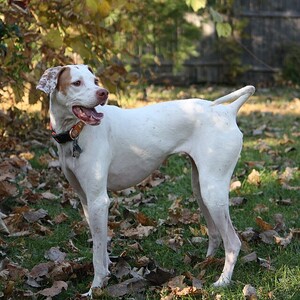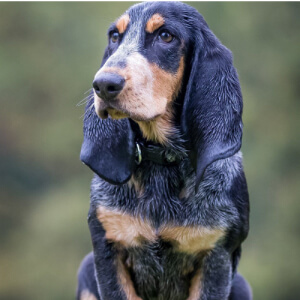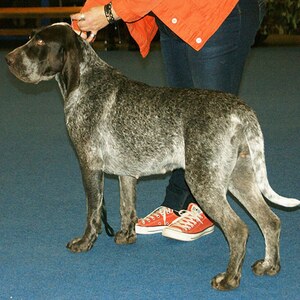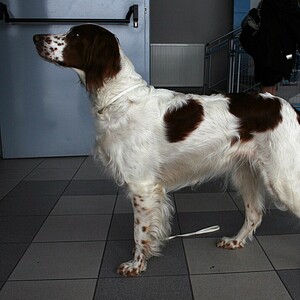
Lagotto RomagnoloCharacteristics, history, training and care
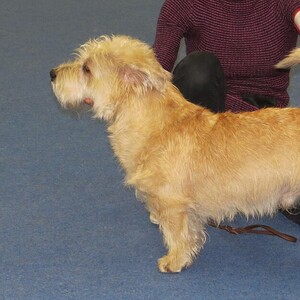
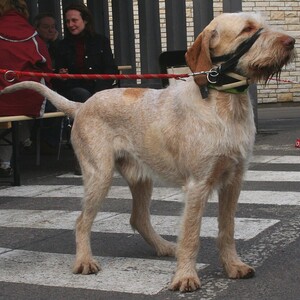
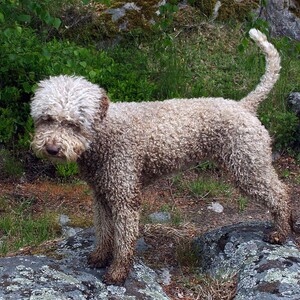
Lagotto Romagnolo. · Entheta / Wikimedia Commons, CC BY-SA 3.0. Cropped and resized.
The Lagotto Romagnolo is a small to medium-sized, sturdy Italian dog with a dense, curly, woolly coat. It was once a water dog in the marshes of Romagna, and after they were drained it became an excellent truffle hunter. The AKC says it is the only breed recognised as a specialist truffle finder.
Quick facts
| Common name | Lagotto Romagnolo (Romagna Water Dog) |
| Scientific name | Canis lupus familiaris |
| Country of origin | Italy |
| Official recognition | FCI, provisionally since 1995 and definitively since 6 July 2005 (group 8, water dogs; standard no. 298); also recognised by the AKC |
| Lifespan | 15–17 years, according to the AKC |
| Size (males) | 43–48 cm at the withers; 13–16 kg |
| Size (females) | 41–46 cm at the withers; 11–14 kg |
| Coat type | Curly, woolly, with an undercoat; practically does not shed |
| Common colours | Off-white, white with brown or orange patches, roan, brown, orange |
| Energy level | High |
| Suited to an apartment? | Yes, with daily activity |
| Temperament | Biddable, undemanding, affectionate, very attached to its owner |
| Tendency to aggression | Low |
| Good with children | Average |
| Good with other animals | Very good with other dogs, according to the AKC |
| Genetic predispositions | No breed-specific diseases are mentioned in the sources used |
- Primary category:Dog breeds
- Explore this animal's categories:
History and origin
The FCI standard says the Lagotto is an ancient breed of water retrieving dog from the lowlands of Comacchio and the marshes around Ravenna. Over the centuries, the marshes were drained and turned into farmland.
As a result, the Lagotto changed from a water dog into a truffle-searching dog on the plains and hills of Romagna. Wikipedia says the FCI accepted it provisionally in 1995 and definitively in 2005, and that about 3,500 puppies are registered in Italy each year on average.
How the breed developed
- Centuries ago – A retrieving dog in the marshes of Comacchio and Ravenna.
- 19th–20th centuries – The marshes are drained; it becomes a truffle dog.
- 1995 – The FCI provisionally accepts the breed.
- 6 July 2005 – The FCI definitively recognises the breed.
Breed rating
| Feature | Stars |
|---|---|
| Training and intelligence | ★★★★☆ |
| Easy to train | ★★★★☆ |
| Intelligence | ★★★★☆ |
| Independence | ★★★☆☆ |
| Stubbornness | ★★★☆☆ |
| Behaviour and temperament | ★★★★★ |
| Affectionate with family | ★★★★★ |
| Friendly with children | ★★★☆☆ |
| Good with other dogs | ★★★★★ |
| Good with cats and other animals | ★★★☆☆ |
| Loyalty | ★★★★★ |
| Tendency to be aggressive | ★☆☆☆☆ |
| Tendency to bark | ★★☆☆☆ |
| Needs and care | ★★★☆☆ |
| Shedding | ★☆☆☆☆ |
| Needs frequent grooming | ★★★☆☆ |
| Activity and lifestyle | ★★★☆☆ |
| Energy level | ★★★★☆ |
| Daily exercise needs | ★★★★☆ |
| Suited to apartment life | ★★★★☆ |
| Health and longevity | ★★★★☆ |
| Life expectancy | ★★★★★ |
| Predisposition to genetic diseases | ★★☆☆☆ |
| Working abilities and uses | ★★★☆☆ |
| Good hunting dog | ★★★★☆ |
| Good companion dog | ★★★★★ |
Indicative rating: 5 stars means the highest level. It is based on the ratings the American Kennel Club gives the breed and on the FCI standard.
Physical characteristics
The standard describes it as a small to medium-sized, well-proportioned, powerful dog with a rustic appearance and a square body. It should give the impression that it has the strength and stamina to work all day on difficult ground.
General appearance
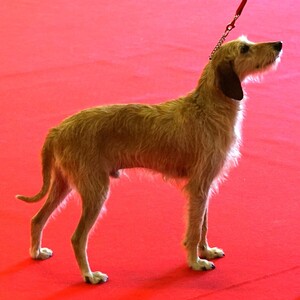
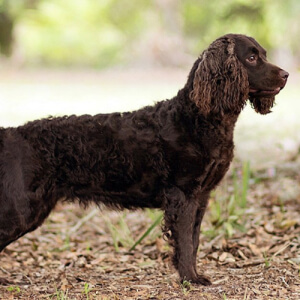
The coat has a woolly texture, with tight, ring-shaped curls evenly spread over the body and tail. On the head, the curls are looser and form abundant eyebrows, whiskers and a beard.
| Feature | Lagotto Romagnolo |
|---|---|
| Size | Small to medium |
| Height at the withers | males: 43–48 cm; females: 41–46 cm |
| Weight | males: 13–16 kg; females: 11–14 kg |
| Coat | Curly, woolly |
| Body | Square, sturdy |
| Head | With an abundant beard and eyebrows |
The accepted colours are solid off-white, white with brown or orange patches, orange roan, brown roan, brown (in various shades), with or without white, and orange, with or without white. Some dogs have a brown mask.
Training and socialisation
The standard says that, thanks to its natural searching ability and very good nose, it is very efficient at finding truffles. Its hunting instinct has been reduced through selection, so that the scent of game does not distract it. It is biddable, undemanding, keen, affectionate, very attached to its owner and easy to train.
The AKC says it loves to learn and to please its owner and excels at agility, obedience and dock diving. Its excellent nose makes it well suited to search, rescue and detection work.
Tips for effective training
- Use its nose. Search games are ideal.
- Socialise it from an early age. The AKC recommends early socialisation.
- Use rewards. It likes to please you.
- Try dog sports. It excels at agility and obedience.
Activity needs and lifestyle
The AKC says it is not hyperactive and does not need a great deal of exercise, but it needs both mental and physical activity. It does not do well if it lives outdoors, away from the family.
| Activity | How often | Why it matters |
|---|---|---|
| Walks | daily | Exercise |
| Search games | daily | An excellent nose |
| Swimming or retrieving | weekly | It loves water |
Tips for a balanced life
- Keep it indoors, with the family.
- Give it something to search for every day.
- Let it swim whenever possible.
Care and health
Coat and skin care
The AKC says the waterproof, tightly curled coat sheds very little but needs regular clipping. Some coats mat more than others, so they should be checked and the knots worked out.
Common health problems
The sources used do not mention any breed-specific diseases. The AKC gives it a long life expectancy, 15–17 years. As with any active dog, the joints and eyes are worth checking at regular vet visits.
Other care
- Check the ears, especially after swimming.
- Work out the knots in the coat.
- Go for regular check-ups.
Diet and nutrition
The AKC says some dogs gain weight easily, so calories and weight should be watched.
Tips for a healthy diet
The table gives a starting estimate, calculated with the formula from the Merck Veterinary Manual. The first two calorie columns show the calories per day for a healthy adult dog. The last column shows what this means in dry food with 3,500–4,000 kcal per kilogram.
| Dog's weight | Calories per day (neutered) | Calories per day (not neutered) | Dry food per day (approximate) |
|---|---|---|---|
| 11 kg | 680 kcal | 760 kcal | 170–220 g |
| 13 kg | 770 kcal | 860 kcal | 190–250 g |
| 16 kg | 900 kcal | 1,010 kcal | 220–290 g |
- Give it its food in two meals a day.
- Treats used in search work should be subtracted from the daily ration.
- A dog is at the right weight when you can feel its ribs under the coat without pressing hard.
Foods to avoid
Some human foods are dangerous for dogs: chocolate, coffee, grapes and raisins, onions, garlic, xylitol (a sweetener used in chewing gum), macadamia nuts and alcohol.
Reproduction and development
Physical and emotional maturity
In dogs, sexual maturity usually comes between 6 and 12 months. Most breeds become adults at around 13–15 months.
Mating and pregnancy
Pregnancy lasts about 63 days, counted from ovulation. Mating a female on her first heat is not recommended. The FCI standard requires that only healthy dogs of typical breed appearance are used for breeding.
Caring for the puppies
In dogs, a litter has 5–6 puppies on average, and the number rises with the size of the breed. Socialisation starts in the first weeks: gentle handling, everyday noises and new people.
Interesting facts
- A truffle specialist. The AKC says it is the only breed recognised as a specialist truffle finder.
- Game does not distract it. Its hunting instinct has been reduced through selection.
- A former water dog. It retrieved game from the marshes around Ravenna.
- “Carino”. The AKC says Italians describe it with this word, meaning “cute”.
- It lives a long time. The AKC gives a life expectancy of 15–17 years.
Frequently asked questions
Does it really search for truffles?
Yes. The standard describes it as a truffle dog.
Does it shed?
Very little, but the coat needs regular clipping.
How big does it get?
Males measure 43–48 cm and weigh 13–16 kg; females measure 41–46 cm and weigh 11–14 kg.
How long does it live?
The AKC gives 15–17 years.