Serbian HoundCharacteristics, history, training and care
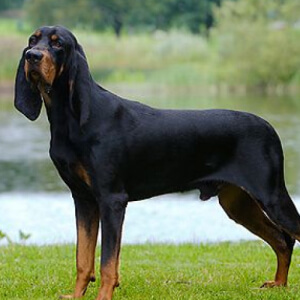
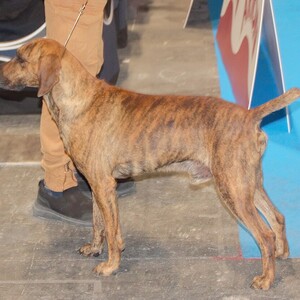
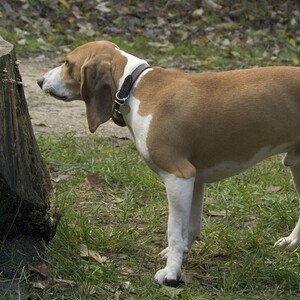
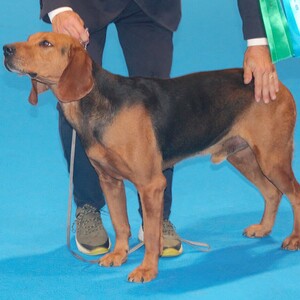
Serbian Hound. · Canarian / Wikimedia Commons, CC BY-SA 4.0. Cropped and resized.
The Serbian Hound (Srpski gonič), formerly known as the Balkan Hound, is a medium-sized hound from Serbia, fox red with a black mantle or saddle. Wikipedia says it is usually kept in packs, for wild boar, deer, foxes and hares, and that it has great stamina on difficult terrain. The FCI standard describes it as gentle, with a lively temperament, reliable and very tenacious.
Quick facts
| Common name | Serbian Hound (Srpski gonič) |
| Scientific name | Canis lupus familiaris |
| Country of origin | Serbia |
| Official recognition | FCI, definitively since 30 March 1955 (group 6, hounds; standard no. 150) |
| Lifespan | No published data for the breed; medium-sized breeds usually live 10–13 years |
| Size (males) | 46–56 cm at the withers (ideally 51–52 cm); around 20 kg |
| Size (females) | 44–54 cm at the withers (ideally 48–49 cm) |
| Coat type | Short, abundant, glossy, with undercoat |
| Common colours | Fox red, from yellowish red to rust, with a black mantle or saddle |
| Energy level | High |
| Suited to an apartment? | No |
| Temperament | Gentle, lively, reliable, tenacious |
| Tendency to aggression | Low |
| Good with children | No specific data; the standard describes it as gentle |
| Good with other animals | Good with pack hounds; poor with small animals |
| Genetic predispositions | No breed-specific diseases are known |
- Primary category:Dog breeds
- Explore this animal's categories:
History and origin
The FCI standard says the breed belongs to the group of hounds spread across the Balkans and that hounds from Asia Minor probably contributed to its development. The first description of the breed, under the name Balkan Hound, was by Frank Laska. The first standard was written in 1924, and the FCI adopted it in Bled on 14 May 1940.
The breed was most widespread in Serbia, so the Yugoslav Kennel Association took charge of breeding and the first registrations. On 12 November 1996, in Copenhagen, the FCI agreed that the name Balkan Hound should be replaced by Serbian Hound.
How the breed developed
- 1924 – The first standard.
- 14 May 1940 – The FCI adopts the Balkan Hound standard.
- 30 March 1955 – Definitive FCI recognition.
- 12 November 1996 – The name becomes Serbian Hound.
Breed rating
| Feature | Stars |
|---|---|
| Training and intelligence | ★★★★☆ |
| Easy to train | ★★★★☆ |
| Intelligence | ★★★★☆ |
| Independence | ★★★☆☆ |
| Stubbornness | ★★★☆☆ |
| Behaviour and temperament | ★★★★☆ |
| Affectionate with family | ★★★★★ |
| Friendly with children | ★★★★☆ |
| Good with other dogs | ★★★★☆ |
| Good with cats and other animals | ★☆☆☆☆ |
| Loyalty | ★★★★★ |
| Tendency to be aggressive | ★★☆☆☆ |
| Tendency to bark | ★★★★★ |
| Needs and care | ★★★☆☆ |
| Shedding | ★★☆☆☆ |
| Needs frequent grooming | ★★☆☆☆ |
| Activity and lifestyle | ★★★★☆ |
| Energy level | ★★★★☆ |
| Daily exercise needs | ★★★★★ |
| Suited to apartment life | ★★★☆☆ |
| Health and longevity | ★★★☆☆ |
| Life expectancy | ★★★★☆ |
| Predisposition to genetic diseases | ★★☆☆☆ |
| Working abilities and uses | ★★★☆☆ |
| Good hunting dog | ★★★★★ |
| Good companion dog | ★★★★☆ |
Indicative rating: 5 stars means the highest level. The breed has no AKC profile, so the rating is based on the FCI standard.
Physical characteristics
The standard describes it as a medium-sized, robust dog, full of character, lively and energetic. Wikipedia says it has a broad skull, medium-length drop ears and a body slightly longer than it is tall.
General appearance
The hair is short, abundant, glossy, fairly thick and lies close to the body, with an undercoat. It is a little longer on the back of the thighs and under the tail.
| Feature | Serbian Hound |
|---|---|
| Size | Medium |
| Height at the withers | males: 46–56 cm; females: 44–54 cm |
| Weight | around 20 kg (Wikipedia) |
| Coat | Short, glossy |
| Colour | Red with a black saddle |
| Type | Hound |
The colour is “fox” red, from yellowish red to rust, with a black mantle or saddle that extends up to the head, where it forms black patches on the temples. A round white spot of no more than 2 cm is permitted on the chest.
Training and socialisation
The standard describes it as gentle, with a lively temperament, reliable and very tenacious. Wikipedia says it is disciplined, energetic and lively, that it tracks and catches game and that it has a high-pitched voice when hunting.
It is a pack hound, made for hunting. Like any hound, it needs plenty of recall practice.
Tips for effective training
- Practise the recall. On a scent, it forgets about you.
- Keep it on a lead. Its hunting instinct is strong.
- Let it work. It is made for pack hunting.
- Think of the neighbours. It has a high-pitched voice.
Activity needs and lifestyle
Wikipedia says the breed is known for its great stamina and its ability to hunt on difficult terrain. It needs plenty of exercise and work for its nose every day.
| Activity | How often | Why it matters |
|---|---|---|
| Long walks | daily | Stamina |
| Scent work | several times a week | Hound instinct |
| Running in a fenced area | several times a week | Energy |
Tips for a balanced life
- It is best suited to hunters.
- Check the ears often.
- The fence must be solid.
Care and health
Coat and skin care
The short coat should be brushed once a week. The ears should be checked regularly, especially after hunting.
Common health problems
There are no published health studies for the breed and no specific diseases are known. As with any active hound, worth watching for:
| Condition | Description | Common symptoms |
|---|---|---|
| Ear infections | Infections of the drop ears | Head shaking, unpleasant smell |
| Hip dysplasia | The hip joint forms incorrectly and, over time, arthritis develops | Limping, difficulty getting up or jumping, hip pain |
Other care
- Check for ticks after every outing.
- Check the paws.
- Clean the ears regularly.
Diet and nutrition
An active hound needs good-quality food, adapted to its level of effort.
Tips for a healthy diet
The table gives a starting estimate, calculated with the formula from the Merck Veterinary Manual. The first two calorie columns show the calories per day for a healthy adult dog. The last column shows what this means in dry food with 3,500–4,000 kcal per kilogram.
| Dog's weight | Calories per day (neutered) | Calories per day (not neutered) | Dry food per day (approximate) |
|---|---|---|---|
| 17 kg | 940 kcal | 1,050 kcal | 240–300 g |
| 20 kg | 1,060 kcal | 1,190 kcal | 260–340 g |
| 23 kg | 1,180 kcal | 1,320 kcal | 300–380 g |
- Split the food into two meals a day.
- Do not let it run right after a meal.
- A dog is at the right weight when you can feel its ribs without pressing hard.
Foods to avoid
Some human foods are dangerous for dogs: chocolate, coffee, grapes and raisins, onions, garlic, xylitol (a sweetener used in chewing gum), macadamia nuts and alcohol.
Reproduction and development
Physical and emotional maturity
In dogs, sexual maturity usually comes between 6 and 12 months. Most breeds become adults at around 13–15 months.
Mating and pregnancy
Pregnancy lasts about 63 days, counted from ovulation. Mating a female on her first heat is not recommended. The FCI standard requires that only healthy dogs of typical breed appearance are used for breeding.
Caring for the puppies
In dogs, a litter has 5–6 puppies on average, and the number rises with the size of the breed. Socialisation starts in the first weeks: gentle handling, everyday noises and new people.
Interesting facts
- Formerly the Balkan Hound. The name only changed in 1996.
- Red as a fox. The standard describes its colour as “fox” red.
- A pack hound. Wikipedia says it usually hunts in a pack.
- Roots in Asia Minor. The standard believes hounds from there contributed.
- A high-pitched voice. Its bark when hunting is easy to recognise.
Frequently asked questions
What is the Balkan Hound?
The former name of the Serbian Hound, changed in 1996.
What colour is it?
Fox red, with a black mantle or saddle.
What does it hunt?
Wild boar, deer, foxes and hares.
How big does it get?
Males measure 46–56 cm, females 44–54 cm.