Miniature SchnauzerCharacteristics, history, training and care
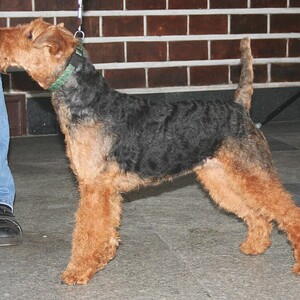
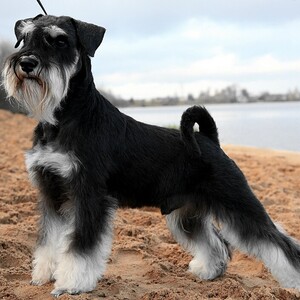
Miniature Schnauzer. · Zorik07 / Wikimedia Commons, CC BY-SA 3.0. Cropped and resized.
The Miniature Schnauzer (Zwergschnauzer) is a small, strong, stocky German dog with a harsh coat, a beard and bushy eyebrows. It appeared at the end of the 19th century in the Frankfurt am Main area as a smaller copy of the Schnauzer. The standard describes it as intelligent, fearless, hardy and alert, suitable even for a small flat.
Quick facts
| Common name | Miniature Schnauzer (Zwergschnauzer) |
| Scientific name | Canis lupus familiaris |
| Country of origin | Germany |
| Official recognition | FCI, definitively since 13 July 1955 (group 2, pinscher and schnauzer type; standard no. 183); also recognised by the AKC |
| Lifespan | 12–15 years, according to the AKC |
| Size (males) | 30–35 cm at the withers; about 4–8 kg |
| Size (females) | 30–35 cm at the withers; about 4–8 kg |
| Coat type | Wiry, harsh, dense, with a thick undercoat |
| Common colours | Black, pepper and salt, black and silver, white |
| Energy level | Moderate |
| Suited to an apartment? | Yes |
| Temperament | Intelligent, fearless, hardy, alert, friendly |
| Tendency to aggression | Low; a good watchdog |
| Good with children | Very good, according to the AKC |
| Good with other animals | Average |
| Genetic predispositions | Cataract, hyperlipidaemia, pancreatitis, liver shunt, bladder stones |
- Primary category:Dog breeds
- Explore this animal's categories:
History and origin
The FCI standard says that around 1900 a Miniature Schnauzer from the Frankfurt am Main area began its career, described at the time as a “wire-haired Zwergpinscher”. Because of the very different shapes, sizes and coat textures, it was not easy to produce a small dog with the appearance and qualities of its bigger brother, the Schnauzer.
Wikipedia says the breed may have come from the smallest Schnauzers or from crosses with smaller breeds such as the Affenpinscher, the Miniature Pinscher and the Poodle, as farmers wanted a small dog that was good at catching rats. The AKC says it is the most popular of the schnauzers.
How the breed developed
- 1888 – Jean Bungartz draws a “wire-haired Zwergpinscher”.
- Around 1900 – The Miniature Schnauzer appears in the Frankfurt am Main area.
- 13 July 1955 – The FCI recognises the breed.
- 6 March 2007 – The current FCI standard is published.
Breed rating
| Feature | Stars |
|---|---|
| Training and intelligence | ★★★★★ |
| Easy to train | ★★★★★ |
| Intelligence | ★★★★☆ |
| Independence | ★★★☆☆ |
| Stubbornness | ★★☆☆☆ |
| Behaviour and temperament | ★★★★★ |
| Affectionate with family | ★★★★★ |
| Friendly with children | ★★★★★ |
| Good with other dogs | ★★★☆☆ |
| Good with cats and other animals | ★★★☆☆ |
| Loyalty | ★★★★★ |
| Tendency to be aggressive | ★☆☆☆☆ |
| Tendency to bark | ★★★★★ |
| Needs and care | ★★★☆☆ |
| Shedding | ★★★★☆ |
| Needs frequent grooming | ★★★☆☆ |
| Activity and lifestyle | ★★★☆☆ |
| Energy level | ★★★☆☆ |
| Daily exercise needs | ★★★★★ |
| Suited to apartment life | ★★★★☆ |
| Health and longevity | ★★★★☆ |
| Life expectancy | ★★★★☆ |
| Predisposition to genetic diseases | ★★★☆☆ |
| Working abilities and uses | ★★★★☆ |
| Good guard dog | ★★★★☆ |
| Good companion dog | ★★★★★ |
Indicative rating: 5 stars means the highest level. It is based on the ratings the American Kennel Club gives the breed and on the FCI standard.
Physical characteristics
The standard describes it as small, strong, stocky rather than slender, rough-coated and elegant: a reduced image of the Schnauzer, without a dwarf appearance. It is square in build, with the height almost equal to the length of the body.
General appearance
The coat is wiry, harsh and dense, with a thick undercoat and a close-lying topcoat that is not too short. The beard on the muzzle and the bushy eyebrows, which slightly shade the eyes, are its typical features. The AKC says they give it a charming, almost human expression.
| Feature | Miniature Schnauzer |
|---|---|
| Size | Small |
| Height at the withers | 30–35 cm |
| Weight | about 4–8 kg |
| Coat | Wiry, harsh |
| Head | With a beard and bushy eyebrows |
| Body | Square, stocky |
The accepted colours are pure black with a black undercoat, pepper and salt (from dark iron grey to silver grey), black and silver and pure white with a white undercoat.
Training and socialisation
The standard says its nature is similar to the Schnauzer's, but influenced by the temperament of a small dog. Its intelligence, courage, stamina and alertness make it a pleasant house dog, a watchdog and a companion that can easily be kept even in a small flat.
The AKC says it is friendly, lively, eager to please and quick to learn. Because it is very intelligent, training should be fun and varied, or it will get bored with repetition.
Tips for effective training
- Keep training varied. It gets bored with repetition.
- Socialise it from an early age. The AKC also recommends puppy classes.
- Teach it not to bark at everything. The AKC gives it top marks for barking.
- Use rewards. It is eager to please.
Activity needs and lifestyle
The AKC says it needs regular daily exercise and has a medium energy level, so it adapts easily to town or country. A fenced yard where it can chase a ball does it good. Its greatest joy is being with its family.
| Activity | How often | Why it matters |
|---|---|---|
| Walks | daily | Exercise |
| Ball games | daily | Energy |
| Agility or obedience | weekly | Intelligence |
Tips for a balanced life
- It suits an apartment.
- Spend plenty of time with it.
- Keep fatty food away from it.
Care and health
Coat and skin care
The AKC says the double coat, harsh with a soft undercoat, needs frequent brushing, combing and grooming and sheds very little. For shows, the coat is hand-stripped; most owners choose clipping.
Common health problems
The AKC says it is a generally healthy breed, but it may be prone to:
| Condition | Description | Common symptoms |
|---|---|---|
| Cataract | The lens of the eye becomes cloudy | “Milky” eye, increasingly poor sight |
| Hyperlipidaemia | Too much fat in the blood | Often no signs; can lead to pancreatitis |
| Pancreatitis | Inflammation of the pancreas | Vomiting, tummy pain, loss of appetite |
| Liver shunt | Blood bypasses the liver | Poor growth, odd behaviour after meals |
| Bladder stones | Crystals or stones in the bladder | Frequent urination, blood in the urine |
Other care
- Keep fatty food away from it.
- Clean the beard after meals.
- Check the ears regularly.
Diet and nutrition
The AKC says some dogs gain weight easily, so calories and weight should be watched. Because of its tendency to hyperlipidaemia and pancreatitis, fatty food should be avoided.
Tips for a healthy diet
The table gives a starting estimate, calculated with the formula from the Merck Veterinary Manual. The first two calorie columns show the calories per day for a healthy adult dog. The last column shows what this means in dry food with 3,500–4,000 kcal per kilogram.
| Dog's weight | Calories per day (neutered) | Calories per day (not neutered) | Dry food per day (approximate) |
|---|---|---|---|
| 5 kg | 370 kcal | 420 kcal | 92–120 g |
| 6.5 kg | 460 kcal | 510 kcal | 120–150 g |
| 8 kg | 530 kcal | 600 kcal | 130–170 g |
- Give it its food in two meals a day.
- Do not give it fatty scraps from the table.
- A dog is at the right weight when you can feel its ribs under the coat without pressing hard.
Foods to avoid
Some human foods are dangerous for dogs: chocolate, coffee, grapes and raisins, onions, garlic, xylitol (a sweetener used in chewing gum), macadamia nuts and alcohol.
Reproduction and development
Physical and emotional maturity
In dogs, sexual maturity usually comes between 6 and 12 months. Small breeds become adults faster than large ones, usually at around one year.
Mating and pregnancy
Pregnancy lasts about 63 days, counted from ovulation. Mating a female on her first heat is not recommended. The FCI standard requires that only healthy dogs of typical breed appearance are used for breeding.
Caring for the puppies
In small breeds, a litter has 3–4 puppies on average. The puppies are very small and fragile in the first weeks, so they must be kept warm and handled with care. Socialisation starts early: gentle handling, everyday noises and new people.
Interesting facts
- The most popular schnauzer. The AKC says it is the most popular of the schnauzers.
- A wire-haired pinscher. At first it was called the wire-haired Zwergpinscher.
- A human expression. The beard and eyebrows give it an almost human expression.
- A ratter. Farmers wanted a small dog that was good at catching rats.
- It sheds little. The AKC says it sheds very little.
Frequently asked questions
How does it differ from the Giant Schnauzer?
It is the smallest variety: 30–35 cm, compared with 60–70 cm for the Giant Schnauzer.
How big does it get?
It measures 30–35 cm and weighs about 4–8 kg.
Does it shed?
Very little, but the coat needs frequent grooming.
How long does it live?
The AKC gives 12–15 years.