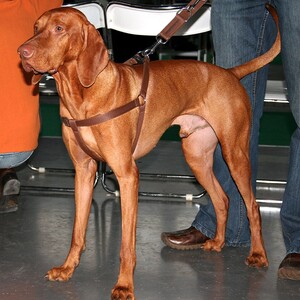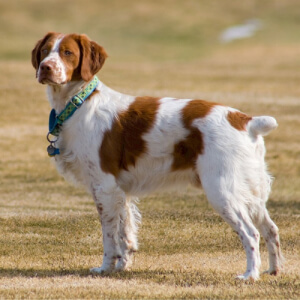
Welsh Springer SpanielCharacteristics, history, training and care
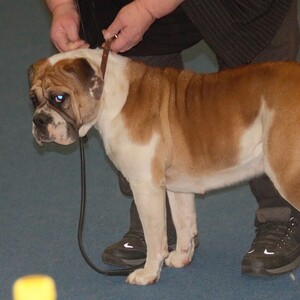
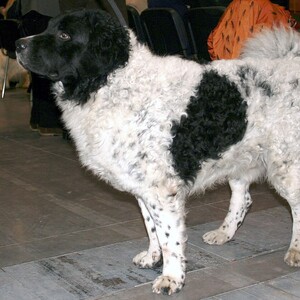
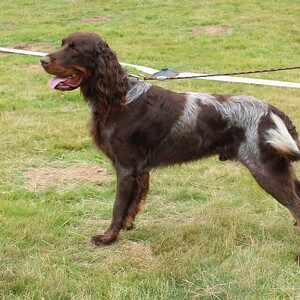
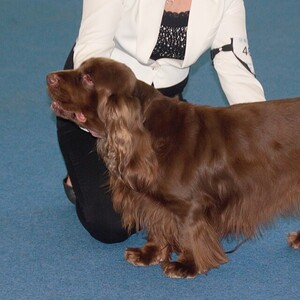
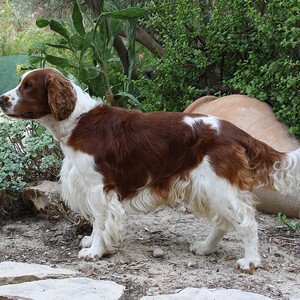
Welsh Springer Spaniel. · Udo Tjalsma / Wikimedia Commons, CC0 (public domain). Cropped and resized.
The Welsh Springer Spaniel is a red and white spaniel from Wales, compact and built for endurance and hard work. The FCI standard describes it as a very ancient and pure breed, strong, merry and very active, with a kindly disposition, never nervous; aggression is not accepted.
Quick facts
| Common name | Welsh Springer Spaniel |
| Scientific name | Canis lupus familiaris |
| Country of origin | United Kingdom (Wales) |
| Official recognition | FCI, definitively since 30 December 1954 (group 8, flushing dogs; standard no. 126); Kennel Club since 1902; also recognised by the AKC |
| Lifespan | 12–15 years, according to the AKC |
| Size (males) | about 48 cm at the withers; 18–25 kg according to the AKC |
| Size (females) | about 46 cm at the withers; 16–23 kg according to the AKC |
| Coat type | Straight, silky, dense, with moderate feathering |
| Common colours | Only rich red and white |
| Energy level | High |
| Suited to an apartment? | Yes, with enough exercise |
| Temperament | Merry, active, kindly, never nervous |
| Tendency to aggression | Very low |
| Good with children | Very good, according to the AKC |
| Good with other animals | Good; hunting instinct |
| Genetic predispositions | Hip and elbow dysplasia, autoimmune thyroiditis, eye diseases |
- Primary category:Dog breeds
- Explore this animal's categories:
History and origin
The FCI standard describes it as a very ancient and distinct breed of pure origin. Wikipedia says it has been compared with the old “Land Spaniel”, that it resembles the English Springer Spaniel and that it was also known as the “Welsh Spaniel” or “Welsh Cocker Spaniel”.
Wikipedia adds that it was little known until a series of wins at working trials raised its popularity. After its recognition by the Kennel Club in 1902, it was given its present name.
How the breed developed
- Centuries ago – A working spaniel in Wales.
- 1902 – Recognised by the Kennel Club under its present name.
- 30 December 1954 – The FCI recognises the breed.
Breed rating
| Feature | Stars |
|---|---|
| Training and intelligence | ★★★★☆ |
| Easy to train | ★★★★★ |
| Intelligence | ★★★★★ |
| Independence | ★★★★☆ |
| Stubbornness | ★★★★☆ |
| Behaviour and temperament | ★★★★☆ |
| Affectionate with family | ★★★★☆ |
| Friendly with children | ★★★★★ |
| Good with other dogs | ★★★☆☆ |
| Good with cats and other animals | ★★★☆☆ |
| Loyalty | ★★★★☆ |
| Tendency to be aggressive | ★★☆☆☆ |
| Tendency to bark | ★★★★☆ |
| Needs and care | ★★★★☆ |
| Shedding | ★★★★☆ |
| Needs frequent grooming | ★★★☆☆ |
| Activity and lifestyle | ★★★★★ |
| Energy level | ★★★★☆ |
| Daily exercise needs | ★★★★☆ |
| Suited to apartment life | ★★★☆☆ |
| Health and longevity | ★★★★☆ |
| Life expectancy | ★★★☆☆ |
| Predisposition to genetic diseases | ★★☆☆☆ |
| Working abilities and uses | ★★★☆☆ |
| Good hunting dog | ★★★★☆ |
| Good companion dog | ★★★★☆ |
Indicative rating: 5 stars means the highest level. It is based on the ratings the American Kennel Club gives the breed and on the FCI standard.
Physical characteristics
The standard describes it as symmetrical, compact, not too tall, built for endurance and hard work, quick and active. The AKC says enthusiasts call it “the practical size”: larger and stronger than the Cocker Spaniel but smaller than the English Springer, with a slightly tapered head and a red and white coat.
General appearance
The coat is straight or flat, silky and dense, never wiry or wavy. The legs are moderately feathered, and the ears and tail lightly feathered.
| Feature | Welsh Springer Spaniel |
|---|---|
| Size | Medium |
| Height at the withers | males: ~48 cm; females: ~46 cm |
| Weight | 16–25 kg (AKC) |
| Coat | Silky, with feathering |
| Colour | Red and white |
| Type | Flushing dog |
The standard accepts only rich red and white.
Training and socialisation
The standard describes it as strong, merry and very active, with a kindly disposition, never nervous. The AKC says it can be reserved with strangers, but this does not mean it is shy; early socialisation and puppy classes are essential.
The AKC points out that it is a hunting dog, with an instinct to chase birds and small mammals, but most puppies quickly learn to respect the family cat or another dog in the house. The AKC gives it the top score for ease of training.
Tips for effective training
- Socialise it early. It is reserved with strangers.
- Use rewards. It learns easily.
- Spend time with it. Interaction makes it happy.
- The fence must be secure. It chases birds.
Activity needs and lifestyle
The AKC says it is active and energetic and happiest with plenty of exercise and lots of time with its people: play in a well-fenced yard or long daily walks. It is a good choice for people with an active lifestyle.
| Activity | How often | Why it matters |
|---|---|---|
| Long walks | daily | Energy |
| Play in the yard | daily | Bonding with the family |
| Retrieving or hunting | weekly | Instinct |
Tips for a balanced life
- Suited to active families.
- Check the ears often.
- Brush it weekly.
Care and health
Coat and skin care
The AKC says the red and white coat needs grooming at least once a week, with a soft brush and a slicker brush or a comb for tangles. The nails should be trimmed every three to four weeks.
Common health problems
The AKC says the breed is generally healthy, and responsible breeders test their dogs for:
| Condition | Description | Common symptoms |
|---|---|---|
| Hip dysplasia | The hip joint forms incorrectly and, over time, arthritis develops | Limping, difficulty getting up or jumping, hip pain |
| Elbow dysplasia | The elbow joint develops incorrectly and arthritis appears | Limping on the front legs, especially after exercise |
| Autoimmune thyroiditis | Inflammation of the thyroid | Weight gain, tiredness |
| Eye diseases | Inherited conditions | Poor vision |
Other care
- Check the ears regularly.
- Brush its teeth often.
- Ask for the parents' health tests.
Diet and nutrition
The AKC recommends good-quality food suited to the dog's age, and attention to its weight.
Tips for a healthy diet
The table gives a starting estimate, calculated with the formula from the Merck Veterinary Manual. The first two calorie columns show the calories per day for a healthy adult dog. The last column shows what this means in dry food with 3,500–4,000 kcal per kilogram.
| Dog's weight | Calories per day (neutered) | Calories per day (not neutered) | Dry food per day (approximate) |
|---|---|---|---|
| 16 kg | 900 kcal | 1,010 kcal | 220–290 g |
| 20 kg | 1,060 kcal | 1,190 kcal | 260–340 g |
| 25 kg | 1,250 kcal | 1,410 kcal | 310–400 g |
- Treats count towards the daily portion.
- Split the food into two meals a day.
- A dog is at the right weight when you can feel its ribs under the coat without pressing hard.
Foods to avoid
Some human foods are dangerous for dogs: chocolate, coffee, grapes and raisins, onions, garlic, xylitol (a sweetener used in chewing gum), macadamia nuts and alcohol.
Reproduction and development
Physical and emotional maturity
In dogs, sexual maturity usually comes between 6 and 12 months. Most breeds become adults at around 13–15 months.
Mating and pregnancy
Pregnancy lasts about 63 days, counted from ovulation. Mating a female on her first heat is not recommended. The FCI standard requires that only healthy dogs of typical breed appearance are used for breeding.
Caring for the puppies
In dogs, a litter has 5–6 puppies on average, and the number rises with the size of the breed. Socialisation starts in the first weeks: gentle handling, everyday noises and new people.
Interesting facts
- A single colour. Only red and white.
- “The practical size”. Between the Cocker and the English Springer.
- A very old breed. The standard considers it ancient and pure.
- Once the “Welsh Cocker”. That is another name it went by.
- Made famous by trials. Its wins at trials made it well known.
Frequently asked questions
How does it differ from the English Springer?
It is smaller and only red and white.
Is it good with children?
Yes; the AKC gives it the top score.
Is it shy?
No, but it is reserved with strangers.
How long does it live?
The AKC gives 12–15 years.