Eurasian bullfinchPyrrhula pyrrhula — habitat, diet and reproduction
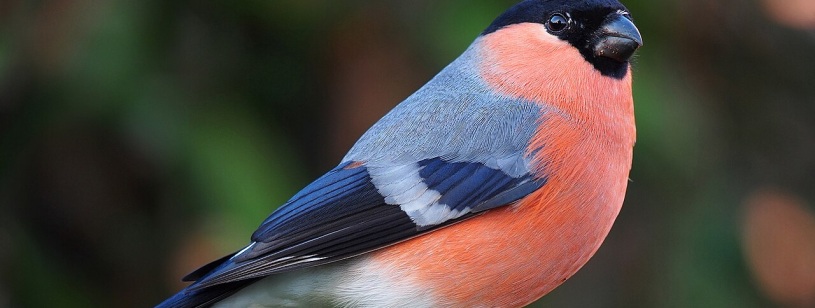
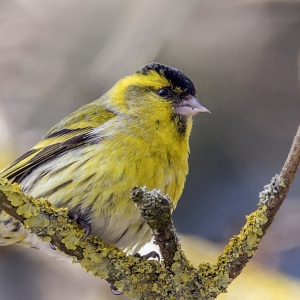
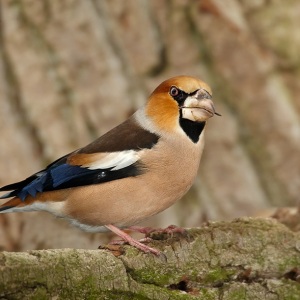
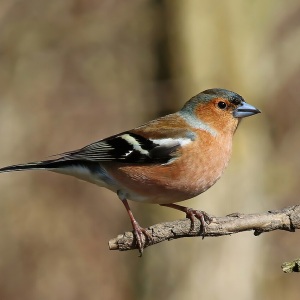
Male Eurasian bullfinch (Pyrrhula pyrrhula) on a branch. · Francis Franklin / CC BY-SA 3.0 (https://creativecommons.org/licenses/by-sa/3.0). Cropped and resized.
The Eurasian bullfinch is a stocky songbird with a black cap and a short, thick bill. The male has a rosy-red breast, while the female’s is pinkish brown. In spring it nibbles the buds of trees, which gave it its Romanian name.
Quick facts
| Common name | Eurasian bullfinch |
| Scientific name | Pyrrhula pyrrhula |
| Lifespan | Usually 2 years in the wild |
| Length | About 14.5–18 cm |
| Weight | About 21–38 g |
| Diet | Seeds, buds and berries; chicks also get insects |
| Predators | Sparrowhawks; martens and crows raid nests |
| Conservation status | Least Concern (LC), globally |
| Distribution | Europe and temperate Asia, east to Japan |
| Habitat | Woods, orchards, scrub and shrubby gardens |
| Family | Fringillidae |
| Nest | In dense bushes or young trees |
- Primary category:Birds
- Explore this animal's categories:
Interesting facts
- Bullfinch pairs stay together all year.
- During breeding, adults develop two pouches in the mouth to carry seeds to the chicks.
- The song is quiet and creaky, but the soft whistled “deu” call carries well.
- In winter, larger bullfinches from northern Europe may reach Romania.
Characteristics
The bullfinch has a round body and short neck. The male has rosy-red cheeks and breast, a grey back and a black cap. The female has the same pattern but a pinkish-brown breast.
Black wings carry a white bar, and the white rump shows well in flight. Juveniles lack the black cap for their first months.
Behaviour
It is a quiet, discreet bird that spends much time in foliage. Pairs move together and keep in touch with soft whistles.
It does not form large flocks; in winter it gathers at most in small groups of a few pairs. It comes close to houses and gardens when it finds food.
Habitat and distribution
The species lives in Europe and temperate Asia, as far as Kamchatka and Japan. Northern populations partly move south in winter.
In Romania it breeds mainly in hill and mountain forests, especially conifers. In winter it comes down to orchards, parks and gardens in the lowlands.
Diet and feeding
The main foods are seeds of trees and plants such as ash, birch, nettle and dandelion. It also eats berries and rowan fruit.
In spring, when seeds are scarce, it eats fruit-tree buds, and was once regarded as an orchard pest for this reason. Chicks are fed seeds and small insects carried in the parents’ mouth pouches.
Reproduction and life cycle
The nest is a loose cup of fine twigs lined with rootlets, placed in a dense bush, hedge or young conifer.
The female usually lays 4–6 bluish, spotted eggs and incubates them for about two weeks. Both parents feed the chicks, which fly after 15–17 days. There may be two broods a year.
Name and history
The scientific name Pyrrhula pyrrhula comes from the Greek “pyrrhos”, flame-red, after the male’s breast.
The Romanian name “mugurar” refers to its habit of eating buds (“muguri”). The bullfinch is related to the chaffinch and the goldfinch.
Conservation and threats
The species has a very large population and is assessed globally as Least Concern. In parts of western Europe numbers fell as hedgerows disappeared.
Keeping shrubs, old trees and berry bushes helps it. In Romania the bullfinch is protected, and trapping it is illegal.
Frequently asked questions
Why is it called “mugurar” in Romanian?
Because in spring it eats tree and shrub buds (“muguri”) when seeds are scarce.
How do you tell males from females?
The male has a bright rosy-red breast, while the female’s is pinkish brown.
Do bullfinches visit feeders?
Yes, especially in winter. They like sunflower seeds and fruit.
Is the bullfinch the same as the robin?
No. Both have reddish breasts, but the robin has a thin bill, no black cap and eats mostly insects.