Griffon Fauve de BretagneCharacteristics, history, training and care
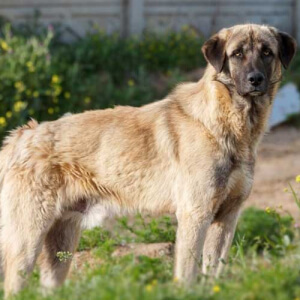
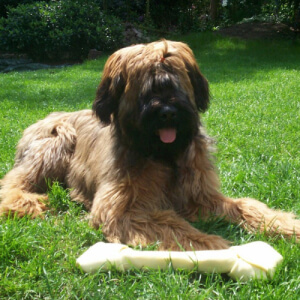
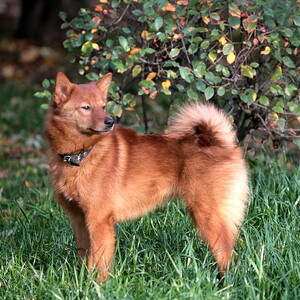
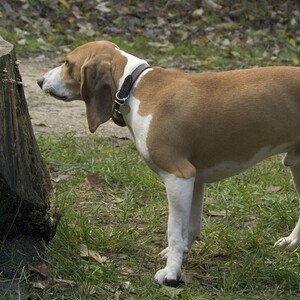
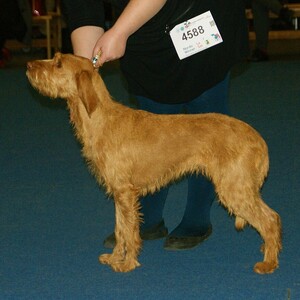
Griffon Fauve de Bretagne. · Canarian / Wikimedia Commons, CC BY-SA 4.0. Cropped and resized.
The Griffon Fauve de Bretagne is one of the oldest French hounds, with a very rough, red coat, from Brittany. Until the 19th century it was used for wolf hunting. It is a passionate, brave and tenacious hunter, but with people it is good-natured, sociable, affectionate and well balanced.
Quick facts
| Common name | Griffon Fauve de Bretagne |
| Scientific name | Canis lupus familiaris |
| Country of origin | France (Brittany) |
| Official recognition | FCI, definitively since 5 October 1954 (group 6, medium-sized scenthounds, with working trial; standard no. 66) |
| Lifespan | No published data for the breed; medium-sized hounds usually live 11–14 years |
| Size (males) | 48–56 cm at the withers (tolerance 2 cm) |
| Size (females) | 48–56 cm at the withers (tolerance 2 cm) |
| Coat type | Very rough, hard, fairly short |
| Common colours | Fawn, from golden wheaten to brick red |
| Energy level | High |
| Suited to an apartment? | Not really |
| Temperament | Passionate hunter, good-natured, sociable, affectionate, well balanced |
| Tendency to aggression | Low |
| Good with children | Good |
| Good with other animals | Good with dogs; strong hunting instinct |
| Genetic predispositions | No breed-specific diseases are known |
- Primary category:Dog breeds
- Explore this animal's categories:
History and origin
The FCI standard says the Fauve de Bretagne is one of the oldest French hound breeds: as early as the 14th century, a nobleman named Huet des Ventes had a pack of these dogs. Wikipedia says King Francis I also had a pack.
Widely used for wolf hunting in Brittany until the 19th century, it declined as the wolves disappeared. In 1949 Marcel Pambrun founded the Club de Fauve de Bretagne, and from the 1980s, under the leadership of Bernard Vallée, the griffon and the basset derived from it regained their place among French hounds. The club's motto is “hunting first”.
How the breed developed
- 14th century – Huet des Ventes has a pack of Fauve de Bretagne hounds.
- 19th century – As the wolves disappear, the breed declines.
- 1949 – Marcel Pambrun founds the breed club.
- 5 October 1954 – The FCI recognises the breed.
- The 1980s – The breed returns, under the leadership of Bernard Vallée.
Breed rating
| Feature | Stars |
|---|---|
| Training and intelligence | ★★★★☆ |
| Easy to train | ★★★★☆ |
| Intelligence | ★★★★☆ |
| Independence | ★★★★☆ |
| Stubbornness | ★★★☆☆ |
| Behaviour and temperament | ★★★★☆ |
| Affectionate with family | ★★★★☆ |
| Friendly with children | ★★★★☆ |
| Good with other dogs | ★★★★☆ |
| Good with cats and other animals | ★★☆☆☆ |
| Loyalty | ★★★★☆ |
| Tendency to be aggressive | ★☆☆☆☆ |
| Tendency to bark | ★★★★☆ |
| Needs and care | ★★★★☆ |
| Shedding | ★★☆☆☆ |
| Needs frequent grooming | ★★☆☆☆ |
| Activity and lifestyle | ★★★★☆ |
| Energy level | ★★★★☆ |
| Daily exercise needs | ★★★★★ |
| Suited to apartment life | ★★☆☆☆ |
| Health and longevity | ★★★★☆ |
| Life expectancy | ★★★★☆ |
| Predisposition to genetic diseases | ★★☆☆☆ |
| Working abilities and uses | ★★★★☆ |
| Good hunting dog | ★★★★★ |
| Good companion dog | ★★★★☆ |
Indicative rating: 5 stars means the highest level. The breed has no AKC profile; the rating is based on the FCI standard (“good with people, sociable, affectionate and well balanced”).
Physical characteristics
The standard describes it as a bony, muscular dog, very resistant to bad weather and fatigue, quite active and especially suited to difficult ground. Wikipedia says it has a short back, long drooping ears and a long tail, carried high and slightly curved.
General appearance
The coat is very rough, hard and fairly short, never woolly or curly. The face should not be too bushy. It has a good nose and the sustained voice of a “chopper”, with short, repeated notes.
| Feature | Griffon Fauve de Bretagne |
|---|---|
| Size | Medium |
| Height at the withers | 48–56 cm |
| Coat | Very rough, fairly short |
| Colour | Fawn, from wheaten to brick red |
| Ears | Long, drooping |
| Voice | Short, repeated notes |
The coat is fawn, from golden wheaten to brick red. A few black hairs on the back and ears are tolerated, as is a small white star on the chest, which is not sought after, however.
Training and socialisation
The standard says the Fauve de Bretagne is a passionate hunter, but good with people, sociable, affectionate and well balanced. It adapts easily to any ground and any game. In the hunt it is brave, cunning, tenacious and steady.
Wikipedia says it is still used in France today for wild boar hunting, but it can also be a good family dog. Like any scenthound, it needs a lot of recall practice.
Tips for effective training
- Practise the recall. It is a passionate hunter.
- Use rewards. It is affectionate and responds well.
- Work with its nose. Scent games make it happy.
- Keep it active. It is very resistant to fatigue.
Activity needs and lifestyle
It is an active, hardy hound, suited to difficult ground. It needs plenty of exercise every day and the chance to use its nose.
| Activity | How often | Why it matters |
|---|---|---|
| Long walks in nature | daily | Great stamina |
| Scent work | several times a week | Hound instinct |
| Play in a fenced yard | daily | Uses up energy |
Tips for a balanced life
- Keep it on a lead outside the yard.
- It copes well with bad weather.
- It suits an active family or a hunter.
Care and health
Coat and skin care
The harsh coat should be brushed once a week, and the dead hair removed by hand a few times a year.
Common health problems
There are no published health studies for the breed and no specific diseases are known. Worth watching for:
| Condition | Description | Common symptoms |
|---|---|---|
| Hip dysplasia | The hip joint forms incorrectly and, over time, arthritis develops | Limping, difficulty getting up or jumping, hip pain |
| Ear infections | Infections of the long ears | Scratching, bad smell, tilted head |
Other care
- Check the ears after every outing.
- Check for ticks after hunting.
- Trim the nails if they do not wear down on their own.
Diet and nutrition
An active hound needs good-quality food. The portion is matched to its weight and level of effort.
Tips for a healthy diet
The table gives a starting estimate, calculated with the formula from the Merck Veterinary Manual. The first two calorie columns show the calories per day for a healthy adult dog. The last column shows what this means in dry food with 3,500–4,000 kcal per kilogram.
| Dog's weight | Calories per day (neutered) | Calories per day (not neutered) | Dry food per day (approximate) |
|---|---|---|---|
| 18 kg | 980 kcal | 1,100 kcal | 240–310 g |
| 21 kg | 1,100 kcal | 1,240 kcal | 280–350 g |
| 25 kg | 1,250 kcal | 1,410 kcal | 310–400 g |
- Give it its food in two meals a day.
- Fresh water should always be available.
- A dog is at the right weight when you can feel its ribs under the coat without pressing hard.
Foods to avoid
Some human foods are dangerous for dogs: chocolate, coffee, grapes and raisins, onions, garlic, xylitol (a sweetener used in chewing gum), macadamia nuts and alcohol.
Reproduction and development
Physical and emotional maturity
In dogs, sexual maturity usually comes between 6 and 12 months. Most breeds become adults at around 13–15 months.
Mating and pregnancy
Pregnancy lasts about 63 days, counted from ovulation. Mating a female on her first heat is not recommended. The FCI standard requires that only healthy dogs of typical breed appearance are used for breeding.
Caring for the puppies
In dogs, a litter has 5–6 puppies on average, and the number rises with the size of the breed. Socialisation starts in the first weeks: gentle handling, everyday noises and new people.
Interesting facts
- A wolf hunter. Until the 19th century it hunted wolves in Brittany.
- The king's pack. Wikipedia says Francis I had a pack of Fauve de Bretagne hounds.
- “Hunting first”. This is the breed club's motto.
- A “chopper” voice. It bays with short, repeated notes.
- Parent of a basset. The Basset Fauve de Bretagne was developed from it.
Frequently asked questions
How does it differ from the Basset Fauve de Bretagne?
The griffon is taller (48–56 cm); the basset was developed from it and has short legs.
How big does it get?
48–56 cm at the withers, the same for males and females.
Is it a family dog?
It can be: it is sociable and affectionate, but needs a lot of exercise.
What colour is it?
Fawn, from golden wheaten to brick red.