Irish WolfhoundCharacteristics, history, training and care
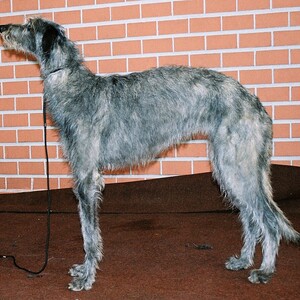
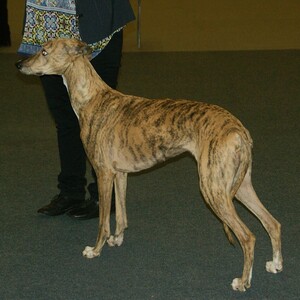
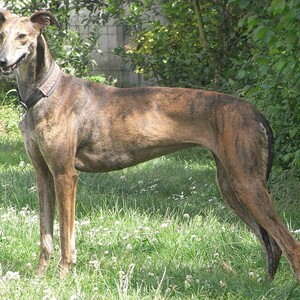
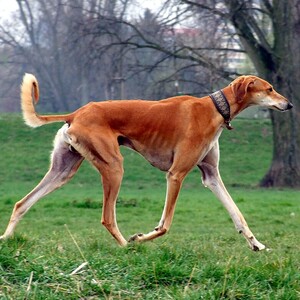
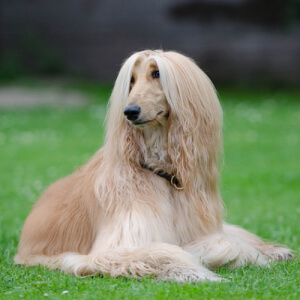
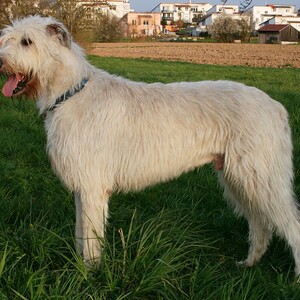
Irish Wolfhound. · Camillo 60 / Wikimedia Commons, CC BY-SA 3.0. Cropped and resized.
The Irish Wolfhound is the largest and tallest of the sighthounds, a rough-coated dog with a commanding appearance, yet gracefully built. It was already well known in Ireland in the 1st century AD and is today one of the five official symbols of Ireland. The standard describes it as “a lamb at home and a lion in the chase”.
Quick facts
| Common name | Irish Wolfhound (Cú Faoil) |
| Scientific name | Canis lupus familiaris |
| Country of origin | Ireland |
| Official recognition | FCI, definitively since 26 April 1955 (group 10, rough-haired sighthounds; standard no. 160); also recognised by the AKC |
| Lifespan | 6–8 years, according to the AKC |
| Size (males) | desirably at least 79 cm at the withers; at least 54.5 kg |
| Size (females) | desirably at least 71 cm at the withers |
| Coat type | Rough and hard on the body, legs and head; wiry eyebrows and beard |
| Common colours | Grey, brindle, red, black, pure white, fawn, wheaten |
| Energy level | Moderate |
| Suited to an apartment? | No |
| Temperament | Gentle, kind, loyal, friendly with people and dogs |
| Tendency to aggression | Very low |
| Good with children | Average; it is a giant |
| Good with other animals | Good with dogs; strong chasing instinct |
| Genetic predispositions | Bloat, heart disease, hip and elbow dysplasia, certain forms of cancer, pneumonia |
- Primary category:Dog breeds
- Explore this animal's categories:
History and origin
The FCI standard says Irish Wolfhounds were already well known in Ireland in the 1st century AD, and the first written mention dates from 391. Wikipedia says that in that year the Roman consul Quintus Aurelius Symmachus received a gift of seven “canes Scotici” for fights with lions and bears, and wrote that “all Rome viewed them with wonder”.
Throughout history the breed appears alongside the great kings of Ireland. The Dublin dog show of 1879 had the first classes for the Irish Wolfhound, and in 1885 the first standard was written and the breed club was formed. It is a living symbol of Irish culture, with heritage status granted by the Irish government.
How the breed developed
- 1st century AD – Irish Wolfhounds are already well known in Ireland.
- 391 – The first written mention: Symmachus receives seven dogs in Rome.
- 1879 – The first classes for the breed at the Dublin show.
- 1885 – The first standard and the breed club.
- 1902 – It becomes the mascot of the Irish Guards regiment.
- 26 April 1955 – The FCI recognises the breed.
Breed rating
| Feature | Stars |
|---|---|
| Training and intelligence | ★★★☆☆ |
| Easy to train | ★★★☆☆ |
| Intelligence | ★★★★☆ |
| Independence | ★★★☆☆ |
| Stubbornness | ★★★☆☆ |
| Behaviour and temperament | ★★★★☆ |
| Affectionate with family | ★★★★★ |
| Friendly with children | ★★★☆☆ |
| Good with other dogs | ★★★★☆ |
| Good with cats and other animals | ★★☆☆☆ |
| Loyalty | ★★★★★ |
| Tendency to be aggressive | ★☆☆☆☆ |
| Tendency to bark | ★☆☆☆☆ |
| Needs and care | ★★★★☆ |
| Shedding | ★★★☆☆ |
| Needs frequent grooming | ★★☆☆☆ |
| Activity and lifestyle | ★★★★☆ |
| Energy level | ★★★☆☆ |
| Daily exercise needs | ★★★☆☆ |
| Suited to apartment life | ★☆☆☆☆ |
| Health and longevity | ★★★★☆ |
| Life expectancy | ★☆☆☆☆ |
| Predisposition to genetic diseases | ★★★★☆ |
| Working abilities and uses | ★★★★☆ |
| Good hunting dog | ★★★★☆ |
| Good companion dog | ★★★★☆ |
Indicative rating: 5 stars means the highest level. It is based on the ratings the American Kennel Club gives the breed and on the FCI standard.
Physical characteristics
The standard describes it as the largest and tallest of the sighthounds, a rough-coated dog of very great size and commanding appearance, very strong and muscular, yet gracefully built. The AKC says a male can stand almost 91 cm at the withers and weigh up to 82 kg.
General appearance
The long head is carried proudly. The coat is rough and hard on the body, legs and head, and the hair over the eyes and the beard are especially wiry. The long tail is carried low, with a slight curve towards the tip.
| Feature | Irish Wolfhound |
|---|---|
| Size | Very large |
| Height at the withers | males: at least 79 cm; females: at least 71 cm |
| Weight | males: at least 54.5 kg |
| Coat | Rough, hard, wiry |
| Head | Long, carried proudly |
| Tail | Long, slightly curved |
The only recognised colours are grey, brindle, red, black, pure white, fawn and wheaten. White markings are accepted only on the chest, on the toes (not the whole foot) and at the tip of the tail.
Training and socialisation
The standard describes it as a sighthound that is gentle, kind and loyal, friendly with people and with other dogs: “a lamb at home and a lion in the chase”.
The AKC says puppies need 18 months or more to mature and can be destructive if left alone for long periods. Early socialisation and puppy classes using positive methods are recommended.
Tips for effective training
- Let it off the lead only in fenced areas. The AKC says it has a strong chasing instinct.
- Do not push the puppy. The AKC says: no forced exercise for puppies.
- Do not leave it alone for long. Puppies can become destructive.
- Use positive methods. It is gentle and sensitive.
Activity needs and lifestyle
The AKC says it needs exercise throughout its life. Left to itself, an adult can become lazy, but long walks or regular play keep it fit. As a sighthound, it should be let off the lead only in well-fenced areas, and walks should be on the lead.
| Activity | How often | Why it matters |
|---|---|---|
| Long walks on the lead | daily | Regular exercise |
| Running in a fenced area | several times a week | Its need for speed |
| Free play | daily | Keeps it fit |
Tips for a balanced life
- Avoid strenuous exercise before and after meals.
- You need a house, car and bed to match its size.
- It is not suitable for a flat.
Care and health
Coat and skin care
The AKC says it has a double coat, with a harsh topcoat over a soft undercoat. It sheds all year round, but not excessively. A thorough brushing once a week removes dirt and dead hair.
Common health problems
The AKC says the breed is generally healthy, but, as with all giant, deep-chested dogs, it is worth watching for:
| Condition | Description | Common symptoms |
|---|---|---|
| Gastric dilatation-volvulus (bloat) | The stomach fills with gas and may twist; this is a veterinary emergency | Swollen belly, trying to vomit without success, drooling, restlessness |
| Heart disease | Heart conditions, including cardiomyopathy | Tiredness, coughing, fainting |
| Hip dysplasia | The hip joint forms incorrectly and, over time, arthritis develops | Limping, difficulty getting up or jumping, hip pain |
| Elbow dysplasia | The elbow joint develops incorrectly and arthritis appears | Limping on the front legs, especially after exercise |
| Bone cancer | A form of cancer common in giant breeds | Lameness, swellings |
Other care
- Trim the nails regularly.
- Check the ears and teeth weekly.
- Have its heart checked regularly.
Diet and nutrition
The AKC recommends good-quality food for large and giant breeds. Because of bloat, strenuous exercise is avoided before and after meals.
Tips for a healthy diet
The table gives a starting estimate, calculated with the formula from the Merck Veterinary Manual. The first two calorie columns show the calories per day for a healthy adult dog. The last column shows what this means in dry food with 3,500–4,000 kcal per kilogram.
| Dog's weight | Calories per day (neutered) | Calories per day (not neutered) | Dry food per day (approximate) |
|---|---|---|---|
| 48 kg | 2,040 kcal | 2,300 kcal | 510–660 g |
| 55 kg | 2,260 kcal | 2,540 kcal | 560–730 g |
| 70 kg | 2,710 kcal | 3,050 kcal | 680–870 g |
- Divide the food into two or three meals a day to reduce the risk of bloat.
- Puppies should grow slowly, on food for giant breeds.
- In a sighthound at the right weight, the ribs are easy to feel.
Foods to avoid
Some human foods are dangerous for dogs: chocolate, coffee, grapes and raisins, onions, garlic, xylitol (a sweetener used in chewing gum), macadamia nuts and alcohol.
Reproduction and development
Physical and emotional maturity
In dogs, sexual maturity usually comes between 6 and 12 months, but in large breeds it can be delayed until about two years. Very large breeds become adults only at around 2 years.
Mating and pregnancy
Pregnancy lasts about 63 days, counted from ovulation. Mating a female on her first heat is not recommended. The FCI standard requires that only healthy dogs of typical breed appearance are used for breeding.
Caring for the puppies
In large breeds, a litter has around 7 puppies on average. The puppies grow very fast, so they need growth food suited to large breeds. Socialisation starts in the first weeks.
Interesting facts
- The tallest sighthound. The FCI standard calls it the largest and tallest of the sighthounds.
- A symbol of Ireland. It is one of the five official symbols of Ireland.
- The Guards' mascot. Since 1902 it has been the mascot of the Irish Guards regiment.
- It amazed Rome. In 391, Symmachus's dogs “amazed all Rome”.
- Lamb and lion. The standard describes it as “a lamb at home and a lion in the chase”.
In popular culture
A symbol of Ireland
The FCI standard says the Irish Wolfhound is a living symbol of Irish culture, one of the five official symbols of Ireland, with heritage status granted by the Irish government. Wikipedia says that its size has inspired literature, poetry and mythology, and that since 1902 it has been the mascot of the Irish Guards regiment.
Frequently asked questions
How big does an Irish Wolfhound get?
Males should desirably be at least 79 cm and 54.5 kg; the AKC says they can reach almost 91 cm.
Is it aggressive?
No. The standard describes it as gentle and friendly with people and dogs.
Can it live in a block of flats?
No. It is a giant and needs space.
How long does it live?
The AKC gives 6–8 years.