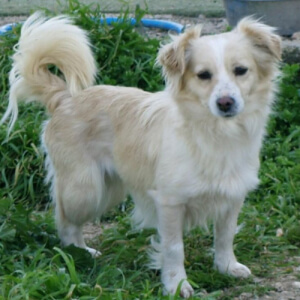
AlopekisCharacteristics, history, training and care
Quick facts
| Common name | Alopekis |
| Scientific name | Canis lupus familiaris |
| Country of origin | Greece |
| Official Recognition | Not recognized by the FCI |
| Typical lifespan | About 12-16 years |
| Dimensions (Male) | About 25-32 cm |
| Dimensions (Female) | About 23-30 cm |
| Weight (Male) | About 4-8 kg |
| Weight (Females) | About 3.5-7 kg |
| Coat type | Short and smooth, or wiry |
| Common colours | White, black, brown, beige, grey, often with markings |
| Energy Level | Moderate to high |
| Suitable for apartment? | Depends on exercise, training, health and the individual dog |
| Temperament | Intelligent, affectionate, curious, alert |
| Behaviour towards unfamiliar people and dogs | Individual behaviour varies; socialisation, training and management matter |
| Compatibility with children | Depends on the individual; adult supervision and suitable handling are essential |
| Compatibility with other animals | Depends on socialisation, prey drive and the animals involved |
| Genetic predispositions | Routine care and individual assessment are important; no landrace is guaranteed to lack hereditary disease |
- Primary category:Dog breeds
- Explore this animal's categories:
History and Origin
The Alopekis is a small, old type of Greek dog. Its name comes from the Greek word alopex, "fox", because of its fox-like look. Its supporters link it with the small dogs shown in ancient Greek art, but a direct line of descent has not been proven.
The evolution of the breed
- Antiquity – Small dogs with a fox-like head appear in ancient Greek vase paintings and reliefs; similar dogs may have been kept for guarding, catching rodents and companionship.
- Village life – For centuries, small dogs of this type lived in Greek villages and farms, where they caught rats, watched the yard and helped with poultry and small livestock.
- Modern era – With the move to cities, the dogs became rarer, and today Greek enthusiasts are working to record and preserve the type.
Breed Evaluation
The Alopekis is an intelligent, lively and affectionate small dog, suitable for families and active people. These editorial ratings offer a general guide. Individual dogs vary with training, environment and health.
| Characteristic | Stars |
|---|---|
| Training and Intelligence | ★★★★☆ |
| Easy to train | ★★★★☆ |
| Intelligence | ★★★★☆ |
| Level of independence | ★★★☆☆ |
| Level of stubbornness | ★★★☆☆ |
| Behavior and Temperament | ★★★★☆ |
| Affectionate with family | ★★★★★ |
| Friendly with children | ★★★★☆ |
| Compatible with other dogs | ★★★★☆ |
| Compatible with cats and other animals | ★★★☆☆ |
| Degree of loyalty | ★★★★★ |
| Tendency to be aggressive | ★☆☆☆☆ |
| Tendency to bark | ★★★★☆ |
| Needs and Care | ★★☆☆☆ |
| Shedding level | ★★★☆☆ |
| Requires frequent care | ★★☆☆☆ |
| Activity and Lifestyle | ★★★★☆ |
| Energy level | ★★★★☆ |
| Daily exercise requirement | ★★★★☆ |
| Suitable for apartment living | ★★★★☆ |
| Health and Longevity | ★★★★☆ |
| Life expectancy | ★★★★☆ |
| Predisposition to genetic diseases | ★★☆☆☆ |
| Work and Utility Features | ★★★★☆ |
| Good watchdog | ★★★★☆ |
| Good companion dog | ★★★★★ |
Physical Characteristics
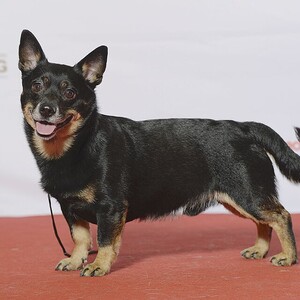
The Alopekis is a small but sturdy dog, longer than it is tall, with a lively, agile way of moving.
General appearance
- A small, muscular body, slightly long, built for agility.
- Two coat types: a short, smooth coat and a rougher, wiry coat.
- A wedge-shaped, fox-like head, with a pointed muzzle and erect or semi-erect ears.
- A medium-length tail, often carried in a curve.
- Dark, lively eyes that give a curious, intelligent expression.
| Characteristic | Alopekis |
|---|---|
| Size | Small (about 23-32 cm at the shoulder) |
| Weight | About 3.5-8 kg |
| Coat | Short and smooth, or wiry |
| Muzzle | Pointed, fox-like |
| Shedding tendency | Moderate |
| Build | Light but athletic |
The Alopekis is a quick, agile little dog, well suited to catching rodents, watching the home and keeping people company.
Training and Socialization
The Alopekis is intelligent and usually easy to train, eager to learn and to please its owner. It can do well in obedience, agility and scent games.
Tips for effective training
- Early socialisation – Because it is alert and curious, it should meet people, other animals and new places from an early age to prevent shyness.
- Reward-based training – It responds very well to food, praise and play.
- Basic and advanced commands – It learns simple commands quickly and can also be trained for agility or scent work.
- Managing prey drive – Because it likes to chase small animals, it should learn a reliable "leave it" command and walk well on a lead.
- Short, frequent sessions – Training should be varied and lively so the dog does not get bored.
The Alopekis suits families and active owners, but needs regular mental stimulation; otherwise it may become bored and stubborn.
Activity and Lifestyle Needs
The Alopekis is a lively, energetic dog that needs daily exercise and mental stimulation.
| Activity | Recommended duration |
|---|---|
| Daily walks | About 45-60 min |
| Fetch and chase games | About 20-30 min |
| Obedience training | About 10-15 min/day |
| Agility or puzzle games | 2-3 sessions/week |
Recommendations for a balanced lifestyle
- Good for active families – It can live in a house with a garden or in an apartment, as long as it gets enough exercise.
- Likes to explore – With its hunting instinct, it may slip through small gaps in fences if not supervised.
- Enjoys games – It loves fetch, puzzle toys and scent games.
- Can live in a city – Thanks to its small size, it can live well in an apartment if it is exercised daily.
The Alopekis is an adaptable, lively dog, well suited to families and people looking for an intelligent, active companion.
Care and Health
The Alopekis is generally considered a hardy dog with an easy-care coat, but little health research has been done on it.
Fur and skin care
- Weekly brushing – Both coat types need little grooming, but regular brushing removes dead hair.
- Baths only when needed – It does not need frequent washing unless it gets very dirty.
- Ear and claw checks – Ears should be checked regularly for infection and claws for length.
Common health problems
| Condition | Description | Common Symptoms |
|---|---|---|
| Dental problems | Tartar build-up is common in small dogs | Bad breath, inflamed gums |
| Patellar luxation | A slipping kneecap, common in small dogs | Occasional limping or skipping a step |
| Skin allergies | Reactions to pollen, parasites or food | Itching, redness, excessive scratching |
Other aspects of care
- Regular vet check-ups – Even healthy dogs benefit from regular visits, including dental checks.
- Balanced diet – A complete diet and a healthy weight help keep the joints and energy in good condition.
Diet and Nutrition
The Alopekis is an active small dog that needs a balanced diet matched to its energy level.
Recommendations for a healthy diet
Choose a complete, balanced diet appropriate to the dog’s age, size and health. Home-prepared diets and supplements should be planned with a veterinarian qualified in nutrition. Raw pet food can carry harmful bacteria.
| Food type | Daily Amount (Adults) | Frequency |
|---|---|---|
| Premium dry food | Individual amount; follow a complete diet’s guidance and veterinary advice | 2 meals/day |
| Home cooked food | Individual amount; follow a complete diet’s guidance and veterinary advice | 2 meals/day |
| Raw food: bacterial contamination is a concern | Individual amount; follow a complete diet’s guidance and veterinary advice | 2 meals/day |
Forbidden foods
⛔ Chocolate, grapes and raisins, xylitol - toxic to dogs. / ⛔ Cooked bones - can break teeth or cause intestinal blockages. / ⛔ Onions and garlic - can cause haemolytic anaemia. / ⛔ Too much milk - can cause digestive problems.
The Alopekis should be fed carefully and in balanced portions to stay active and healthy without gaining extra weight.
Reproduction and Development
Breeding can involve health risks. Responsible breeders use appropriate health screening and veterinary advice rather than assuming that a breed is free of reproductive problems.
Physical and emotional maturity
- Physical maturity: The Alopekis usually reaches adult size at about 8-12 months, and fills out until about 1.5 years.
- Emotional maturity: It stays active and playful all its life, but usually becomes calmer after about 2 years.
Mating and Gestation
- Breeding decisions – A veterinarian should assess health, maturity and relevant screening. A fixed age alone does not establish that a dog should be bred.
- Duration of gestation: Approximately 58-68 days, usually about 63 days.
- Average number of puppies: Usually about 3-6 puppies per litter.
Puppy care
- The first 3 weeks: Puppies need a warm, protected place and feed only on their mother's milk.
- Between 4-8 weeks: They begin to eat solid food, and socialisation becomes essential for a balanced character.
- Moving to a new home – Timing depends on health, development and local requirements. Continue careful socialisation and veterinary care.
Curiosities and Interesting Facts
- A "fox dog" – The name Alopekis comes from the ancient Greek word alopex, meaning "fox".
- A rat catcher – In Greek villages, it was valued for keeping rats and mice away from houses and farms.
- Adaptable – It can live both in a city apartment and on a farm.
- A big voice – Although small, it is alert and barks to warn its family of visitors.
- Very rare – Even in Greece, true Alopekis dogs are uncommon, and they are almost unknown abroad.
- Not FCI-recognised – The Alopekis is not recognised by the FCI or other major international kennel clubs.
The Dog in Popular Culture
The Alopekis is not well known worldwide, but it is part of the rural culture of Greece.
Importance in Greek mythology and history
- The dog of Greek villages – In the past, the Alopekis was a common companion in Greek villages and farms, used for guarding, catching rodents and keeping people company.
- Ancient art – Small fox-like dogs on ancient Greek vases are often mentioned by the breed's supporters as early relatives of the Alopekis.