Southern platyfishXiphophorus maculatus — habitat, diet and reproduction
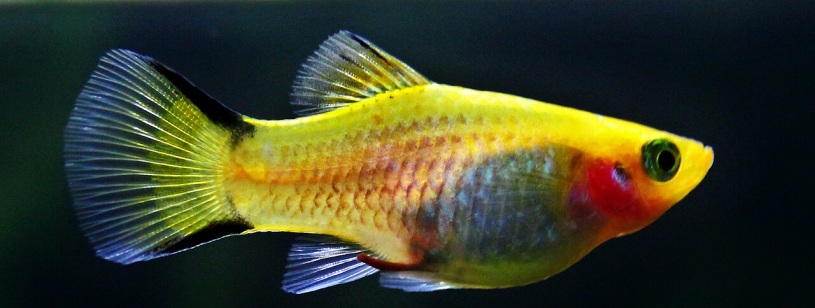
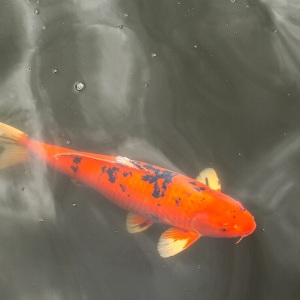
Platy (Xiphophorus maculatus), a colourful aquarium form. · Usien / CC BY-SA 4.0 (https://creativecommons.org/licenses/by-sa/4.0). Cropped and resized.
The platy is a small freshwater fish, very popular in aquariums for its colours and easy care. It comes from waters of southern Mexico and Central America. Like the guppy, it does not lay eggs but gives birth to live young that can swim immediately.
Quick facts
| Common name | Southern platyfish, platy |
| Scientific name | Xiphophorus maculatus |
| Lifespan | About 2–3 years, sometimes up to 5 |
| Length | About 4–6 cm |
| Diet | Omnivore: algae, plants, larvae, small crustaceans |
| Predators | Larger fish, waterbirds |
| Conservation status | Least Concern (LC) |
| Distribution | Southern Mexico, Guatemala and Belize |
| Habitat | Slow, warm, vegetated waters: ditches, ponds, small rivers |
| Family | Poeciliidae |
| Reproduction | Gives birth to live young |
- Primary category:Fish
- Explore this animal's categories:
Interesting facts
- The “Mickey Mouse” form has a black mark at the tail base resembling the character’s ears.
- A female can give birth to dozens of young about once a month.
- Platies have been used by researchers to study skin cancer.
- Platies can interbreed with their relatives the swordtails, and many shop colours come from such crosses.
Characteristics
The platy has a short, deep body, slightly flattened sideways. Wild fish are greenish grey with dark spots, while aquarium forms come in many colours: red, yellow, orange, blue or black.
Males are smaller and have an anal fin modified into a long, thin organ called a gonopodium, used in reproduction. Females have rounder bellies.
Behaviour
The platy is peaceful, does well in groups and suits community aquariums. It swims mainly in middle water layers and searches for food among plants.
Males court females without being aggressive. To avoid females being chased too much, breeders recommend several females per male.
Habitat and distribution
The species naturally lives on the Atlantic slope of southern Mexico, Guatemala and Belize, in warm, slow, plant-rich waters.
Fish released from aquariums have formed populations in some warm regions such as Florida. In Europe it lives only in aquariums.
Diet and feeding
In the wild, platies eat algae, plants, insect larvae, worms and small crustaceans, picking debris from plants and the bottom.
In aquariums they get tropical flakes plus vegetable-based food and occasional live or frozen food.
Reproduction and life cycle
The platy is a livebearer: fertilisation happens inside the female, and young develop there for about four weeks. She then gives birth to 20–80 fully formed young.
Females can store sperm and give birth several times without mating again. Adults eat the fry, so dense plants help them hide.
Name and history
The scientific name Xiphophorus maculatus means “spotted sword-bearer”. The genus name comes from its relatives, the swordtails, whose males have a sword-like tail extension.
For almost a century, platies and swordtails have been used in laboratories to study skin tumours, because some crosses develop melanomas.
Conservation and threats
The species is assessed as Least Concern. Traded fish are farm-bred, not wild-caught.
Like all aquarium fish, platies must not be released into natural waters, where they can become invasive. They are a good choice for beginners.
Frequently asked questions
Do platies give birth to live young?
Yes. The female gives birth to fully formed young, usually 20–80, about once a month.
How long does a platy live?
Usually 2–3 years, sometimes up to 5.
What do platies eat?
Tropical flakes, vegetable-based food and occasional live or frozen food.
How do you tell males from females?
The male has a long, thin anal fin (gonopodium), and the female has a rounder belly.