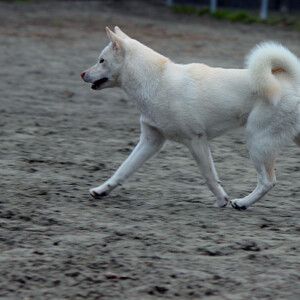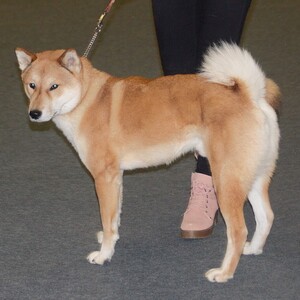
TosaCharacteristics, history, training and care
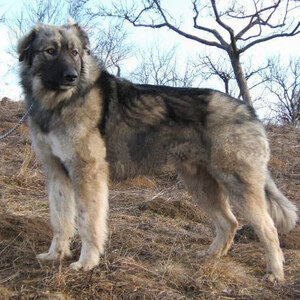
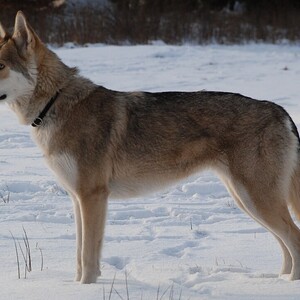
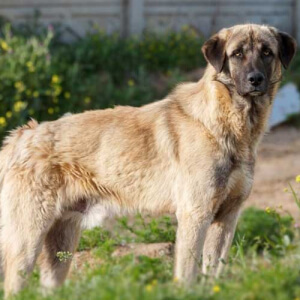
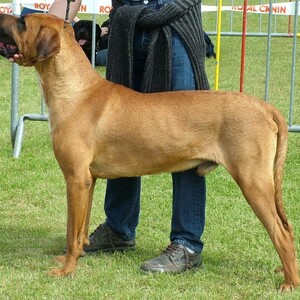
Tosa. · Ludivine HOUDAS / Wikimedia Commons, CC BY-SA 3.0. Cropped and resized.
The Tosa (Tosa Inu or Japanese Mastiff) is a large molosser from Japan, created on the island of Shikoku as a fighting dog and used today as a guard dog. The FCI standard describes its temperament as patient, composed, bold and brave. The AKC says it is normally quiet and obedient, quietly affectionate with its family, but aloof with strangers and wary of other dogs.
Quick facts
| Common name | Tosa (Tosa Inu, Japanese Mastiff) |
| Scientific name | Canis lupus familiaris |
| Country of origin | Japan |
| Official recognition | FCI, definitively since 1 April 1964 (group 2, molossoid breeds; standard no. 260); in the AKC Foundation Stock Service |
| Lifespan | 10–12 years, according to the AKC |
| Size (males) | at least 60 cm at the withers; 45–91 kg according to the AKC |
| Size (females) | at least 55 cm at the withers |
| Coat type | Short, harsh and dense |
| Common colours | Red, fawn, apricot, black, brindle |
| Energy level | Low to medium |
| Suited to an apartment? | No |
| Temperament | Patient, calm, bold, brave, watchful |
| Tendency to aggression | High towards other dogs; unusual towards people |
| Good with children | Moderate; with supervision |
| Good with other animals | Poor with other dogs |
| Genetic predispositions | No known breed-specific diseases; as in giant breeds, dysplasia and bloat |
- Primary category:Dog breeds
- Explore this animal's categories:
History and origin
The FCI standard says Japan has a long history of dog fighting, going back to the 14th century. The breed was created as a hybrid of the Shikoku-ken and Western breeds: Bulldogs (1872), Mastiffs (1874), German Pointers (1876) and Great Danes (1924); according to some accounts, the Saint Bernard and the Bull Terrier also contributed. It was named after the area where it was bred, Tosa.
Wikipedia says it is a rare breed and that owning one is restricted in some countries, as it is considered dangerous. Dogs bred in Japan are usually much smaller than those bred outside it.
How the breed developed
- 14th century – Dog fighting begins in Japan.
- 1872–1924 – Crosses with Bulldogs, Mastiffs, Pointers and Great Danes.
- 1 April 1964 – The FCI recognises the breed.
Breed rating
| Feature | Stars |
|---|---|
| Training and intelligence | ★★★☆☆ |
| Easy to train | ★★★★★ |
| Intelligence | ★★★☆☆ |
| Independence | ★☆☆☆☆ |
| Stubbornness | ★★★☆☆ |
| Behaviour and temperament | ★★☆☆☆ |
| Affectionate with family | ★★★☆☆ |
| Friendly with children | ★★★☆☆ |
| Good with other dogs | ★★★★★ |
| Good with cats and other animals | ★☆☆☆☆ |
| Loyalty | ★★★☆☆ |
| Tendency to be aggressive | ★★★☆☆ |
| Tendency to bark | ★★★☆☆ |
| Needs and care | ★★★☆☆ |
| Shedding | ★★★☆☆ |
| Needs frequent grooming | ★★★☆☆ |
| Activity and lifestyle | ★★★☆☆ |
| Energy level | ★★★★☆ |
| Daily exercise needs | ★★★☆☆ |
| Suited to apartment life | ★★★★★ |
| Health and longevity | ★★★☆☆ |
| Life expectancy | ★★★☆☆ |
| Predisposition to genetic diseases | ★★★★☆ |
| Working abilities and uses | ★☆☆☆☆ |
| Good guard dog | ★★★☆☆ |
| Good companion dog | ★★★★★ |
Indicative rating: 5 stars means the highest level. It is based on the ratings the American Kennel Club gives the breed and on the FCI standard.
Physical characteristics
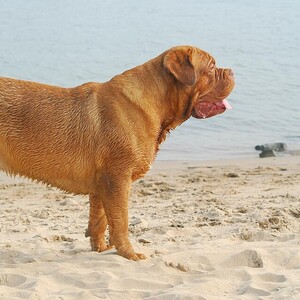
The standard describes it as a large dog with a stately bearing and a robust build, drop ears, short hair, a square muzzle and a hanging tail, thick at the base. Wikipedia says Japanese dogs usually weigh 36–61 kg, while those bred outside Japan weigh 60–90 kg.
General appearance
The coat is short, harsh and dense.
| Feature | Tosa |
|---|---|
| Size | Giant |
| Height at the withers | males: at least 60 cm; females: at least 55 cm |
| Weight | 45–91 kg (AKC) |
| Coat | Short, harsh |
| Ears | Drop |
| Type | Molosser |
The standard accepts red, fawn, apricot, black and brindle. A little white on the chest and feet is allowed.
Training and socialisation
The standard describes its temperament as patient, composed, bold and brave. The AKC says it is normally quiet, silent and obedient, calm yet watchful, and aggression towards people is not characteristic of the breed.
The AKC warns that it is naturally wary of other dogs and may react aggressively to those it sees as intruders. It needs an experienced owner and early socialisation.
Tips for effective training
- Socialise it early. Especially with other dogs.
- Be calm and firm. It is very powerful.
- Check the law. The breed is restricted in some countries.
- Keep it on the lead. It may react to unfamiliar dogs.
Activity needs and lifestyle
The AKC says it is a fairly calm breed by nature, but it needs exercise to stay at the right weight and keep its mind busy: running in a fenced yard, walks or indoor games.
| Activity | How often | Why it matters |
|---|---|---|
| Walks | daily | Fitness |
| Exercise in the yard | daily | Energy |
| Brain games | several times a week | A busy mind |
Tips for a balanced life
- Not suited to beginners.
- It needs a large yard.
- Check the local rules on the breed.
Care and health
Coat and skin care
The AKC says the short, dense coat needs little care: an occasional brush and bath. The nails grow quickly and should be trimmed regularly, and the ears checked often.
Common health problems
There are no known breed-specific diseases. As with any giant breed, it is worth watching for:
| Condition | Description | Common symptoms |
|---|---|---|
| Hip dysplasia | The hip joint forms incorrectly and, over time, arthritis develops | Limping, difficulty getting up or jumping, hip pain |
| Elbow dysplasia | The elbow joint develops incorrectly and arthritis appears | Limping on the front legs, especially after exercise |
| Gastric dilatation-volvulus (bloat) | The stomach fills with gas and may twist; this is a veterinary emergency | Swollen belly, trying to vomit without success, drooling, restlessness |
Other care
- Ask for the parents' hip tests.
- Do not let it run after a meal.
- Keep it at the right weight.
Diet and nutrition
The AKC recommends good-quality food suited to the dog's age, and attention to its weight.
Tips for a healthy diet
The table gives a starting estimate, calculated with the formula from the Merck Veterinary Manual. The first two calorie columns show the calories per day for a healthy adult dog. The last column shows what this means in dry food with 3,500–4,000 kcal per kilogram.
| Dog's weight | Calories per day (neutered) | Calories per day (not neutered) | Dry food per day (approximate) |
|---|---|---|---|
| 45 kg | 1,950 kcal | 2,190 kcal | 490–630 g |
| 68 kg | 2,650 kcal | 2,980 kcal | 660–850 g |
| 91 kg | 3,300 kcal | 3,710 kcal | 820–1060 g |
- Split the food into two or three meals a day.
- Giant-breed puppies need special food.
- A dog is at the right weight when you can feel its ribs without pressing hard.
Foods to avoid
Some human foods are dangerous for dogs: chocolate, coffee, grapes and raisins, onions, garlic, xylitol (a sweetener used in chewing gum), macadamia nuts and alcohol.
Reproduction and development
Physical and emotional maturity
In dogs, sexual maturity usually comes between 6 and 12 months, but in large breeds it can be delayed until about two years. Very large breeds become adults only at around 2 years.
Mating and pregnancy
Pregnancy lasts about 63 days, counted from ovulation. Mating a female on her first heat is not recommended. The FCI standard requires that only healthy dogs of typical breed appearance are used for breeding.
Caring for the puppies
In large breeds, a litter has around 7 puppies on average. The puppies grow very fast, so they need growth food suited to large breeds. Socialisation starts in the first weeks.
Interesting facts
- From Shikoku. Its Japanese ancestor is the Shikoku dog.
- Japanese Mastiff. That is another name for it.
- Smaller in Japan. Japanese dogs are much smaller.
- Restricted in some countries. It is considered dangerous in some countries.
- Quiet at home. The AKC describes it as silent and obedient.
Frequently asked questions
Is it dangerous?
Aggression towards people is not typical, but it can be aggressive with other dogs.
Is it good for beginners?
No; it needs an experienced owner.
How much does it weigh?
The AKC gives 45–91 kg.
How long does it live?
The AKC gives 10–12 years.