Shetland SheepdogCharacteristics, history, training and care
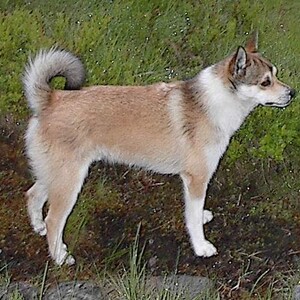
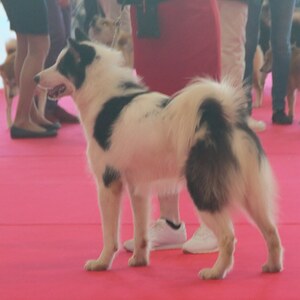
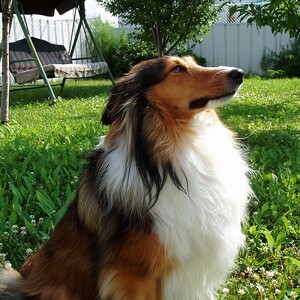
Shetland Sheepdog. · Viviane / Wikimedia Commons, public domain. Cropped and resized.
The Shetland Sheepdog (Sheltie) is a small, long-coated herding dog from the Shetland Islands of Scotland. The FCI standard describes it as a working dog of great beauty, alert, gentle, intelligent, strong and active, affectionate with its owner, reserved with strangers and never nervous. Wikipedia says that although it looks like a miniature Collie, it is not descended from the Collie alone.
Quick facts
| Common name | Shetland Sheepdog (Sheltie) |
| Scientific name | Canis lupus familiaris |
| Country of origin | United Kingdom (Scotland) |
| Official recognition | FCI, definitively since 9 November 1954 (group 1, herding dogs; standard no. 88); Kennel Club since 1909; also recognised by the AKC |
| Lifespan | 12–14 years, according to the AKC |
| Size (males) | ideally 37 cm at the withers; 7–11 kg according to the AKC |
| Size (females) | ideally 35.5 cm at the withers |
| Coat type | Double: long, harsh topcoat, soft, dense undercoat |
| Common colours | Sable, tricolour, blue merle, black and white, black and tan |
| Energy level | High |
| Suited to an apartment? | Yes, with enough exercise |
| Temperament | Alert, gentle, intelligent, affectionate, reserved with strangers |
| Tendency to aggression | Very low |
| Good with children | Very good, according to the AKC |
| Good with other animals | Very good |
| Genetic predispositions | Hip dysplasia, eye diseases, dermatomyositis, von Willebrand disease, epilepsy |
History and origin
Wikipedia says the origins of the breed are unclear. The original herding dog of Shetland was of the Spitz type, probably similar to the Icelandic Sheepdog, later crossed with Collies from mainland Scotland and, according to local stories, with a King Charles Spaniel that arrived on a yacht. In the early 20th century, James Loggie added a small Rough Collie, contributing to today's breed.
The breed was originally called the Shetland Collie, but Collie breeders objected, so the Kennel Club recognised it in 1909 only on condition that the name was changed. Wikipedia adds that, like Shetland ponies, cattle and sheep, the breed is small but hardy, made for the harsh conditions of the islands.
How the breed developed
- Early 20th century – James Loggie adds a small Collie.
- 1909 – The Kennel Club recognises the breed under the name Shetland Sheepdog.
- 9 November 1954 – The FCI recognises the breed.
Breed rating
| Feature | Stars |
|---|---|
| Training and intelligence | ★★★★★ |
| Easy to train | ★★★★★ |
| Intelligence | ★★★★★ |
| Independence | ★★★★☆ |
| Stubbornness | ★★★★☆ |
| Behaviour and temperament | ★★★★★ |
| Affectionate with family | ★★★★★ |
| Friendly with children | ★★★★★ |
| Good with other dogs | ★★★★☆ |
| Good with cats and other animals | ★★★★★ |
| Loyalty | ★★★★☆ |
| Tendency to be aggressive | ★★☆☆☆ |
| Tendency to bark | ★★★★☆ |
| Needs and care | ★★★★☆ |
| Shedding | ★★★☆☆ |
| Needs frequent grooming | ★★★★★ |
| Activity and lifestyle | ★★★★★ |
| Energy level | ★★★★★ |
| Daily exercise needs | ★★★★☆ |
| Suited to apartment life | ★★★★★ |
| Health and longevity | ★★★★★ |
| Life expectancy | ★★★★☆ |
| Predisposition to genetic diseases | ★☆☆☆☆ |
| Working abilities and uses | ★★★★☆ |
| Good companion dog | ★★★★☆ |
| Good companion dog | ★★★☆☆ |
Indicative rating: 5 stars means the highest level. It is based on the ratings the American Kennel Club gives the breed and on the FCI standard.
Physical characteristics
The standard describes it as a small, long-coated working dog of great beauty, free from cloddiness or coarseness, with supple movement. The AKC describes it as small, active and agile, with a long, wedge-shaped head, small ears that are three-quarters erect and a deep chest.
General appearance
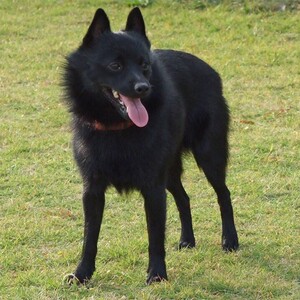
The coat is double: the topcoat is long, harsh and straight, and the undercoat soft, short and dense. The mane and frill are very abundant, and the forelegs are well feathered. The face is smooth.
| Feature | Shetland Sheepdog |
|---|---|
| Size | Small |
| Height at the withers | ideally 37 cm (males), 35.5 cm (females) |
| Weight | 7–11 kg (AKC) |
| Coat | Double, long, with a mane |
| Head | Long, wedge-shaped |
| Type | Herding dog |
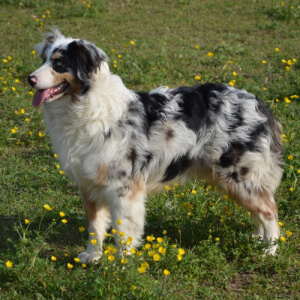
The standard accepts sable (from light gold to deep mahogany), tricolour (intense black with tan markings), blue merle (silvery blue splashed with black), black and white and black and tan. White markings may appear on the face, collar, chest, legs and tail tip.
Training and socialisation
The standard describes it as alert, gentle, intelligent, strong and active, affectionate and responsive to its owner, reserved with strangers and never nervous. Wikipedia says it ranked 6th out of 138 breeds for intelligence in Stanley Coren's research.
The AKC says it is very intelligent, easy to train and eager to please, a real star at agility. It can be quite vocal and shows its joy by barking, so it is worth teaching it from an early age when to be quiet.
Tips for effective training
- Start early. Socialisation and puppy classes.
- Teach it “quiet”. The AKC says it can be vocal.
- Try dog sports. It excels at agility.
- Use rewards. It is eager to please.
Activity needs and lifestyle
The AKC says it is active and athletic, needs moderate exercise and adapts easily to family life, including in the city, as long as it gets enough exercise. It enjoys outings that work both its mind and its body.
| Activity | How often | Why it matters |
|---|---|---|
| Walks | daily | Fitness |
| Agility or obedience | several times a week | Keeps its mind busy |
| Play | daily | Energy |
Tips for a balanced life
- It can also live in an apartment.
- Brush it weekly.
- Teach it not to bark at everything.
Care and health
Coat and skin care
The AKC says the abundant double coat sheds heavily. It should be brushed weekly, and more often during the shedding season, so that dead hair does not end up all over the house.
Common health problems
The AKC says the breed is generally healthy, and responsible breeders screen their dogs for:
| Condition | Description | Common symptoms |
|---|---|---|
| Hip dysplasia | The hip joint forms incorrectly and, over time, arthritis develops | Limping, difficulty getting up or jumping, hip pain |
| Eye diseases | Inherited eye conditions | Poor vision |
| Dermatomyositis | “Sheltie skin syndrome” | Lesions on the face, ears and legs |
| Von Willebrand disease | A clotting disorder | Bleeding that is hard to stop |
| Epilepsy | Repeated seizures | Convulsions |
Other care
- Ask for the parents' health tests.
- Check its thyroid if it gains weight.
- Go for yearly check-ups.
Diet and nutrition
The AKC recommends good-quality food suited to its age and keeping an eye on its weight, as some Shelties gain weight easily.
Tips for a healthy diet
The table gives a starting estimate, calculated with the formula from the Merck Veterinary Manual. The first two calorie columns show the calories per day for a healthy adult dog. The last column shows what this means in dry food with 3,500–4,000 kcal per kilogram.
| Dog's weight | Calories per day (neutered) | Calories per day (not neutered) | Dry food per day (approximate) |
|---|---|---|---|
| 7 kg | 480 kcal | 540 kcal | 120–150 g |
| 9 kg | 580 kcal | 650 kcal | 140–190 g |
| 11 kg | 680 kcal | 760 kcal | 170–220 g |
- Treats count towards the daily portion.
- Split the food into two meals a day.
- A dog is at the right weight when you can feel its ribs under the coat without pressing hard.
Foods to avoid
Some human foods are dangerous for dogs: chocolate, coffee, grapes and raisins, onions, garlic, xylitol (a sweetener used in chewing gum), macadamia nuts and alcohol.
Reproduction and development
Physical and emotional maturity
In dogs, sexual maturity usually comes between 6 and 12 months. Small breeds become adults faster than large ones, usually at around one year.
Mating and pregnancy
Pregnancy lasts about 63 days, counted from ovulation. Mating a female on her first heat is not recommended. The FCI standard requires that only healthy dogs of typical breed appearance are used for breeding.
Caring for the puppies
In small breeds, a litter has 3–4 puppies on average. The puppies are very small and fragile in the first weeks, so they must be kept warm and handled with care. Socialisation starts early: gentle handling, everyday noises and new people.
Interesting facts
- Formerly the “Shetland Collie”. The name changed at the request of Collie breeders.
- Among the cleverest. 6th out of 138 in Stanley Coren's research.
- Small like Shetland ponies. Like the islands' animals, it is small but hardy.
- A Spitz-type ancestor. The original Shetland dog resembled the Icelandic Sheepdog.
- An agility star. The AKC calls it a superstar of dog sports.
Frequently asked questions
Is it a small Collie?
No; it looks like one, but it also has Spitz-type ancestors.
How big does it get?
Ideally 37 cm for males and 35.5 cm for females.
Does it bark a lot?
It can be vocal; the AKC recommends training from an early age.
Does it shed?
Yes, a lot; it should be brushed weekly.
How long does it live?
The AKC gives 12–14 years.