Chodsky PesCharacteristics, history, training and care
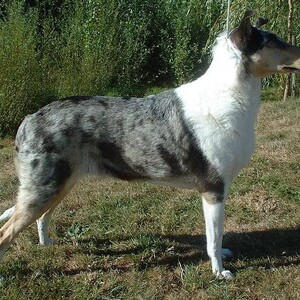
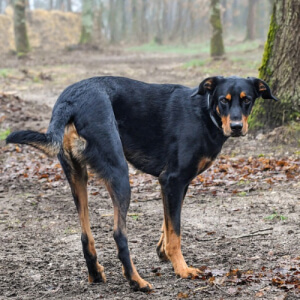
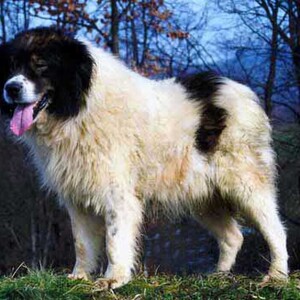
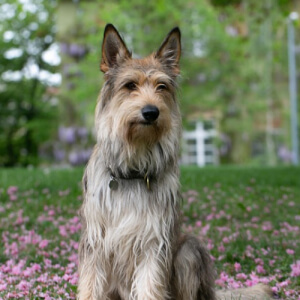
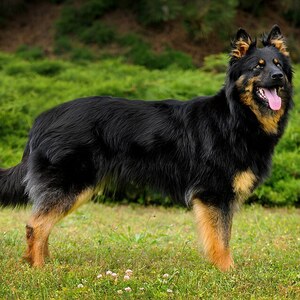
Chodský pes (Bohemian Shepherd) · Krosandra / Wikimedia Commons, CC BY-SA 3.0. Cropped and resized.
The Chodský pes, also called the Bohemian Shepherd, is a medium-sized Czech herding dog, black with tan markings and a long coat. Its ancestors helped the Chods guard the border of Bohemia as far back as the Middle Ages. It is intelligent, devoted to its family and easy to train with gentle methods.
Quick facts
| Common name | Chodský pes (Bohemian Shepherd) |
| Scientific name | Canis lupus familiaris |
| Country of origin | Czech Republic (Chodsko region) |
| Official recognition | FCI, provisionally (group 1, standard no. 364, published on 20 February 2019); AKC, in the Foundation Stock Service since April 2019 |
| Lifespan | 12–15 years |
| Size (males) | 52–55 cm at the withers; 19–27 kg |
| Size (females) | 49–52 cm at the withers; 17–24 kg |
| Coat type | Long (5–12 cm), glossy, straight or slightly wavy, with an abundant undercoat |
| Common colours | Black or steel black with bright tan markings |
| Energy level | Moderate to high |
| Suited to an apartment? | Yes, if it gets exercise and daily activities |
| Temperament | Intelligent, devoted, balanced, alert |
| Tendency to aggression | Low |
| Good with children | Very good; it adores the family's children |
| Good with other animals | Good, especially if raised with them |
| Genetic predispositions | The club monitors hip and elbow dysplasia, degenerative myelopathy and epilepsy |
- Primary category:Dog breeds
- Explore this animal's categories:
History and origin
The breed comes from the Chodsko region in south-western Bohemia, around the town of Domažlice. The Chods were people brought in by the kings of Bohemia to guard the border with Bavaria. They were accompanied by very loyal herding dogs.
In 1325, King John of Luxembourg recognised the Chods' right to keep large dogs, something ordinary peasants were not allowed to do. After the Second World War the breed was almost forgotten. In 1984, Vilém Kurz and Jan Findejs began to rebuild it.
How the breed developed
- 13th century – King Ottokar II brings in the Chods to guard the border with Bavaria.
- 1325 – King John of Luxembourg recognises the Chods' right to keep large dogs.
- 1864 – J. A. Gabriel writes that the Chods were nicknamed “dogheads”, after their banner bearing the silhouette of a herding dog.
- 1984 – Vilém Kurz and Jan Findejs begin rebuilding the breed.
- 1985 – The first litter is born according to the approved standard.
- 2019 – The FCI provisionally recognises the breed, and the AKC admits it to the Foundation Stock Service.
Breed rating
| Feature | Stars |
|---|---|
| Training and intelligence | ★★★★☆ |
| Easy to train | ★★★★☆ |
| Intelligence | ★★★★☆ |
| Independence | ★★★☆☆ |
| Stubbornness | ★★☆☆☆ |
| Behaviour and temperament | ★★★★☆ |
| Affectionate with family | ★★★★☆ |
| Friendly with children | ★★★★☆ |
| Good with other dogs | ★★★★☆ |
| Good with cats and other animals | ★★★★☆ |
| Loyalty | ★★★★★ |
| Tendency to be aggressive | ★☆☆☆☆ |
| Tendency to bark | ★★★★☆ |
| Needs and care | ★★★☆☆ |
| Shedding | ★★★☆☆ |
| Needs frequent grooming | ★★☆☆☆ |
| Activity and lifestyle | ★★★★☆ |
| Energy level | ★★★★☆ |
| Daily exercise needs | ★★★★☆ |
| Suited to apartment life | ★★★★☆ |
| Health and longevity | ★★★★☆ |
| Life expectancy | ★★★★☆ |
| Predisposition to genetic diseases | ★★☆☆☆ |
| Working abilities and uses | ★★★★☆ |
| Good sheepdog and guard dog | ★★★★☆ |
| Good companion dog | ★★★★★ |
Indicative rating: 5 stars means the highest level. It is based on the ratings the American Kennel Club gives the breed and on the FCI standard.
Physical characteristics
It is a medium-sized, compact and harmonious herding dog with a long, dense coat. It looks a little like a smaller, long-haired German Shepherd.
General appearance
The short, erect, triangular ears are set high and close together, with tufts of long hair on the edges. The almond-shaped brown eyes have a lively but pleasant expression. The bushy tail reaches the hock and is not docked.
| Feature | Chodsky Pes |
|---|---|
| Size | Medium |
| Height at the withers | males: 52–55 cm; females: 49–52 cm |
| Weight | males: 19–27 kg; females: 17–24 kg |
| Coat | 5–12 cm long, glossy, with an abundant undercoat |
| Ears | Short, erect, with tufts of hair |
| Tail | Bushy, reaching the hock |
The only accepted colour is black or steel black with bright tan markings: in the ears, above the eyes, on the cheeks, on the sides of the muzzle, on the chest, on the legs and under the tail. The brighter the markings, the better.
Training and socialisation
It is intelligent, has an excellent memory and wants to please its owner. The AKC says it trains easily, but is sensitive: harsh methods break its bond with people and make it nervous.
Training should be based on play, rewards and praise, applied consistently.
Tips for effective training
- Be calm. A gentle tone helps it learn.
- Use play and rewards. Monotony and endless repetition bore it.
- Give it a job. It loves agility, search work, tracking or canine freestyle.
- Work on barking. It is an alert watchdog and can be noisy.
Activity needs and lifestyle
It has medium to high energy and needs exercise, training or play every day. Without them, energy builds up and excessive barking or chewing may appear.
| Activity | How often | Why it matters |
|---|---|---|
| Active walks | daily | Burns off energy |
| Training or brain games | daily | It is very intelligent |
| Dog sports (agility, tracking, search work) | weekly | Gives it a “job” |
Tips for a balanced life
- It copes well with cold, but suffers in summer heat: it needs a cool place.
- The AKC recommends that it live indoors, close to the family.
- It switches easily from activity to rest.
Care and health
Coat and skin care
The long coat should be brushed once or twice a week. The undercoat sheds more during moulting periods. It is an easy dog to groom.
Common health problems
The AKC says nothing suggests that the breed suffers to a great extent from any particular disease. Even so, the club's breeding programme aims to reduce a few conditions:
| Condition | Description | Common symptoms |
|---|---|---|
| Hip dysplasia | The hip joint forms incorrectly and, over time, arthritis develops | Limping, difficulty getting up or jumping, hip pain |
| Elbow dysplasia | The elbow joint develops incorrectly and arthritis appears | Limping on the front legs, especially after exercise |
| Degenerative myelopathy | A disease of the spinal cord that appears in old age | Gradual weakness of the hind legs, unsteady gait |
| Epilepsy | Repeated neurological seizures | Trembling, convulsions, loss of consciousness |
Other care
- Trim the nails when they start to touch the floor.
- Check its ears and teeth regularly.
- In summer, protect it from heat and exertion during the hottest hours.
Diet and nutrition
The AKC recommends a good-quality food suited to an athletic dog, which also helps give it a glossy coat.
Tips for a healthy diet
The table gives a starting estimate, calculated with the formula from the Merck Veterinary Manual. The first two calorie columns show the calories per day for a healthy adult dog. The last column shows what this means in dry food with 3,500–4,000 kcal per kilogram.
| Dog's weight | Calories per day (neutered) | Calories per day (not neutered) | Dry food per day (approximate) |
|---|---|---|---|
| 17 kg | 940 kcal | 1,050 kcal | 240–300 g |
| 22 kg | 1,140 kcal | 1,280 kcal | 280–370 g |
| 27 kg | 1,330 kcal | 1,490 kcal | 330–430 g |
- Give it its food in two meals a day.
- Training treats count towards the daily portion.
- A dog is at the right weight when you can feel its ribs without pressing hard.
Foods to avoid
Some human foods are dangerous for dogs: chocolate, coffee, grapes and raisins, onions, garlic, xylitol (a sweetener used in chewing gum), macadamia nuts and alcohol.
Reproduction and development
Physical and emotional maturity
In dogs, sexual maturity usually comes between 6 and 12 months. Most breeds become adults at around 13–15 months.
Mating and pregnancy
Pregnancy lasts about 63 days, counted from ovulation. Mating a female on her first heat is not recommended. The FCI standard requires that only healthy dogs of typical breed appearance are used for breeding.
Caring for the puppies
In dogs, a litter has 5–6 puppies on average, and the number rises with the size of the breed. Socialisation starts in the first weeks: gentle handling, everyday noises and new people.
Interesting facts
- A king allowed it to exist. In 1325 the King of Bohemia gave the Chods the right to keep such dogs.
- “Dogheads”. The Chods were nicknamed this after their banner, which showed a herding dog.
- It appears in a novel. The writer Alois Jirásek wrote a novel about the Chods, “Psohlavci” (“The Dogheads”).
- It has ear tufts. The long hair on the edges of the ears forms little tufts.
- It does many sports. It does well at agility, canine freestyle, search and rescue, tracking and even dock diving.
In popular culture
“Psohlavci”, the novel by Alois Jirásek
The Czech writer Alois Jirásek wrote the novel “Psohlavci” (“The Dogheads”), about the Chods and their loyal dogs. The book was illustrated by the painter Mikoláš Aleš. The nickname comes from the Chods' banner, which bore the silhouette of a herding dog.
Frequently asked questions
What is a Chodský pes?
A Czech herding dog, also called the Bohemian Shepherd, black with tan markings and a long coat.
How big does it get?
Males measure 52–55 cm and weigh 19–27 kg; females measure 49–52 cm and weigh 17–24 kg.
Is it a good family dog?
Yes. It is devoted to the family, loves children and is easy to train with gentle methods.
How long does it live?
Its life expectancy is 12–15 years.
Does it cope with heat?
Not really. It copes well with cold, but in summer it needs a cool place.