American Water SpanielCharacteristics, history, training and care
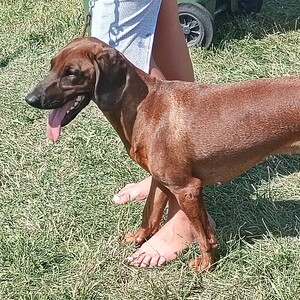
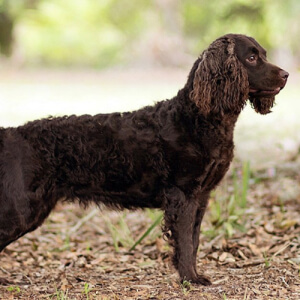
The American Water Spaniel is a medium-sized hunting dog with a curly brown or chocolate coat. It was created in the US state of Wisconsin to retrieve ducks from the water and fit into a small boat. The FCI standard describes it as intelligent, friendly and eager to please its owner.
Quick facts
| Common name | American Water Spaniel |
| Scientific name | Canis lupus familiaris |
| Country of origin | USA (Wisconsin) |
| Official recognition | FCI, definitively since 2 November 1979 (group 8, water dogs; standard no. 301) |
| Lifespan | 10–14 years (AKC) |
| Size (males) | 38–46 cm at the withers; 14–20 kg |
| Size (females) | 38–46 cm at the withers; 11–18 kg |
| Coat type | Double, wavy or curly, slightly oily |
| Common colours | Liver, brown or dark chocolate |
| Energy level | High |
| Suited to an apartment? | Yes, with plenty of exercise |
| Temperament | Intelligent, friendly, eager to please |
| Tendency to aggression | Low; some dogs guard their food |
| Good with children | Good |
| Good with other animals | Good |
| Genetic predispositions | Cataract, progressive retinal atrophy, hip dysplasia |
- Primary category:Dog breeds
- Explore this animal's categories:
History and origin
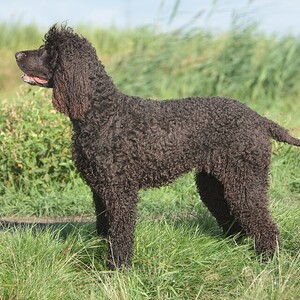
The breed appeared in the early 19th century in the valleys of the Fox and Wolf rivers in Wisconsin. Hunters wanted a dog that could work on land and in cold water, yet was small enough for a narrow boat. Wikipedia says Irish and English water spaniels contributed to its creation (see the Irish Water Spaniel).
The dogs were first called American Brown Spaniels and weighed around 18 kg. When ducks became scarce, the breed almost disappeared. Dr Fred J. Pfeifer of New London saved it: he founded the Wolf River kennel, the breed club and the first standard.
The United Kennel Club recognised the breed in 1920, and the American Kennel Club in 1940. Since 1985 it has been the official state dog of Wisconsin. Wikipedia says it was probably the main breed from which the Boykin Spaniel was created.
How the breed developed
- Early 19th century – The breed appears in Wisconsin.
- 1920 – Recognised by the United Kennel Club.
- 1940 – Recognised by the American Kennel Club.
- 2 November 1979 – Definitive FCI recognition.
- 1985 – It becomes the state dog of Wisconsin.
Breed rating
| Feature | Stars |
|---|---|
| Training and intelligence | ★★★★☆ |
| Easy to train | ★★★★★ |
| Intelligence | ★★★★☆ |
| Independence | ★★★☆☆ |
| Stubbornness | ★★★☆☆ |
| Behaviour and temperament | ★★★☆☆ |
| Affectionate with family | ★★★☆☆ |
| Friendly with children | ★★★☆☆ |
| Good with other dogs | ★★★☆☆ |
| Good with cats and other animals | ★★★☆☆ |
| Loyalty | ★★★★☆ |
| Tendency to be aggressive | ★★☆☆☆ |
| Tendency to bark | ★★★☆☆ |
| Needs and care | ★★☆☆☆ |
| Shedding | ★☆☆☆☆ |
| Needs frequent grooming | ★★★☆☆ |
| Activity and lifestyle | ★★★★☆ |
| Energy level | ★★★★☆ |
| Daily exercise needs | ★★★★☆ |
| Suited to apartment life | ★★★☆☆ |
| Health and longevity | ★★★☆☆ |
| Life expectancy | ★★★☆☆ |
| Predisposition to genetic diseases | ★★★☆☆ |
| Working abilities and uses | ★★★★☆ |
| Good hunting and retrieving dog | ★★★★☆ |
| Good companion dog | ★★★★☆ |
Indicative rating: 5 stars means the highest level. The rating is based on the breed's AKC profile (trainability 5 out of 5, energy 3 out of 5, shedding 1 out of 5), on the FCI standard and on Wikipedia.
Physical characteristics
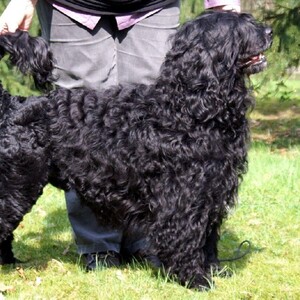
The FCI standard describes it as an active, muscular, medium-sized dog with a wavy or curly coat. It is solid, with bones strong enough for its muscles, but without looking heavy. The head is broad, with long, wide ears.
General appearance
The coat has two layers. The harsh outer layer keeps out water and protects it from brambles, while the inner one keeps it warm. Wikipedia says the coat is slightly oily and has a distinctive doggy smell. The eye colour should match the coat.
| Feature | American Water Spaniel |
|---|---|
| Size | Medium |
| Height at the withers | 38–46 cm, for both sexes |
| Weight | males: 14–20 kg; females: 11–18 kg |
| Coat | Double, wavy or curly |
| Colour | Liver, brown or chocolate |
| Ears | Long and wide |
The colour is a solid liver, brown or dark chocolate. A little white on the toes and chest is accepted.
Training and socialisation
The AKC profile gives it 5 stars out of 5 for ease of training. Wikipedia says it learns well, especially when lessons are varied. However, it can be stubborn and is slow to mature.
It usually bonds with one person in the family and likes to be the centre of attention. Some dogs guard their food, so it is worth getting it used to people near its bowl from an early age.
Tips for effective training
- Vary the exercises. It gets bored with repetition.
- Be patient. It stays a puppy at heart for a long time.
- Get it used to people near its bowl. Some dogs guard their food.
- Let it swim. That is what it was bred for.
Activity needs and lifestyle
It is a hunter that works on land and in water, with great stamina. Wikipedia says it does well at agility and flyball. It needs long walks every day and, as often as possible, play in the water or retrieving.
| Activity | How often | Why it matters |
|---|---|---|
| Long walks | daily | Fitness |
| Swimming and retrieving | several times a week | Satisfies its water-dog instinct |
| Agility or flyball | weekly | Keeps its mind busy |
Tips for a balanced life
- Suited to active families.
- Ideal near a lake or river.
- Dry its ears well after swimming.
Care and health
Coat and skin care
The curly coat should be brushed once or twice a week to prevent knots. The AKC profile gives it 1 star out of 5 for shedding. It can be trimmed a little for a tidy look, but this is not essential.
Common health problems
Wikipedia says that, having long been bred in packs, the breed has good genetic diversity. Hip dysplasia affects about 8.3% of dogs, according to Orthopedic Foundation for Animals data from 1974–1999. The best-known problems affect the eyes.
| Condition | Description | Common symptoms |
|---|---|---|
| Cataract | The lens of the eye becomes cloudy; in this breed it often appears before one year of age | A bluish or white spot in the eye, bumping into objects |
| Progressive retinal atrophy | The retina gradually deteriorates and the dog goes blind | Poor sight at night, then also by day |
| Hip dysplasia | The hip joint forms incorrectly and, over time, arthritis develops | Limping, difficulty getting up or jumping, hip pain |
Other care
- Ask to see the parents' eye tests.
- Clean its ears after swimming.
- Go for yearly check-ups.
Diet and nutrition
An active hunting dog needs good-quality food suited to its age and activity.
Tips for a healthy diet
The table gives a starting estimate, calculated with the formula from the Merck Veterinary Manual. The first two calorie columns show the calories per day for a healthy adult dog. The last column shows what this means in dry food with 3,500–4,000 kcal per kilogram.
| Dog's weight | Calories per day (neutered) | Calories per day (not neutered) | Dry food per day (approximate) |
|---|---|---|---|
| 12 kg | 720 kcal | 810 kcal | 180–230 g |
| 16 kg | 900 kcal | 1,010 kcal | 220–290 g |
| 20 kg | 1,060 kcal | 1,190 kcal | 260–340 g |
- Split the food into two meals a day.
- On days of hunting or long swims, it needs more food.
- A dog is at the right weight when you can feel its ribs under the coat without pressing hard.
Foods to avoid
Some human foods are dangerous for dogs: chocolate, coffee, grapes and raisins, onions, garlic, xylitol (a sweetener used in chewing gum), macadamia nuts and alcohol.
Reproduction and development
Physical and emotional maturity
In dogs, sexual maturity usually comes between 6 and 12 months. Most breeds become adults at around 13–15 months.
Mating and pregnancy
Pregnancy lasts about 63 days, counted from ovulation. Mating a female on her first heat is not recommended. The FCI standard requires that only healthy dogs of typical breed appearance are used for breeding.
Caring for the puppies
In dogs, a litter has 5–6 puppies on average, and the number rises with the size of the breed. Socialisation starts in the first weeks: gentle handling, everyday noises and new people.
Interesting facts
- The state dog of Wisconsin. Since 1985.
- Made for the boat. Small enough to fit in a narrow boat.
- Saved by a doctor. Fred J. Pfeifer sometimes had 132 dogs in his kennel.
- A rare breed. In 1998 there were estimated to be only about 3,000 dogs.
- The first registered dog. Curly Pfeifer, with the United Kennel Club.
Frequently asked questions
Does it like water?
Yes; it was bred to retrieve ducks from cold water.
Does it shed a lot?
Little; the curly coat is brushed once or twice a week.
How does it differ from the Irish Water Spaniel?
The Irish breed is much larger, at 53–61 cm at the withers.
Is it easy to train?
Yes, if the lessons are varied; it can sometimes be stubborn.