Korean JindoCharacteristics, history, training and care
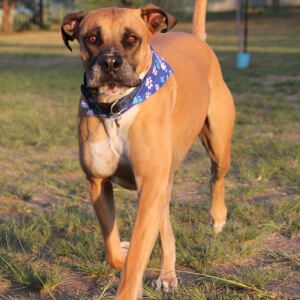
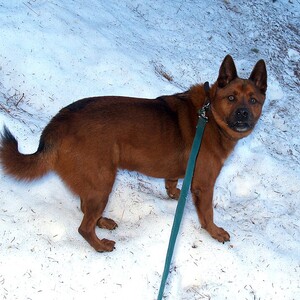
Korean Jindo. · Mitch Barrie from Reno, NV, USA / Wikimedia Commons, CC BY-SA 2.0. Cropped and resized.
The Korean Jindo is a medium-sized spitz-type dog with erect ears and a curled or sickle tail, from Jindo Island in south-western Korea. It is used for hunting and guarding and is known for its loyalty to its owner. In South Korea it is protected as a natural monument.
Quick facts
| Common name | Korean Jindo (Korea Jindo Dog, Jindo-gae) |
| Scientific name | Canis lupus familiaris |
| Country of origin | South Korea (Jindo Island) |
| Official recognition | FCI, definitively since 6 July 2005 (group 5, Asian spitz; standard no. 334); AKC, in the Foundation Stock Service since 2008 |
| Lifespan | 14–15 years, according to the AKC |
| Size (males) | 50–55 cm at the withers (ideally 53–54 cm); 18–23 kg |
| Size (females) | 45–50 cm at the withers (ideally 48–49 cm); 15–19 kg |
| Coat type | Double: soft, dense undercoat, harsh topcoat |
| Common colours | Red fawn, white, black, black and tan, wolf grey, brindle |
| Energy level | High |
| Suited to an apartment? | No |
| Temperament | Loyal, independent, brave, alert, calm |
| Tendency to aggression | Low without reason; territorial and protective |
| Good with children | Average |
| Good with other animals | Poor with other dogs, according to the AKC; strong prey drive |
| Genetic predispositions | Hypothyroidism, discoid lupus |
- Primary category:Dog breeds
- Explore this animal's categories:
History and origin
The FCI standard says there are no written records of the breed's origin, but many experts agree that it has lived for several thousand years on Jindo Island, at the south-western tip of the Korean Peninsula. The most widely accepted theory is that it is a native Korean dog, kept pure on the island because transport used to be difficult.
Wikipedia says that in 1962 the South Korean government declared the Jindo the country's 53rd natural monument. Because of this status, only dogs born on Jindo Island can be officially registered as Jindos by the South Korean government, after an inspection.
How the breed developed
- For thousands of years – The dogs live on Jindo Island.
- 1962 – South Korea declares the Jindo a natural monument.
- 1988 – Jindo dogs parade at the opening of the Seoul Olympic Games.
- 6 July 2005 – The FCI recognises the breed.
Breed rating
| Feature | Stars |
|---|---|
| Training and intelligence | ★★★☆☆ |
| Easy to train | ★★★☆☆ |
| Intelligence | ★★★★★ |
| Independence | ★★★★★ |
| Stubbornness | ★★★★☆ |
| Behaviour and temperament | ★★★★☆ |
| Affectionate with family | ★★★☆☆ |
| Friendly with children | ★★★☆☆ |
| Good with other dogs | ★☆☆☆☆ |
| Good with cats and other animals | ★☆☆☆☆ |
| Loyalty | ★★★★★ |
| Tendency to be aggressive | ★★★☆☆ |
| Tendency to bark | ★★★☆☆ |
| Needs and care | ★★★★☆ |
| Shedding | ★★★☆☆ |
| Needs frequent grooming | ★★★☆☆ |
| Activity and lifestyle | ★★★★☆ |
| Energy level | ★★★★☆ |
| Daily exercise needs | ★★★★☆ |
| Suited to apartment life | ★☆☆☆☆ |
| Health and longevity | ★★★☆☆ |
| Life expectancy | ★★★★★ |
| Predisposition to genetic diseases | ★★☆☆☆ |
| Working abilities and uses | ★★★★☆ |
| Good hunting dog | ★★★★☆ |
| Good companion dog | ★★★☆☆ |
Indicative rating: 5 stars means the highest level. It is based on the ratings the American Kennel Club gives the breed and on the FCI standard.
Physical characteristics
The standard describes it as a well-proportioned, medium-sized dog used for hunting and guarding. With its erect ears and curled or sickle tail, it should show agility, strength, alertness and dignity.
General appearance
The coat is double: the undercoat is soft, dense and light in colour, while the topcoat is harsh and stands slightly off the body. The hair is shorter on the head, legs and ears and longer on the neck, withers, back, croup, tail and the back of the thighs.
| Feature | Korean Jindo |
|---|---|
| Size | Medium |
| Height at the withers | males: 50–55 cm; females: 45–50 cm |
| Weight | males: 18–23 kg; females: 15–19 kg |
| Coat | Double, harsh |
| Ears | Erect |
| Tail | Curled or sickle-shaped |
The accepted colours are red fawn, white, black, black and tan, wolf grey and brindle.
Training and socialisation
The AKC describes it as a very serious hunting dog, renowned for its loyalty to its owner and family. It is highly intelligent and independent, good at solving problems and thinks for itself. It has a calm, confident and thoughtful nature and is not fearful or aggressive without reason.
The AKC says it is a “one-person dog” and that its strong prey drive can make it dig under a fence or jump over it, however well trained it is.
Tips for effective training
- Provide a very good fence. It may jump or dig to escape.
- Socialise it as a puppy. It is reserved with strangers.
- Be consistent and patient. It is very independent.
- Be careful around other dogs. The AKC gives it a low score for getting on with other dogs.
Activity needs and lifestyle
The AKC says it is an energetic hunting and guard dog, but with impeccable manners in the house. It was bred to cover long distances, so it needs plenty of physical and mental exercise.
| Activity | How often | Why it matters |
|---|---|---|
| Long walks on the lead | daily | High energy |
| Games and tricks | daily | Mental stimulation |
| Time in a well-fenced yard | daily | It guards its territory |
Tips for a balanced life
- The fence must be high and set into the ground.
- It is not a dog for dog parks.
- It suits experienced owners.
Care and health
Coat and skin care
The AKC says it is a very clean dog. The double coat repels dirt and water, usually has no odour and should be brushed once a week with a slicker or pin brush. During moulting periods, it needs brushing more often.
Common health problems
The AKC says it is a healthy, long-lived breed that often lives 14 years or more. Few problems have been reported, but these are worth watching for:
| Condition | Description | Common symptoms |
|---|---|---|
| Hypothyroidism | The thyroid gland produces too few hormones | Tiredness, weight gain, thin coat |
| Discoid lupus | An autoimmune skin disease, mainly on the nose | Discoloured nose, crusts, sores |
Other care
- Check the skin on its nose.
- Trim the nails regularly.
- Go for regular check-ups.
Diet and nutrition
The AKC says the Jindo eats little and its lean look worries owners. However, it is very easy to overfeed.
Tips for a healthy diet
The table gives a starting estimate, calculated with the formula from the Merck Veterinary Manual. The first two calorie columns show the calories per day for a healthy adult dog. The last column shows what this means in dry food with 3,500–4,000 kcal per kilogram.
| Dog's weight | Calories per day (neutered) | Calories per day (not neutered) | Dry food per day (approximate) |
|---|---|---|---|
| 15 kg | 850 kcal | 960 kcal | 210–270 g |
| 19 kg | 1,020 kcal | 1,150 kcal | 260–330 g |
| 23 kg | 1,180 kcal | 1,320 kcal | 300–380 g |
- Split the food into two meals a day.
- Do not overfeed it just because it looks thin.
- A dog is at the right weight when you can feel its ribs under the coat without pressing hard.
Foods to avoid
Some human foods are dangerous for dogs: chocolate, coffee, grapes and raisins, onions, garlic, xylitol (a sweetener used in chewing gum), macadamia nuts and alcohol.
Reproduction and development
Physical and emotional maturity
In dogs, sexual maturity usually comes between 6 and 12 months. Most breeds become adults at around 13–15 months.
Mating and pregnancy
Pregnancy lasts about 63 days, counted from ovulation. Mating a female on her first heat is not recommended. The FCI standard requires that only healthy dogs of typical breed appearance are used for breeding.
Caring for the puppies
In dogs, a litter has 5–6 puppies on average, and the number rises with the size of the breed. Socialisation starts in the first weeks: gentle handling, everyday noises and new people.
Interesting facts
- Baekgu came home. Wikipedia says that in 1993 a Jindo bitch sold 300 km away made her own way back to her owner after 7 months.
- A natural monument. It is South Korea's 53rd natural monument.
- At the Olympic Games. Jindo dogs paraded at the opening of the 1988 Seoul Olympics.
- Very clean. The AKC says its coat usually has no odour.
- A one-person dog. It is very attached to a single person.
In popular culture
The story of Baekgu
Wikipedia says that in 1993 the bitch Baekgu was sold to an owner in Daejeon, about 300 km from Jindo Island. She ran away and returned to her former owner after seven months. The story became famous in South Korea and inspired cartoons and a TV documentary.
Frequently asked questions
Where does the name come from?
From Jindo Island, in south-western South Korea.
How big does it get?
Males measure 50–55 cm and weigh 18–23 kg; females measure 45–50 cm and weigh 15–19 kg.
Is it suited to beginners?
Usually not. It is independent, territorial and can easily run off.
How long does it live?
The AKC gives 14–15 years.