PekingeseCharacteristics, history, training and care
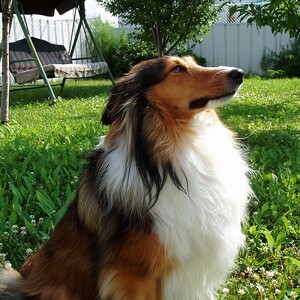
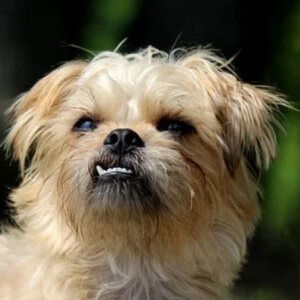
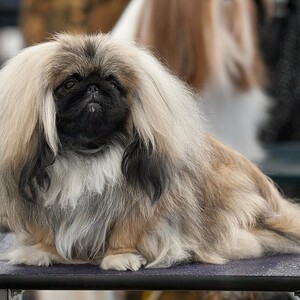
Pekingese. · SheltieBoy / Wikimedia Commons, CC BY 2.0. Cropped and resized.
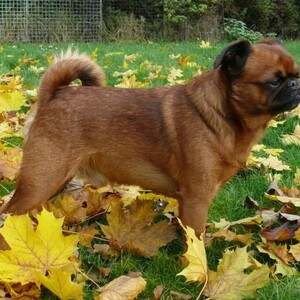
The Pekingese is a small companion dog from China with a lion-like look: a short, thickset body, a large, broad head and a rich mane around the neck. Wikipedia says it was the favourite of the Chinese imperial court. The standard describes it as fearless, loyal and aloof, neither timid nor aggressive.
Quick facts
| Common name | Pekingese |
| Scientific name | Canis lupus familiaris |
| Country of origin | China |
| Official recognition | FCI, definitively since 3 November 1966 (group 9, Japan Chin and Pekingese; standard no. 207); also recognised by the AKC |
| Lifespan | 12–14 years, according to the AKC |
| Size (males) | Ideally under 5 kg; 15–23 cm at the withers according to the AKC |
| Size (females) | Ideally under 5.4 kg; 15–23 cm at the withers according to the AKC |
| Coat type | Moderately long, straight, with a mane and a thick undercoat |
| Common colours | All colours; most often shades of red and gold |
| Energy level | Low to moderate |
| Suited to an apartment? | Yes |
| Temperament | Fearless, loyal, aloof, affectionate with the family |
| Tendency to aggression | Low |
| Good with children | Average |
| Good with other animals | Average |
| Genetic predispositions | Breathing problems (short muzzle), eye problems, IVDD |
- Primary category:Dog breeds
- Explore this animal's categories:
History and origin
Wikipedia says the breed arose in China from several types of small dogs kept by aristocratic families, but unlike the others it could be kept only by members of the imperial palace. The name comes from the city of Beijing, and in Chinese it is called the “lion dog”.
In 1860, during the Second Opium War, the Old Summer Palace in Beijing was looted by British and French troops. The British captain John Hart Dunne found a Pekingese there and took it to England, the first to survive the journey. He gave it to Queen Victoria, who named it “Looty”.
How the breed developed
- Centuries – The dog of the Chinese imperial palaces.
- 1860 – The first Pekingese reaches England alive and is given to Queen Victoria.
- 3 November 1966 – The FCI recognises the breed.
Breed rating
| Feature | Stars |
|---|---|
| Training and intelligence | ★★☆☆☆ |
| Easy to train | ★★☆☆☆ |
| Intelligence | ★★★★☆ |
| Independence | ★★★★★ |
| Stubbornness | ★★★★★ |
| Behaviour and temperament | ★★★★☆ |
| Affectionate with family | ★★★★★ |
| Friendly with children | ★★★☆☆ |
| Good with other dogs | ★★★☆☆ |
| Good with cats and other animals | ★★★☆☆ |
| Loyalty | ★★★★★ |
| Tendency to be aggressive | ★☆☆☆☆ |
| Tendency to bark | ★☆☆☆☆ |
| Needs and care | ★★★☆☆ |
| Shedding | ★★★★☆ |
| Needs frequent grooming | ★★★☆☆ |
| Activity and lifestyle | ★★☆☆☆ |
| Energy level | ★★☆☆☆ |
| Daily exercise needs | ★★★★★ |
| Suited to apartment life | ★★★★★ |
| Health and longevity | ★★★★☆ |
| Life expectancy | ★★★☆☆ |
| Predisposition to genetic diseases | ★★★★☆ |
| Working abilities and uses | ★★★☆☆ |
| Good guard dog | ★★★☆☆ |
| Good companion dog | ★★★★★ |
Indicative rating: 5 stars means the highest level. It is based on the ratings the American Kennel Club gives the breed and on the FCI standard.
Physical characteristics
The standard describes it as having a lion-like appearance, with an alert, intelligent expression: small, well balanced, moderately thickset, with dignity and quality. It should look small but be surprisingly heavy when picked up.
General appearance
The head is fairly large, wider than it is deep. The AKC says the coat is longest on the neck and shoulders, forming the famous “lion's mane”, while the large head with its short muzzle is rectangular, “like an envelope”, with large, dark, lustrous eyes.
| Feature | Pekingese |
|---|---|
| Size | Very small |
| Weight | Ideally under 5 kg for males and 5.4 kg for females |
| Height at the withers | 15–23 cm (AKC) |
| Coat | Long, with a mane |
| Head | Large, broad, with a short muzzle |
| Body | Short, thickset, heavy |
The standard says that all colours and markings are equally valued. The AKC says the coat comes in various shades of red, from golden red to darker shades.
Training and socialisation
The standard describes it as fearless, loyal and aloof, neither timid nor aggressive. The AKC says that, after centuries in palaces, it can be as calmly independent as the emperors who owned it; fans of the breed say it has “a mind of its own”.
It is affectionate and intelligent and bonds very closely with its people. As it is always alert, it is also a good watchdog.
Tips for effective training
- Be patient. It has “a mind of its own”.
- Use rewards. It learns at its own pace.
- Keep it out of the heat. Its short muzzle makes breathing harder.
- Take care of its eyes. It has no long muzzle to protect them.
Activity needs and lifestyle
The AKC says the Pekingese is mostly calm and has modest exercise needs, but it enjoys taking part in dog sports at its own pace. Its purpose in life is to amuse and comfort its people.
| Activity | How often | Why it matters |
|---|---|---|
| Short walks | daily | Light exercise |
| Indoor play | daily | Keeps it active |
| Cool conditions | in summer | It copes badly with heat |
Tips for a balanced life
- It suits an apartment very well.
- In summer, walk it only in the morning and evening.
- Keep its eyes away from sharp objects.
Care and health
Coat and skin care
The AKC says the thick double coat needs a fair amount of care: at least an hour of brushing a week to remove dead hair and prevent mats, and a bath from time to time. It sheds seasonally.
Common health problems
The AKC says that, as in all short-muzzled breeds, easy breathing can be a major issue; you should choose a Pekingese with wide-open nostrils. Because it has no long muzzle to protect its eyes, they must be shielded from knocks.
| Condition | Description | Common symptoms |
|---|---|---|
| Brachycephalic syndrome | The airways are narrowed by the short muzzle | Noisy breathing, tires quickly, copes poorly with heat |
| Eye problems | The large, exposed eyes are easily injured | Red eyes, tearing, corneal ulcer |
| Intervertebral disc disease | A disc between the vertebrae ruptures and presses on the spinal cord | Back or neck pain, unsteady walking on the hind legs; in severe cases, paralysis |
Other care
- Clean the facial folds and eyes daily.
- Keep it out of the heat.
- Trim the nails regularly.
Diet and nutrition
The AKC says some dogs gain weight easily, so calories and weight should be watched.
Tips for a healthy diet
The table gives a starting estimate, calculated with the formula from the Merck Veterinary Manual. The first two calorie columns show the calories per day for a healthy adult dog. The last column shows what this means in dry food with 3,500–4,000 kcal per kilogram.
| Dog's weight | Calories per day (neutered) | Calories per day (not neutered) | Dry food per day (approximate) |
|---|---|---|---|
| 4 kg | 320 kcal | 360 kcal | 80–103 g |
| 4.5 kg | 350 kcal | 390 kcal | 88–111 g |
| 5.4 kg | 400 kcal | 450 kcal | 100–130 g |
- Give it its food in two small meals a day.
- Treats count towards the daily portion.
- Choose small kibble suited to small breeds.
Foods to avoid
Some human foods are dangerous for dogs: chocolate, coffee, grapes and raisins, onions, garlic, xylitol (a sweetener used in chewing gum), macadamia nuts and alcohol.
Reproduction and development
Physical and emotional maturity
In dogs, sexual maturity usually comes between 6 and 12 months. Small breeds become adults faster than large ones, usually at around one year.
Mating and pregnancy
Pregnancy lasts about 63 days, counted from ovulation. Mating a female on her first heat is not recommended. The FCI standard requires that only healthy dogs of typical breed appearance are used for breeding.
Caring for the puppies
In small breeds, a litter has 3–4 puppies on average. The puppies are very small and fragile in the first weeks, so they must be kept warm and handled with care. Socialisation starts early: gentle handling, everyday noises and new people.
Interesting facts
- The lion dog. In Chinese it is called the “lion dog”.
- Looty, the Queen's dog. The first Pekingese in England was given to Queen Victoria.
- Heavy for its size. The standard says it is surprisingly heavy when picked up.
- Only for the palace. Only members of the imperial palace could keep it.
- It barks little. The AKC gives it a low score for barking.
In popular culture
Looty and Queen Victoria
Wikipedia says that in 1860 Captain John Hart Dunne brought a Pekingese from the Summer Palace in Beijing, the first to survive the journey to England. He gave it to Queen Victoria, who named it “Looty”.
Frequently asked questions
Where does the name come from?
From the city of Beijing (Peking), in China.
How much does it weigh?
Ideally under 5 kg for males and under 5.4 kg for females.
Does it need a lot of exercise?
No. The AKC says its exercise needs are modest.
How long does it live?
The AKC gives 12–14 years.