LemurInteresting facts and information
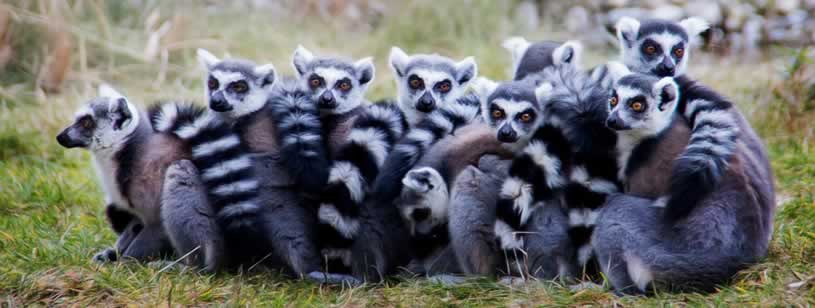
Lemurs are primates whose natural range is centred on Madagascar. They belong to several families and vary greatly in size, diet and daily activity. Habitat loss and hunting threaten many species.
Madagascar has been separated from other land masses for about 88 million years, which allowed lemurs to evolve into more than 100 species adapted to habitats from dense rainforests to dry regions. Sadly, most lemurs are threatened by habitat loss and illegal hunting and are among the most endangered mammals in the world.
Quick facts
| Common name | Lemur |
| Scientific name | Lemuriformes (several families) |
| Typical lifespan | About 15-20 years in the wild for larger species, up to about 30 years in captivity |
| Maximum speed | Varies by species; sifakas can leap about 10 m between trees |
| Height | About 25-45 cm (excluding tail) for medium-sized species |
| Length | About 70-110 cm (including tail) for medium-sized species |
| Weight | About 0.03 - 9 kg, depending on species |
| Diet type | Many are omnivores (fruit, leaves, insects) |
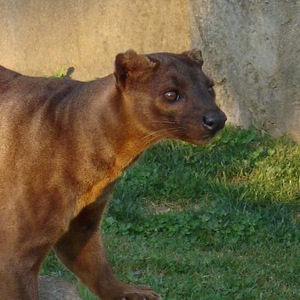
| Main predators | Fossa (Cryptoprocta ferox), snakes, birds of prey, humans |
| Conservation status | Around 95% of species are threatened; many are Critically Endangered |
| Geographic distribution | Madagascar; two introduced species on the Comoros Islands |
| Social behaviour | Most live in groups, often led by females |
| Special adaptations | Grasping hands, good night vision in nocturnal species, keen sense of smell |
Interesting facts
- An ancient lineage - The ancestors of lemurs split from other primates more than 50 million years ago. Scientists think they reached Madagascar by drifting across the sea on rafts of floating vegetation.
- Their tails can be longer than their bodies - In the ring-tailed lemur (Lemur catta), the tail is longer than the head and body together. Unlike some monkeys' tails, it cannot grip; it is used for balance and signalling.
- They communicate with scent - Lemurs have scent glands on their wrists and elsewhere that they use to mark territory and show their social status. Male ring-tailed lemurs hold "stink fights", wafting their scented tails at rivals.
- Sifakas "dance" - On the ground, sifakas (Propithecus) cannot walk comfortably on all fours, so they bound sideways on their hind legs, which looks like a dance.
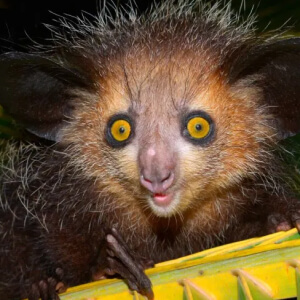
- A finger for finding food - The aye-aye (Daubentonia madagascariensis) taps on tree bark with its very long, thin middle finger and uses it to pull out grubs, a behaviour unique among primates.
- Females are in charge - In most lemur species, females are dominant over males and get first access to food.
- Some lemurs hibernate - Dwarf lemurs, such as the fat-tailed dwarf lemur (Cheirogaleus medius), are among the few primates known to hibernate, living for months on fat stored in their tails.
Records and remarkable features
- Lemurs are primates whose natural range is centred on Madagascar. They belong to several families and vary greatly in size, diet and daily activity. Habitat loss and hunting threaten many species.
Characteristics
Lemurs are small to medium-sized primates with large eyes, long tails and, in many species, a pointed, fox-like snout. Their appearance varies between species, but they share features that help them live in the forests of Madagascar.
Appearance
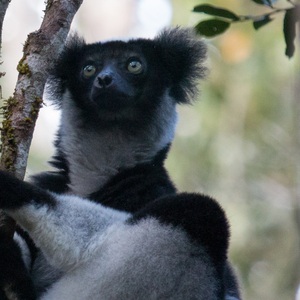
- Very different sizes - The smallest, such as Madame Berthe's mouse lemur (Microcebus berthae), have a body only about 9-10 cm long, while the indri (Indri indri) can be about 70 cm long without its short tail.
- Soft fur in many colours - Grey, brown, black, white, orange or reddish, depending on the species and habitat.
- Long, fluffy tails - Most lemurs have long tails that help them balance, but unlike some monkeys, their tails cannot grip branches.
- Large eyes - Nocturnal lemurs have huge eyes with a reflective layer (tapetum lucidum) that improves their night vision.
Special adaptations
- Grasping hands and a grooming claw - Lemurs have long fingers for gripping branches and a special "toilet claw" on the second toe of each foot for grooming.
- Acrobatic leaps - Sifakas bound on two legs on the ground and can leap up to about 10 metres between trees.
- A keen sense of smell - Lemurs rely much more than monkeys on smell to communicate and mark territory.
Habits and behaviour
Lemur behaviour varies greatly between species and habitats. Although they are sometimes called "primitive" primates, many have complex social lives and interesting ways of communicating.
Social behaviour
- Female-led groups - In many species, females dominate males and have priority access to food and resting places.
- Small or large groups - Some lemurs, such as the aye-aye, live mostly alone, while ring-tailed lemurs live in groups of up to about 30.
- Grooming - Lemurs spend a lot of time grooming each other with their tooth combs (special lower front teeth), which strengthens bonds within the group.
Territory and communication
- Scent marking - Lemurs use secretions from glands on their wrists, chest and genital area to mark their territory.
- Many calls - Lemurs use sounds to warn of danger, keep in touch with the group or attract mates. The indri is famous for its loud, haunting songs, which can be heard about 2-3 km away.
- Stink fights - Male ring-tailed lemurs rub their tails with scent and wave them at rivals to show dominance.
Defence techniques
- Alarm calls - Lemurs give different alarm calls for danger from the air (birds of prey) and on the ground (such as the fossa).
- Camouflage - Many species have brown or grey fur that helps them hide among leaves.
- Fast leaping - Sifakas and other tree-dwelling lemurs escape predators by leaping quickly through the branches.
Habitat and geographic distribution
Lemurs are found naturally only in Madagascar, apart from two species introduced to the nearby Comoros Islands. They live in many kinds of habitat, from rainforests to dry, spiny forests.
| Region | Situation |
|---|---|
| Madagascar - eastern rainforests | The greatest variety of lemurs; many species threatened |
| Madagascar - western dry forests | Heavy deforestation; declining populations |
| Madagascar - southern spiny forest | A few well-adapted species, such as ring-tailed lemurs and Verreaux's sifakas |
| Comoros Islands | Two species, the mongoose lemur and the common brown lemur, probably introduced by people |
Types of habitat
- Dense rainforests - Most lemurs live in humid tropical forests full of fruit and leaves.
- Dry forests and scrub - Some species, such as the ring-tailed lemur, are more adaptable and live in dry and semi-dry areas.
- Mangroves and coastal forests - A few species, such as some mouse lemurs, live in forests near the coast.
Human impact
- Massive deforestation - Madagascar has lost a large share of its original forests, destroying the habitat of many lemurs.
- Hunting and illegal trade - In some regions, lemurs are hunted for meat or captured to be sold as pets.
- Climate change - Rising temperatures and droughts affect food supplies and habitats.
Diet and feeding
Many lemurs are omnivores and eat a wide range of food, from fruit and leaves to insects and even small vertebrates. Their diet varies with the species, the season and what is available.
| Type of lemur | Main diet |
|---|---|
| Ring-tailed lemur (Lemur catta) | Fruit (especially tamarind), leaves, flowers, bark |
| Sifakas (Propithecus) | Leaves, flowers, seeds, sometimes fruit |
| Indri (Indri indri) | Mainly young leaves, with some seeds and fruit |
| Mouse lemurs (Microcebus) | Fruit, insects, gum, nectar, small animals |
| Aye-aye (Daubentonia madagascariensis) | Grubs, seeds, nuts, fruit and nectar |
Feeding techniques
- Choosing the best leaves - Sifakas and indris prefer young, tender leaves, which are more nutritious and contain fewer harmful substances.
- Tapping and probing - The aye-aye taps on wood, listens for grubs, gnaws a hole and pulls them out with its thin middle finger.
- Feeding on nectar - Some lemurs lick nectar from flowers and help pollinate them, for example the flowers of the traveller's tree.
- Night and day - Mouse lemurs and aye-ayes feed at night and rely on smell and hearing, while daytime species such as sifakas use sight and memory to find food.
Reproduction and life cycle
Lemurs' breeding varies between species, but most have short, fixed breeding seasons and raise their young with great care.
| Feature | Details |
|---|---|
| Breeding season | Depends on the species; often around April-June |
| Pregnancy | About 60-170 days, depending on the species |
| Number of young | Usually 1-2 (some small species have more) |
| Nursing | About 2-6 months |
| Maturity | About 1-3 years, depending on species |
| Lifespan | About 15-20 years in the wild for larger species, up to about 30 years in captivity |
Parental behaviour
- Mothers do most of the work - In most species, mothers care for the young, although other group members may help carry or groom them.
- Carrying the young - Newborns cling to their mother's fur and are carried on her belly and later on her back; some small species leave their young in nests or carry them in their mouths.
- Learning - Young lemurs learn how to feed, play and communicate by interacting with other members of the group.
Name and history
Lemurs were named after the lemures, the restless spirits of the dead in Roman mythology. Their large, glowing eyes, night-time activity and eerie calls reminded European naturalists of ghosts.
Classification and discovery
- Early scientific descriptions - Lemurs were first described scientifically in the 18th century; Carl Linnaeus gave the ring-tailed lemur its scientific name in 1758.
- Classification - Lemurs belong to the primate suborder Strepsirrhini, together with lorises and galagos, which share features such as a moist nose, a strong sense of smell and a tooth comb.
Other names
- Many lemur names come from the Malagasy language, such as "sifaka", which imitates the animal's alarm call, and "indri".
- In local culture, some species are protected by taboos (fady), while others, like the aye-aye, are feared as bringers of bad luck.
Cultural significance and mythology
Lemurs have an important place in the beliefs and culture of the people of Madagascar and have also become well known around the world. In many local traditions, they are seen either as sacred animals or as messengers of spirits.
Myths and legends of Madagascar
- Lemurs and ancestors - In some Malagasy traditions, certain lemurs, such as the indri, are linked with the ancestors, so hunting or killing them is taboo (fady).
- The aye-aye and bad luck - In some areas, the aye-aye is seen as an omen of death; it is said that if an aye-aye points its long finger at you, you will soon die. This belief has led to aye-ayes being killed.
- The indri's origin - One legend says that the indri and humans were once brothers, which is why the indri must not be harmed.
Lemurs in world culture
- A symbol of Madagascar's wildlife - Lemurs are ambassadors for the island's unique animals and are often used as symbols of nature conservation.
- European natural history — Carl Linnaeus described the ring-tailed lemur (Lemur catta) in 1758.
- Art - Traditional carvings and drawings from Madagascar sometimes show lemurs.
Conservation status and threats
Lemurs are among the most endangered groups of mammals on Earth. Around 95% of lemur species are threatened, and many are Critically Endangered.
| Status | Examples |
|---|---|
| Critically Endangered (CR) | Indri (Indri indri), greater bamboo lemur (Prolemur simus), several sifakas |
| Endangered (EN) | Ring-tailed lemur, aye-aye |
| Vulnerable (VU) | Several mouse and dwarf lemurs |
| Least Concern (LC) | Only a few species, and even their numbers are falling |
Main threats
- Deforestation - Madagascar has lost much of its forest to slash-and-burn farming, logging, charcoal making and fires.
- Hunting and illegal trade - In some regions, lemurs are hunted for meat or captured to be sold as pets.
- Climate change - More frequent droughts and higher temperatures affect lemurs' food.
- Fragmented habitat - Roads, settlements and plantations break forests into small patches, making it hard for lemurs to move and find mates.
Conservation efforts
- National parks and reserves - Madagascar has created many protected areas, such as Andasibe-Mantadia National Park, to protect lemur habitat.
- Reforestation - Tree-planting projects help reconnect fragmented forests with green corridors.
- Education - Local campaigns encourage people to protect lemurs and offer alternatives to hunting.
- International cooperation - Organisations such as the IUCN, WWF and the Madagascar Fauna and Flora Group work to protect lemurs and restore their habitats.
In popular culture
Films and cartoons
- Madagascar (2005-2012) - The best-known lemur in popular culture is King Julien, an eccentric, party-loving ring-tailed lemur from the DreamWorks films.
- Nature documentaries - Lemurs star in many wildlife films about Madagascar, such as the BBC series Madagascar (2011).
Books
- Lemurs of Madagascar (Russell Mittermeier and others) - A detailed field guide describing about 100 lemur species.
- The Aye-Aye and I (Gerald Durrell, 1992) - Durrell's account of his expedition to Madagascar to help save the aye-aye.
Video games
- Zoo Tycoon 2 - Lemurs are among the animals players can keep in their virtual zoos.
Lemurs as symbols
- A symbol of Madagascar - Lemurs are a national symbol of Madagascar's wildlife and appear on stamps and souvenirs.