BullmastiffCharacteristics, history, training and care
The Bullmastiff is a large British working breed developed from mastiff and bulldog ancestry. It has a guarding background and needs responsible breeding, early socialisation, consistent training and exercise suited to its health.
Quick facts
| Common name | Bullmastiff |
| Scientific name | Canis lupus familiaris |
| Country of origin | United Kingdom |
| Official Recognition | Recognized by FCI, AKC, UKC |
| Typical lifespan | About 7-10 years |
| Dimensions (Male) | About 64-69 cm / 50-59 kg |
| Dimensions (Female) | About 61-66 cm / 45-54 kg |
| Coat type | Short, dense, smooth |
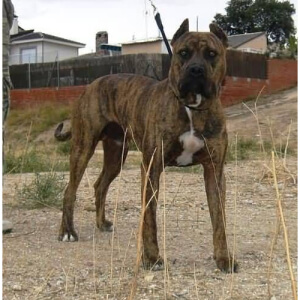
| Common colours | Fawn, red or brindle, with a black mask |
| Energy Level | Moderate |
| Suitable for an apartment? | Depends on exercise, training, health and the individual dog |
| Temperament | Loyal, protective, calm |
| Behaviour towards unfamiliar people and dogs | Individual behaviour varies; socialisation, training and management matter |
| Compatibility with children | Depends on the individual; adult supervision and suitable handling are essential |
| Compatibility with other animals | Depends on socialisation, prey drive and the animals involved |
| Health considerations | Hip and elbow dysplasia, cancer, bloat, eyelid problems |
- Primary category:Dog breeds
- Explore this animal's categories:
History and Origin
The Bullmastiff was developed in 19th-century Great Britain to help gamekeepers guard estates against poachers.
Evolution of the breed
- The 1800s - Gamekeepers crossed the English Mastiff with the old English Bulldog, roughly 60% Mastiff to 40% Bulldog, to get a fast, strong and fearless dog.
- Catching poachers - The dog was trained to track poachers quietly at night, knock them down and hold them without mauling them.
- Guard and companion - As poaching declined, the Bullmastiff became a valued guard dog and family companion.
- Official recognition - The Kennel Club in Britain recognised the breed in 1924, and the American Kennel Club (AKC) in the early 1930s.
Breed Evaluation
The Bullmastiff is an intelligent, loyal and protective dog, but it needs careful socialisation and an experienced owner. These are general editorial ratings, not measured scores; individual dogs vary.
| Characteristic | Stars |
|---|---|
| Training and Intelligence | ★★★★☆ |
| Easy to train | ★★★☆☆ |
| Intelligence | ★★★★☆ |
| Level of independence | ★★★☆☆ |
| Level of stubbornness | ★★★★☆ |
| Behavior and Temperament | ★★★★★ |
| Affectionate with family | ★★★★★ |
| Friendly with children | ★★★★★ |
| Compatible with other dogs | ★★★☆☆ |
| Compatible with cats and other animals | ★★★☆☆ |
| Degree of loyalty | ★★★★★ |
| Tendency to be aggressive | ★★★☆☆ |
| Tendency to bark | ★★☆☆☆ |
| Needs and Care | ★★★☆☆ |
| Shedding level | ★★★☆☆ |
| Requires frequent care | ★★☆☆☆ |
| Activity and Lifestyle | ★★★★☆ |
| Energy level | ★★★☆☆ |
| Daily exercise requirement | ★★★★☆ |
| Suitable for apartment living | ★★★☆☆ |
| Health and Longevity | ★★★☆☆ |
| Life expectancy | ★★★☆☆ |
| Predisposition to genetic diseases | ★★★★☆ |
| Work and Utility Features | ★★★★★ |
| Good guard dog | ★★★★★ |
| Good companion dog | ★★★★★ |
Physical Characteristics
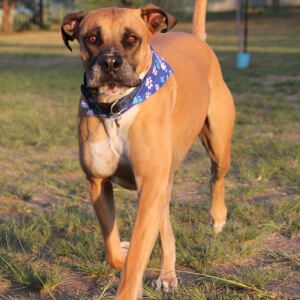
The Bullmastiff is a large, muscular, powerful dog with an alert expression.
General appearance
- A compact, muscular body, more agile than that of the English Mastiff.
- A short, dense, smooth coat that is easy to care for.
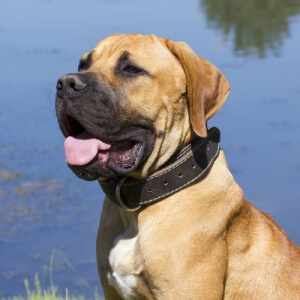
- A large, square head with a short muzzle, a black mask and strong jaws.
- Medium-sized V-shaped ears, darker than the body, lying close to the cheeks.
- A long tail, thick at the base and tapering to the tip.
- Dark or hazel eyes with an alert, intelligent expression.
| Characteristic | Bullmastiff |
|---|---|
| Size | Large (about 61-69 cm at the shoulder) |
| Weight | About 45-59 kg |
| Coat | Short, dense, smooth |
| Muzzle | Broad, short, with a black mask |
| Shedding tendency | Moderate |
| Build | Strong, muscular |
The Bullmastiff is an imposing but balanced dog, suited to people who want a loyal companion and a natural guardian.
Training and Socialization
The Bullmastiff is intelligent and loyal, but it can be independent and stubborn, so training must be calm and consistent. It has a natural guarding instinct, so early socialisation is essential.
Tips for effective training
- Start early - The Bullmastiff should begin training at about 8-10 weeks, before it becomes too big and strong.
- Calm, confident leadership - This breed respects a calm, consistent owner who sets clear rules.
- Wide socialisation - It should meet new people, animals and places to avoid over-protective behaviour towards strangers or other animals.
- Reward-based training - The Bullmastiff responds well to rewards and praise, but not to harsh corrections.
- Impulse control - Commands such as "sit", "down" and "wait" help manage its strength and protective instinct.
The Bullmastiff can be easy to train for experienced owners, but it needs a calm, confident and consistent handler.
Activity and Lifestyle Needs
The Bullmastiff is a guardian with moderate energy: it does not need extreme exercise, but it should be active every day.
| Activity | Recommended duration |
|---|---|
| Daily walks | About 30-60 min |
| Interactive games | About 20 min |
| Obedience training | About 10-15 min |
| Socialisation and new experiences | Regularly |
Recommendations for a balanced lifestyle
- Can live in an apartment, but prefers a garden - With enough exercise, it can adapt to a smaller home, as it is quiet indoors.
- Needs mental activity - Besides walks, it benefits from games and obedience training.
- Does not tolerate heat - Because of its short muzzle and large body, it must be protected from high temperatures.
- Not hyperactive, but needs stimulation - Without enough activity, it may become bored or over-protective.
The Bullmastiff is calm with moderate energy, so it suits people who want an active but not very demanding dog.
Care and Health
The Bullmastiff is easy to groom, but it should be monitored for some inherited problems.
Fur and skin care
- Weekly brushing - The short coat needs brushing about once a week to remove dead hair.
- Occasional baths - Baths every few months, or when dirty, help avoid drying the skin.
- Skin checks - It can be prone to skin allergies and infections, so its skin should be checked regularly.
Common health problems
| Condition | Description | Common symptoms |
|---|---|---|
| Hip and elbow dysplasia | Abnormal development of the joints | Lameness, stiff gait |
| Cancer | The breed has a higher risk of some cancers, such as lymphoma | Lumps, tiredness, weight loss |
| Bloat (gastric dilatation-volvulus) | A serious emergency in large, deep-chested dogs | Swollen belly, severe discomfort |
| Eyelid problems | Such as entropion, where the eyelid rolls inwards | Watery, irritated eyes |
Other aspects of care
- Weekly eye and ear checks - To prevent infections and irritation.
- Weight control - The Bullmastiff can gain weight quickly, so it must be fed carefully and kept active.
- Regular veterinary visits - Yearly check-ups help find joint and other problems early.
The Bullmastiff has a fairly short life, and its joints, heart and digestion need monitoring.
Diet and Nutrition
The Bullmastiff needs a balanced diet with good-quality protein and well-controlled portions to avoid digestive problems and obesity.
Recommendations for a healthy diet
Choose a complete, balanced diet suited to age, size and health. Plan home-prepared diets and supplements with a qualified veterinarian; raw pet food can carry harmful bacteria.
| Food type | Daily Amount (Adults) | Frequency |
|---|---|---|
| Premium dry food | Individual amount; follow complete-food guidance and veterinary advice | 2 meals/day |
| Home cooked food | Individual amount; follow complete-food guidance and veterinary advice | 2 meals/day |
| Raw food: bacterial contamination is a concern | Individual amount; follow complete-food guidance and veterinary advice | 2 meals/day |
Forbidden foods
Chocolate, grapes and raisins, onions and xylitol - toxic to dogs. ; Cooked bones - can splinter and cause intestinal blockage. ; Fatty or fried foods - can upset digestion and cause pancreatitis. ; Overfeeding - the Bullmastiff is prone to obesity, which worsens joint and heart problems.
The Bullmastiff should get a balanced, measured diet, with food for large-breed puppies while growing.
Reproduction and Development
Breeding requires veterinary planning, suitable health screening and care for the mother and puppies. Pregnancy and birth can involve complications.
Physical and emotional maturity
- Physical maturity: The Bullmastiff reaches adult height at about 18-24 months, but continues to fill out until about 2.5-3 years.
- Emotional maturity: It usually settles at about 2-3 years; until then it can be impulsive and boisterous.
Mating and Gestation
- Breeding decisions require veterinary assessment of maturity, health and suitable screening; reaching a fixed age does not establish that breeding is appropriate.
- Duration of gestation: Approximately 58-68 days, usually about 63 days.
- Average number of puppies: Usually about 5-9 puppies.
Puppy care
- The first 3 weeks: Puppies depend completely on their mother for warmth, milk and care.
- Between 4-8 weeks: They begin to develop their personality, and early socialisation is very important for a balanced temperament.
- Moving to a new home: When puppies go to their new homes, basic training should begin.
Careful breeding, with health tests, helps keep the Bullmastiff healthy.
Curiosities and Interesting Facts
- "The Gamekeeper's Night Dog" - In the 19th century, the Bullmastiff was used to catch poachers on British estates.
- Dark for the night - Gamekeepers preferred dark brindle dogs, which were hard to see at night.
- A quiet guardian - The Bullmastiff barks little and was bred to approach intruders silently.
- Faster than it looks - Although heavy, it can be surprisingly quick over short distances.
- Gentle at home - With its family, the Bullmastiff is usually calm, affectionate and devoted.
- Holds, does not maul - It was bred to knock down and hold intruders with its weight rather than bite them.
The Dog in Popular Culture
The Bullmastiff has appeared in several films as a big, gentle and loyal dog.
Bullmastiff in modern media and culture
- "See Spot Run" (2001) - The dog "Agent 11", an FBI dog in this family comedy, is a Bullmastiff.
- "Rocky" (1976) - Butkus, Rocky Balboa's dog, was a Bullmastiff that belonged to actor Sylvester Stallone.
Importance in modern culture
- A respected guardian - Thanks to its calm, protective nature, the Bullmastiff is popular as a family guard dog in many countries.