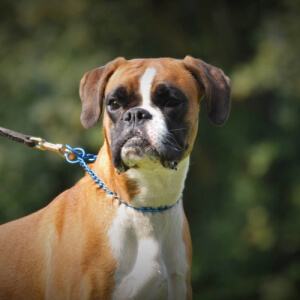
BoxerCharacteristics, history, training and care
Quick facts
| Common name | Boxer |
| Scientific name | Canis lupus familiaris |
| Country of origin | Germany |
| Official Recognition | Recognized by FCI; recognized by AKC in 1904 |
| Typical lifespan | About 10-12 years |
| Dimensions (Male) | About 57-63 cm / 30-36 kg |
| Dimensions (Female) | About 53-59 cm / 25-30 kg |
| Coat type | Short, smooth, close-lying |
| Common colours | Fawn or brindle, often with white markings; mostly white dogs also occur |
| Energy Level | High |
| Suitable for an apartment? | Depends on exercise, training, health and the individual dog |
| Temperament | Loyal, playful, protective |
| Behaviour towards unfamiliar people and dogs | Individual behaviour varies; socialisation, training and management matter |
| Compatibility with children | Depends on the individual; adult supervision and suitable handling are essential |
| Compatibility with other animals | Depends on socialisation, prey drive and the animals involved |
| Health considerations | Heart disease, hip dysplasia, cancer, bloat |
- Primary category:Dog breeds
- Explore this animal's categories:
History and Origin
The Boxer is a German breed developed in the late 19th century from the old Bullenbeisser and the English Bulldog.
Evolution of the breed
- Bullenbeisser ancestors - The Bullenbeisser ("bull biter") was a strong German hunting dog used to catch and hold wild boar, bears and deer; it is considered the Boxer's main ancestor.
- The 1890s - Breeders in Munich crossed these dogs with English Bulldogs; the first Boxer was shown in Munich in 1895, and the first Boxer club was founded the same year.
- A working dog - The Boxer was one of the first breeds used as a police dog in Germany, and in the First World War it served as a messenger, guard and pack dog.
- Recognised by the AKC in 1904 - After the Second World War, the Boxer became very popular in the USA and Europe as a guardian and family dog.
Breed Evaluation
The Boxer is a strong, intelligent and protective dog, suitable for active families looking for a devoted companion. These are general editorial ratings, not measured scores; individual dogs vary.
| Characteristic | Stars |
|---|---|
| Training and Intelligence | ★★★★☆ |
| Easy to train | ★★★★☆ |
| Intelligence | ★★★★★ |
| Level of independence | ★★★☆☆ |
| Level of stubbornness | ★★★☆☆ |
| Behavior and Temperament | ★★★★★ |
| Affectionate with family | ★★★★★ |
| Friendly with children | ★★★★★ |
| Compatible with other dogs | ★★★☆☆ |
| Compatible with cats and other animals | ★★★☆☆ |
| Degree of loyalty | ★★★★★ |
| Tendency to be aggressive | ★★★☆☆ |
| Tendency to bark | ★★★☆☆ |
| Needs and Care | ★★★☆☆ |
| Shedding level | ★★★☆☆ |
| Requires frequent care | ★★☆☆☆ |
| Activity and Lifestyle | ★★★★★ |
| Energy level | ★★★★★ |
| Daily exercise requirement | ★★★★★ |
| Suitable for apartment living | ★★★☆☆ |
| Health and Longevity | ★★★☆☆ |
| Life expectancy | ★★★☆☆ |
| Predisposition to genetic diseases | ★★★★☆ |
| Work and Utility Features | ★★★★★ |
| Good guard dog | ★★★★★ |
| Good companion dog | ★★★★★ |
Physical Characteristics
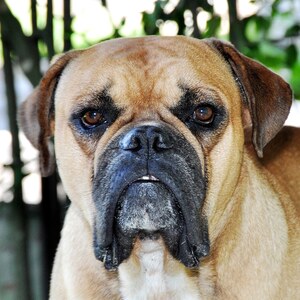
The Boxer is a muscular, athletic, square-built dog with great strength and agility.
General appearance
- A strong, muscular body with a deep, broad chest.
- A short, shiny coat that lies close to the body and is easy to care for.
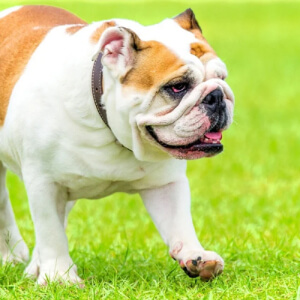
- A distinctive head with a short, broad muzzle and an undershot jaw, typical of brachycephalic (short-faced) breeds.
- Ears and tails were often cropped and docked in the past, but in many countries they are now left natural.
- Dark brown eyes with a lively, intelligent expression.
| Characteristic | Boxer |
|---|---|
| Size | Medium to large (about 53-63 cm at the shoulder) |
| Weight | About 25-36 kg |
| Coat | Short, smooth, glossy |
| Muzzle | Short and broad |
| Shedding tendency | Moderate |
| Build | Strong, square and compact |
The Boxer is an impressive but affectionate dog that combines strength, agility and loyalty, making it both a good guardian and a good companion.
Training and Socialization
The Boxer is intelligent, energetic and eager to learn, but it can be stubborn, so training needs patience and consistency.
Tips for effective training
- Start early - The Boxer should be socialised and trained from about 8-10 weeks old.
- Use positive methods - It responds best to rewards, praise and play; shouting and physical punishment should be avoided.
- Recall and lead walking - Because it is strong, energetic and curious, it should learn to come when called and not to pull on the lead.
- Socialising with dogs and people - The Boxer can be protective of its family, and early contact with many different places helps it become friendly and confident.
- Mental exercises - As an intelligent breed, it needs puzzles, games and obedience exercises to prevent boredom.
The Boxer learns quickly, but it needs consistent training and a calm, confident owner.
Activity and Lifestyle Needs
The Boxer is a very active breed that needs daily exercise to stay healthy in body and mind.
| Activity | Recommended duration |
|---|---|
| Brisk walks | About 60 min or more |
| Interactive games | About 30 min |
| Obedience training | About 15-20 min |
| Dog sports (agility, obedience, flyball) | A few times a week, in cool weather |
Recommendations for a balanced lifestyle
- Not for a quiet lifestyle - It needs plenty of daily activity.
- Sensitive to heat - Because of its short muzzle, it may have trouble breathing in very hot weather and must be protected on hot days.
- Needs company - It loves people, and being left alone for long periods can lead to anxiety and destructive behaviour.
- Can live in an apartment - only if it gets regular exercise and enough space to move.
The Boxer suits people and families who can give it plenty of exercise and mental stimulation.
Care and Health
The Boxer is a strong breed, but it has some inherited health problems that need careful monitoring.
Fur and skin care
- Weekly brushing - The short coat sheds moderately, and weekly brushing removes dead hair.
- Baths only when needed - Its skin can be sensitive, so frequent washing should be avoided.
- Face care - The folds around the muzzle should be cleaned regularly to prevent infections.
Common health problems
| Condition | Description | Common symptoms |
|---|---|---|
| Heart disease (aortic stenosis, Boxer cardiomyopathy) | Can cause an irregular heartbeat or poor blood flow | Tiring quickly, heavy breathing, fainting |
| Hip dysplasia | Abnormal development of the hip joint | Difficulty walking, pain |
| Cancer | Boxers have a higher risk of some tumours, such as mast cell tumours | Lumps under the skin, weakness |
| Bloat (gastric torsion) | The stomach swells and may twist; it can be fatal | Swollen belly, restlessness, drooling |
Other aspects of care
- Regular veterinary checks - The heart and joints should be checked regularly, and any new lumps examined.
- Avoid hard exercise on hot days - Because of its short muzzle, the Boxer can overheat easily.
- Weight control - It can gain weight, so food should match its activity.
The Boxer can be a healthy dog, but it needs careful care to prevent heart and joint problems.
Diet and Nutrition
The Boxer needs a balanced diet with enough good-quality protein, matched to its energy level.
Recommendations for a healthy diet
Choose a complete, balanced diet suited to age, size and health. Plan home-prepared diets and supplements with a qualified veterinarian; raw pet food can carry harmful bacteria.
| Food type | Daily Amount (Adults) | Frequency |
|---|---|---|
| Premium dry food | Individual amount; follow a complete diet’s guidance and veterinary advice | 2-3 meals/day |
| Home cooked food | Individual amount; follow complete-food guidance and veterinary advice | 2-3 meals/day |
| Raw food: bacterial contamination is a concern | Individual amount; follow complete-food guidance and veterinary advice | 2-3 meals/day |
Forbidden foods
Chocolate, grapes and raisins, onions and xylitol - toxic to dogs. ; Cooked bones - can splinter and injure the gut. ; Fatty or fried food - can upset digestion and cause pancreatitis. ; Overfeeding - the Boxer tends to eat more than it needs, which can lead to obesity and digestive problems.
The Boxer should get a balanced diet matched to its activity, with food split into two or three meals to reduce the risk of bloat.
Reproduction and Development
Breeding requires veterinary planning, suitable health screening and care for the mother and puppies. Pregnancy and birth can involve complications.
Physical and emotional maturity
- Physical maturity: The Boxer reaches adult height at about 12-18 months, but continues to fill out until about 2 years.
- Emotional maturity: Boxers mature slowly and often stay playful and puppy-like for years.
Mating and Gestation
- Breeding decisions require veterinary assessment of maturity, health and suitable screening; reaching a fixed age does not establish that breeding is appropriate.
- Duration of gestation: Approximately 58-68 days, usually about 63 days.
- Average number of puppies: Usually about 6-8 puppies.
Puppy care
- The first 3 weeks: Puppies depend completely on their mother for warmth and milk.
- Between 4-8 weeks: They begin to play with littermates and people; meeting different sounds, smells and places helps prevent fearfulness.
- Moving to a new home: When puppies go to their new homes, training should continue to build good habits.
The Boxer develops quickly and needs a stimulating environment to become a healthy, balanced adult.
Curiosities and Interesting Facts
- Famous owners - Humphrey Bogart and Lauren Bacall were known for their love of Boxers.
- A war dog - Boxers carried messages and worked as guards and patrol dogs in both World Wars.
- Very expressive - With its wrinkled forehead and big eyes, the Boxer can show a wide range of emotions.
- The "kidney bean" dance - Many Boxers twist their whole body into a curve when they are happy.
- The name - One popular explanation is that Boxers often stand on their hind legs and use their front paws when playing, like a boxer, but the true origin of the name is uncertain.
- White Boxers - Around a fifth of Boxers are born mostly white; they are healthy companions, though white dogs have a higher risk of deafness.
- Therapy dogs - Thanks to their affectionate nature, some Boxers work as therapy and assistance dogs.
The Dog in Popular Culture
The Boxer has been a popular family dog and a familiar face in films and advertising.
Boxer in modern media and culture
- Hollywood - Actor Humphrey Bogart and his wife, Lauren Bacall, kept Boxers, including one named Harvey.
- Advertising - With its expressive face, the Boxer has often appeared in advertisements for dog products.
Importance in modern culture
- A family companion - Although it is a protective dog, the Boxer is known for its affectionate, playful nature and patience with children.