BarbetCharacteristics, history, training and care
Quick facts
| Common name | Barbet |
| Scientific name | Canis lupus familiaris |
| Country of origin | France |
| Official Recognition | Recognized by FCI and AKC |
| Typical lifespan | About 12-15 years |
| Dimensions (Male) | About 58-65 cm / 17-28 kg |
| Dimensions (Female) | About 53-61 cm / 15-25 kg |
| Coat type | Dense, curly coat requiring regular care |
| Common colours | Black, grey, brown, fawn, sand, white, or pied |
| Energy Level | High |
| Suitable for apartment? | Suitability depends on exercise, training, safe management and the individual dog |
| Temperament | Friendly, intelligent, affectionate |
| Behaviour towards unfamiliar people and dogs | Individual behaviour varies; appropriate socialisation, training and management matter |
| Compatibility with children | Depends on the individual; adult supervision and suitable handling are essential |
| Compatibility with other animals | Depends on socialisation, prey drive and the animals involved |
| Genetic predispositions | Hip dysplasia, ear infections, eye problems |
- Primary category:Dog breeds
- Explore this animal's categories:
History and Origin
The Barbet is an old French water dog, mentioned in writings from the 16th century. It is often linked with the history of other water dogs, such as the Poodle, although the exact relationships between these breeds are uncertain.
Evolution of the breed
- A hunting dog - The Barbet was used to find and retrieve ducks and other water birds shot by hunters, even from cold water and marshes.
- Nearly lost in the 20th century - The World Wars led to a sharp decline in the breed, but French breeders worked to save it.
- Today - It is valued as a family dog and an active companion, thanks to its friendly temperament.
Breed Evaluation
The Barbet is an intelligent, playful and sociable dog, well suited to families and outdoor activities. These are general editorial ratings, not measured scores; individual dogs vary.
| Characteristic | Stars |
|---|---|
| Training and Intelligence | ★★★★★ |
| Easy to train | ★★★★★ |
| Intelligence | ★★★★★ |
| Level of independence | ★★★☆☆ |
| Level of stubbornness | ★★★☆☆ |
| Behavior and Temperament | ★★★★★ |
| Affectionate with family | ★★★★★ |
| Friendly with children | ★★★★★ |
| Compatible with other dogs | ★★★★☆ |
| Compatible with cats and other animals | ★★★★☆ |
| Degree of loyalty | ★★★★★ |
| Tendency to be aggressive | ★☆☆☆☆ |
| Tendency to bark | ★★★☆☆ |
| Needs and Care | ★★★★☆ |
| Shedding level | ★★☆☆☆ |
| Requires frequent care | ★★★★★ |
| Activity and Lifestyle | ★★★★★ |
| Energy level | ★★★★★ |
| Daily exercise requirement | ★★★★★ |
| Suitable for apartment living | ★★★☆☆ |
| Health and Longevity | ★★★★☆ |
| Life expectancy | ★★★★★ |
| Predisposition to genetic diseases | ★★★☆☆ |
| Work and Utility Features | ★★★★★ |
| He's a good water dog. | ★★★★★ |
| Good companion dog | ★★★★★ |
Physical Characteristics
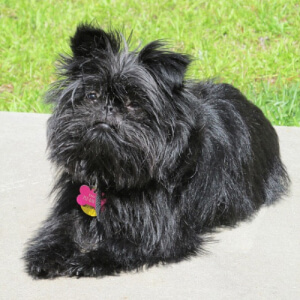
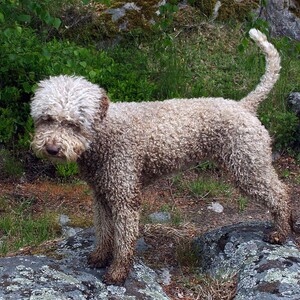
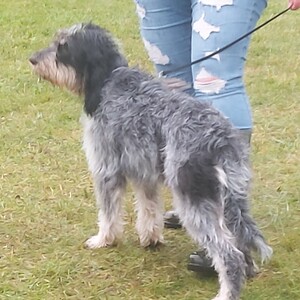
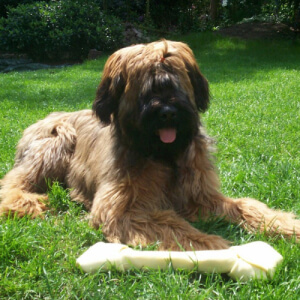
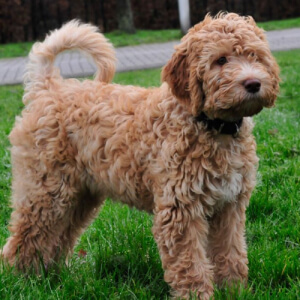
The Barbet is a medium-sized dog with a dense, curly coat that protects it from water and cold.
General appearance
- A strong, athletic, well-proportioned body, built for swimming and hard work.
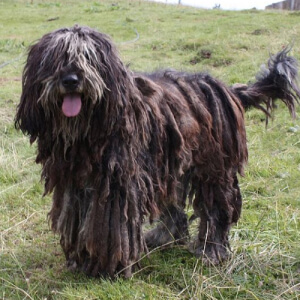
- A long, thick, woolly and curly coat that protects it from cold and wet.
- A round head with a beard and moustache, and long, flat, hanging ears covered with thick hair.
- A tail carried slightly raised, with a gentle curve.
- Dark, round eyes, often partly hidden by hair, with a gentle expression.
| Characteristic | Barbet |
|---|---|
| Size | Medium to large (about 53-65 cm at the shoulder) |
| Weight | About 15-28 kg |
| Coat | Dense, long, woolly and curly |
| Muzzle | Medium length, square, bearded |
| Shedding tendency | Low |
| Build | Strong but agile |
The Barbet is a strong yet elegant dog, equally at home in water and on rough ground.
Training and Socialization
The Barbet is intelligent, willing and eager to learn, which makes it fairly easy to train. Because it is playful and sometimes independent, consistency and positive methods are important.
Tips for effective training
- Early socialisation - The Barbet is sociable, but it should meet people, other animals and different places from an early age to prevent shyness.
- Reward-based training - It responds best to food rewards, praise and play.
- Recall for safety - As a hunting and retrieving dog, it should learn to come when called, as it may follow birds or scents.
- Mental stimulation - Scent games, agility and puzzles keep it happy and balanced.
- No harsh training - It is sensitive, and harsh methods can make it anxious or uncooperative.
The Barbet is easy to train, but it needs a patient, consistent owner who is both firm and friendly.
Activity and Lifestyle Needs
The Barbet is an active, athletic dog that needs regular exercise and mental stimulation to prevent boredom.
| Activity | Recommended duration |
|---|---|
| Daily walks | About 60-90 min |
| Swimming or water games | 2-3 times a week |
| Interactive games | About 30 min |
| Obedience training | About 15 min/day |
Recommendations for a balanced lifestyle
- Can live in an apartment with enough exercise - It is adaptable, but it needs daily activity.
- Good for active families - It suits people who love walks, sports and nature.
- Loves water - The Barbet is a natural swimmer and is very happy with access to water.
- A fenced area is recommended - It is not usually a runaway, but it may be distracted by birds or small animals.
The Barbet is happiest with an active life that combines exercise, company and mental stimulation.
Care and Health
The Barbet's thick coat needs regular care, but the breed is generally healthy and hardy.
Fur and skin care
- Frequent brushing (2-3 times a week or more) - The dense, curly coat can mat quickly, so regular brushing is essential.
- Regular trimming - A trim every 2-3 months keeps the coat tidy and easier to care for.
- Ear checks - The hanging, hairy ears can trap moisture, so they should be cleaned regularly to prevent infections.
Common health problems
| Condition | Description | Common symptoms |
|---|---|---|
| Hip dysplasia | Abnormal development of the hip joint | Limping, stiff joints |
| Ear infections (otitis) | Hairy, hanging ears can trap moisture | Scratching, discharge from the ear |
| Eye problems | Such as progressive retinal atrophy | Difficulty seeing at night |
Other aspects of care
- Regular veterinary checks - Help monitor the joints and eyes.
- Drying after swimming - The coat should be dried well after swimming to prevent skin problems.
- Healthy weight - Regular exercise and good food help prevent joint problems.
The Barbet needs regular coat and ear care, but it is generally a strong, healthy dog.
Diet and Nutrition
The Barbet needs a balanced diet with good-quality protein to support its activity.
Recommendations for a healthy diet
Choose a complete, balanced diet for the dog’s age, size and health. Plan home-prepared diets and supplements with a qualified veterinarian.
| Food type | Daily Amount (Adults) | Frequency |
|---|---|---|
| Premium dry food | Individual amount; follow a complete diet’s guidance and veterinary advice | 2 meals/day |
| Home cooked food | Individual amount; follow a complete diet’s guidance and veterinary advice | 2 meals/day |
| Raw food: bacterial contamination is a concern | Individual amount; follow complete-food guidance and veterinary advice | 2 meals/day |
Forbidden foods
Chocolate, grapes and raisins, onions and xylitol - toxic to dogs. ; Cooked bones - can splinter and cause intestinal blockage. ; Fatty and processed foods - can upset digestion. ; One large meal a day - can increase the risk of bloat.
The Barbet should be fed according to its energy needs, avoiding overfeeding and obesity.
Reproduction and Development
Breeding can involve health risks. Appropriate screening and veterinary advice are necessary.
Physical and emotional maturity
- Physical maturity: The Barbet reaches adult size at about 12-16 months, but continues to fill out until about 2 years.
- Emotional maturity: It is sociable and playful, but usually becomes calmer and more predictable at about 2-3 years.
Mating and Gestation
- Breeding decisions - A veterinarian should assess health, maturity and relevant screening. A fixed age alone does not establish that a dog should be bred.
- Duration of gestation: Approximately 58-68 days, usually about 63 days.
- Average number of puppies: Usually about 4-8 puppies.
Puppy care
- The first 3 weeks: Puppies stay with their mother in a warm, safe place and feed only on her milk.
- Between 4-8 weeks: They begin to eat solid food and develop social skills with littermates and people.
- Moving to a new home - Timing depends on health, development and local requirements. Continue careful socialisation and veterinary care.
Good food and gradual training help Barbet puppies grow into healthy, balanced dogs.
Curiosities and Interesting Facts
- A longstanding French water dog — The Barbet is described or mentioned in works dating to the 16th century.
- A bearded dog - Its name comes from the French word barbe, "beard", because of the long hair on its chin.
- A water lover - The Barbet loves to swim and can retrieve birds even from deep, cold water.
- Nearly lost - The breed almost disappeared during the two World Wars and was revived by French enthusiasts.
- A coat that needs care - Without regular brushing, its thick coat can mat, which can cause discomfort and skin problems.
- A recent AKC breed - The American Kennel Club recognised the Barbet in 2020.
- A gentle companion - Thanks to its gentle, affectionate nature, some Barbets work as therapy dogs.
The Dog in Popular Culture
The Barbet is not as famous as many breeds, but it appears in old writings and is loved by fans of water dogs.
The importance in French culture
- Old French writings - The Barbet is described in French books about hunting and dogs from the 16th century onwards.
Barbet in the media and canine sports
- Dog sports - Barbets take part in retrieving tests, dock diving, agility and obedience.