Ratonero Bodeguero AndaluzCharacteristics, history, training and care
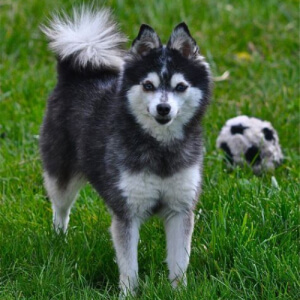
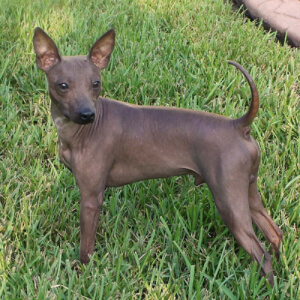
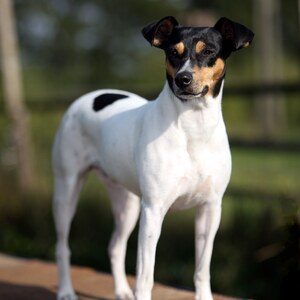
Young Ratonero Bodeguero Andaluz · Torsten Dickmann / Wikimedia Commons, CC BY-SA 3.0 de. Cropped and resized.
The Ratonero Bodeguero Andaluz, also called the Andalusian Terrier or Sherry Terrier, is a small, athletic dog from southern Spain. It was bred to catch rats and mice among the barrels of the Jerez wine cellars. It is cheerful, curious, affectionate and very clean.
Quick facts
| Common name | Ratonero Bodeguero Andaluz (Andalusian Terrier, Sherry Terrier) |
| Scientific name | Canis lupus familiaris |
| Country of origin | Spain (Andalusia, Jerez area) |
| Official recognition | FCI, provisionally since September 2024 (group 3, standard no. 371); recognised as a Spanish breed in 2000 |
| Lifespan | No data published for the breed; small breeds usually live 10–15 years |
| Size (males) | 37–43 cm at the withers (ideally 40 cm); 10–12 kg |
| Size (females) | 35–41 cm at the withers (ideally 38 cm); 8–10 kg |
| Coat type | Very short and dense |
| Common colours | White, with black patches on the head and neck and tan markings on the face |
| Energy level | High |
| Suited to an apartment? | Yes, if it gets plenty of exercise |
| Temperament | Cheerful, curious, affectionate, brave |
| Tendency to aggression | Low towards people |
| Good with children | Good |
| Good with other animals | Average; hunts rodents by instinct |
| Genetic predispositions | No breed-specific diseases are known |
- Primary category:Dog breeds
- Explore this animal's categories:
History and origin
The breed descends from old lines of Smooth Fox Terrier, brought in the 19th century by the British companies that bought wine from Jerez, in southern Spain. The dogs mixed with those from the local villages.
They were bred to catch rodents in ports, wine cellars, warehouses, stables and tanneries. The white colour was chosen deliberately: a white dog is easy to see in the darkness of the cellars.
How the breed developed
- 19th century – British wine merchants bring terriers to the Jerez area.
- 1993 – The first breed club is founded and a standard is written.
- 2000 – The Spanish Ministry of Agriculture and the Spanish Kennel Club recognise it as a native breed.
- 2020 – The city of Jerez de la Frontera declares it intangible cultural heritage.
- September 2024 – The FCI provisionally accepts the breed.
Breed rating
| Feature | Stars |
|---|---|
| Training and intelligence | ★★★★☆ |
| Easy to train | ★★★★☆ |
| Intelligence | ★★★★☆ |
| Independence | ★★★☆☆ |
| Stubbornness | ★★★☆☆ |
| Behaviour and temperament | ★★★★☆ |
| Affectionate with family | ★★★★★ |
| Friendly with children | ★★★★☆ |
| Good with other dogs | ★★★★☆ |
| Good with cats and other animals | ★★☆☆☆ |
| Loyalty | ★★★★☆ |
| Tendency to be aggressive | ★☆☆☆☆ |
| Tendency to bark | ★★★☆☆ |
| Needs and care | ★★☆☆☆ |
| Shedding | ★★☆☆☆ |
| Needs frequent grooming | ★☆☆☆☆ |
| Activity and lifestyle | ★★★★☆ |
| Energy level | ★★★★☆ |
| Daily exercise needs | ★★★★☆ |
| Suited to apartment life | ★★★★☆ |
| Health and longevity | ★★★★☆ |
| Life expectancy | ★★★★☆ |
| Predisposition to genetic diseases | ★★☆☆☆ |
| Working abilities and uses | ★★★★★ |
| Good rodent hunter | ★★★★★ |
| Good companion dog | ★★★★★ |
Indicative rating: 5 stars means the highest level. The breed has no AKC profile; the rating is based on the FCI standard (“cheerful, curious, affectionate, brave, loyal companion”).
Physical characteristics
It is a small to medium, supple and athletic dog. The body is as long as it is tall, and females are slightly longer. The thin skin and very short coat show off its muscles.
General appearance
The head is triangular, with small, very dark eyes. The triangular ears fold forward when the dog is alert. The tail is carried high; some puppies are born without a tail or with a short tail.
| Feature | Ratonero Bodeguero Andaluz |
|---|---|
| Size | Small to medium |
| Height at the withers | males: 37–43 cm; females: 35–41 cm |
| Weight | males: 10–12 kg; females: 8–10 kg |
| Coat | Very short, dense, even |
| Eyes | Small, as dark as possible |
| Ears | Triangular, folded forward |
The base colour is pure white, with black patches mainly on the head and the start of the neck, together with tan markings on the face, cheeks and above the eyes. An entirely white dog is disqualified.
Training and socialisation
It is an intelligent, cheerful dog, keen to take part in everything the family does. Like any terrier, it has a very strong hunting instinct, especially for rodents.
It learns well through play and rewards. Short, varied sessions keep it focused.
Tips for effective training
- Keep training sessions short. A few minutes, several times a day, work better than an hour.
- Use play. Toys it can “hunt” make an excellent reward.
- Work on the recall. If it sees a rodent, it may forget about you.
- Socialise it with the household pets. Pet rodents must be kept away from it.
Activity needs and lifestyle
It is an energetic, agile dog that shows its joy with jumps and quick turns. It needs daily exercise and play.
| Activity | How often | Why it matters |
|---|---|---|
| Brisk walks | daily | Burns off energy |
| Ball or rope games | daily | Uses its hunting instinct |
| Agility or search games | weekly | Exercise and training for the mind |
Tips for a balanced life
- It adapts to any climate, according to the standard.
- In town it can live in a flat, as long as it goes out often.
- Do not leave it unsupervised near pet hamsters, mice or rabbits.
Care and health
Coat and skin care
The very short coat is easy to maintain. The standard says the breed is extremely clean. A rubber brush once a week is enough.
Common health problems
No health studies have been published for this breed and no known hereditary diseases are specific to it. An annual veterinary check-up remains important.
Other care
- The thin skin scratches easily, so check it after play in the undergrowth.
- Brush its teeth several times a week.
- In winter, in very cold weather, a dog coat can help.
Diet and nutrition
A small, very active dog burns a lot of calories. Weigh it regularly and adjust the portion to its activity.
Tips for a healthy diet
The table gives a starting estimate, calculated with the formula from the Merck Veterinary Manual. The first two calorie columns show the calories per day for a healthy adult dog. The last column shows what this means in dry food with 3,500–4,000 kcal per kilogram.
| Dog's weight | Calories per day (neutered) | Calories per day (not neutered) | Dry food per day (approximate) |
|---|---|---|---|
| 8 kg | 530 kcal | 600 kcal | 130–170 g |
| 10 kg | 630 kcal | 710 kcal | 160–200 g |
| 12 kg | 720 kcal | 810 kcal | 180–230 g |
- Give it its food in two meals a day.
- Training treats count towards the daily portion.
- A dog is at the right weight when you can feel its ribs without pressing hard.
Foods to avoid
Some human foods are dangerous for dogs: chocolate, coffee, grapes and raisins, onions, garlic, xylitol (a sweetener used in chewing gum), macadamia nuts and alcohol.
Reproduction and development
Physical and emotional maturity
In dogs, sexual maturity usually comes between 6 and 12 months. Most breeds become adults at around 13–15 months.
Mating and pregnancy
Pregnancy lasts about 63 days, counted from ovulation. Mating a female on her first heat is not recommended. The FCI standard requires that only healthy dogs of typical breed appearance are used for breeding.
Caring for the puppies
In dogs, a litter has 5–6 puppies on average, and the number rises with the size of the breed. Socialisation starts in the first weeks: gentle handling, everyday noises and new people.
Interesting facts
- It is white so it can be seen. The white colour was chosen so that it could be seen easily in the darkness of the cellars.
- It is cultural heritage. In 2020, the city of Jerez de la Frontera declared it intangible cultural heritage.
- It is called the “Spanish Jack Russell”. It looks like a taller Jack Russell with longer legs.
- It can be born without a tail. The standard says puppies may be born without a tail or with tails of different lengths.
- The name says it all. “Ratonero” comes from “ratón”, meaning mouse, and “bodeguero” from “bodega”, a wine cellar.
In popular culture
The dog of the Jerez wine cellars
The Ratonero Bodeguero Andaluz is linked to the wine cellars of Jerez, where it guarded the barrels against rodents. For this reason, in 2020 the city council of Jerez de la Frontera declared it intangible cultural heritage.
Frequently asked questions
What is a Ratonero Bodeguero Andaluz?
It is a Spanish terrier from the Jerez area, bred to catch rats and mice in wine cellars.
How big does it get?
Males measure 37–43 cm and weigh 10–12 kg, and females measure 35–41 cm and weigh 8–10 kg.
Can it live in an apartment?
Yes, if it gets plenty of daily exercise. It is clean and adapts to any climate.
Does it get on with other animals?
With dogs, usually yes. Pet rodents are not suitable in the same home.