New Zealand HuntawayCharacteristics, history, training and care
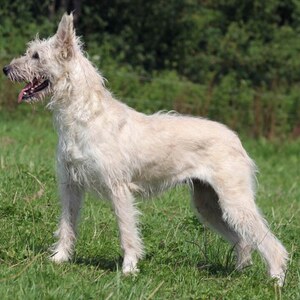
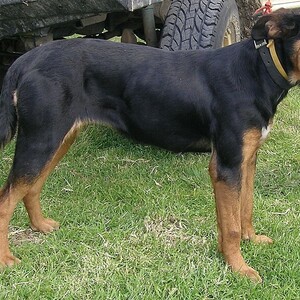
New Zealand Huntaway. · Cgoodwin / Wikimedia Commons, CC BY 3.0. Cropped and resized.
The New Zealand Huntaway is a large, powerful sheepdog from New Zealand, bred to drive flocks with a deep, repeated bark. Wikipedia says the breed dates from the late 19th century and is defined only by its working ability, not by its appearance or origin. It must have plenty of intelligence, agility and stamina. It is not recognised by the FCI.
Quick facts
| Common name | New Zealand Huntaway |
| Scientific name | Canis lupus familiaris |
| Country of origin | New Zealand |
| Official recognition | Not recognised by the FCI; registered by the New Zealand Sheep Dog Trial Association, on the basis of trials only |
| Lifespan | No published data for the breed; large breeds usually live 10–13 years |
| Size (males) | 56–66 cm at the withers; 25–45 kg |
| Size (females) | 56–66 cm at the withers; 25–45 kg |
| Coat type | Smooth, rough or wiry |
| Common colours | Usually black and tan, sometimes with white or brindle |
| Energy level | Very high |
| Suited to an apartment? | No |
| Temperament | Hard-working, intelligent, hardy, vocal |
| Tendency to aggression | Low |
| Good with children | No specific data |
| Good with other animals | Good with farm animals |
| Genetic predispositions | No breed-specific diseases are known |
- Primary category:Dog breeds
- Explore this animal's categories:
History and origin
Wikipedia says the breed developed in response to conditions on New Zealand's high-country farms, where huge, often unfenced pastures called for teams of dogs to muster sheep for days on end, over long distances and steep ground. British sheepdogs usually worked silently, but some used their bark, and farmers valued this where the dog disappeared from view.
The breed dates from the late 19th century and is selected for work alone. Only dogs that win trials can be entered in the register of the New Zealand Sheep Dog Trial Association.
How the breed developed
- Late 19th century – It appears on New Zealand's high-country farms.
- Today – Registered only on the basis of trial results.
Breed rating
| Feature | Stars |
|---|---|
| Training and intelligence | ★★☆☆☆ |
| Easy to train | ★★★★☆ |
| Intelligence | ★★★☆☆ |
| Independence | ★★★★☆ |
| Stubbornness | ★★★☆☆ |
| Behaviour and temperament | ★★★☆☆ |
| Affectionate with family | ★★★☆☆ |
| Friendly with children | ★★★★☆ |
| Good with other dogs | ★★★★☆ |
| Good with cats and other animals | ★★★★★ |
| Loyalty | ★★★★★ |
| Tendency to be aggressive | ★★☆☆☆ |
| Tendency to bark | ★★★★☆ |
| Needs and care | ★★★☆☆ |
| Shedding | ★★★★★ |
| Needs frequent grooming | ★★★☆☆ |
| Activity and lifestyle | ★★★★☆ |
| Energy level | ★★★★☆ |
| Daily exercise needs | ★★★★★ |
| Suited to apartment life | ★★★☆☆ |
| Health and longevity | ★★★☆☆ |
| Life expectancy | ★★★★☆ |
| Predisposition to genetic diseases | ★★☆☆☆ |
| Working abilities and uses | ★★★☆☆ |
| Good herding dog | ★★★★★ |
| Good companion dog | ★★★★☆ |
Indicative rating: 5 stars means the highest level. The breed is not recognised by the FCI or the AKC, so the rating is based on its description on Wikipedia.
Physical characteristics
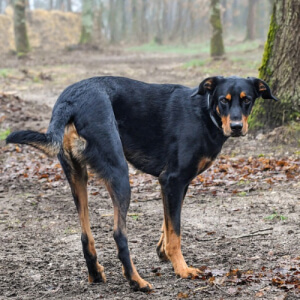
Wikipedia says it is a large, deep-chested dog, 56–66 cm and 25–45 kg, usually with drop ears. Its bark is deep and repeated, with short pauses, which allows it to bark for a very long time.
General appearance
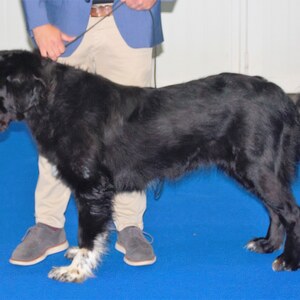
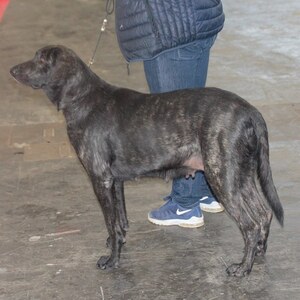
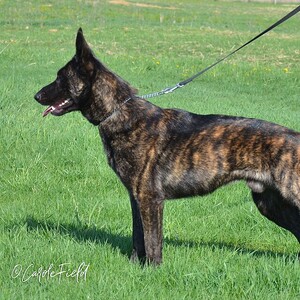
The coat can be smooth, rough or wiry.
| Feature | New Zealand Huntaway |
|---|---|
| Size | Large |
| Height at the withers | 56–66 cm |
| Weight | 25–45 kg |
| Coat | Varied |
| Colour | Usually black and tan |
| Type | Sheepdog |
Wikipedia says it is usually black and tan, sometimes with white or brindle; it has no prescribed appearance.
Training and socialisation
Wikipedia says it must have plenty of intelligence, agility and stamina for whole days of work on steep ground. It is a working dog that needs a job and an active owner.
Barking is part of its work, so it is not suitable where noise is a nuisance.
Tips for effective training
- Give it a job. It is bred for flocks.
- Think of the neighbours. It barks a lot by nature.
- Use rewards. It is intelligent.
- Keep it busy. It has very high energy.
Activity needs and lifestyle
As it is bred for whole days of work on steep ground, it needs a great deal of exercise every day, ideally on a farm.
| Activity | How often | Why it matters |
|---|---|---|
| Farm work | daily | Instinct |
| Running | daily | Energy |
| Training | several times a week | A busy mind |
Tips for a balanced life
- Suitable only for country life.
- Not suitable for a flat.
- Give it a daily job.
Care and health
Coat and skin care
The coat is brushed once a week; rough or wiry coats a little more often.
Common health problems
There are no published health studies for the breed. As with any large working dog, it is worth watching for:
| Condition | Description | Common symptoms |
|---|---|---|
| Hip dysplasia | The hip joint forms incorrectly and, over time, arthritis develops | Limping, difficulty getting up or jumping, hip pain |
| Gastric dilatation-volvulus (bloat) | The stomach fills with gas and may twist; this is a veterinary emergency | Swollen belly, trying to vomit without success, drooling, restlessness |
Other care
- Check it for injuries after work.
- Do not let it run after a meal.
- Go for yearly check-ups.
Diet and nutrition
A very active working dog needs good-quality food suited to its level of effort.
Tips for a healthy diet
The table gives a starting estimate, calculated with the formula from the Merck Veterinary Manual. The first two calorie columns show the calories per day for a healthy adult dog. The last column shows what this means in dry food with 3,500–4,000 kcal per kilogram.
| Dog's weight | Calories per day (neutered) | Calories per day (not neutered) | Dry food per day (approximate) |
|---|---|---|---|
| 25 kg | 1,250 kcal | 1,410 kcal | 310–400 g |
| 35 kg | 1,610 kcal | 1,810 kcal | 400–520 g |
| 45 kg | 1,950 kcal | 2,190 kcal | 490–630 g |
- Adjust the portion to its level of effort.
- Do not let it run right after a meal.
- A dog is at the right weight when you can feel its ribs without pressing hard.
Foods to avoid
Some human foods are dangerous for dogs: chocolate, coffee, grapes and raisins, onions, garlic, xylitol (a sweetener used in chewing gum), macadamia nuts and alcohol.
Reproduction and development
Physical and emotional maturity
In dogs, sexual maturity usually comes between 6 and 12 months, but in large breeds it can be delayed until about two years. The body also reaches its adult form later than in small breeds.
Mating and pregnancy
Pregnancy lasts about 63 days, counted from ovulation. Mating a female on her first heat is not recommended. Only healthy dogs of typical breed appearance should be used for breeding.
Caring for the puppies
In large breeds, a litter has around 7 puppies on average. Socialisation starts in the first weeks: gentle handling, everyday noises and new people.
Interesting facts
- It drives sheep by barking. Unlike other sheepdogs, which work silently.
- Chosen for work alone. Looks do not matter.
- A bark with pauses. That is how it can bark for so long.
- Whole days of work. On New Zealand's high-country farms.
- A register by trial. Only winners are entered.
Frequently asked questions
Why does it bark so much?
That is how it drives sheep.
Is it recognised by the FCI?
No.
How big does it get?
56–66 cm and 25–45 kg.
Is it suitable for town life?
No; it is a farm dog.