Ratonero ValencianoCharacteristics, history, training and care
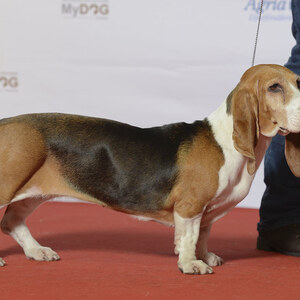
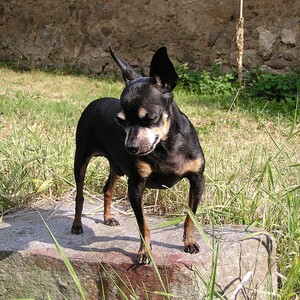
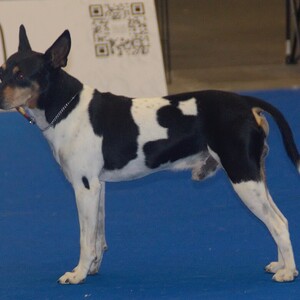
Ratonero Valenciano. · Canarian / Wikimedia Commons, CC BY-SA 4.0. Cropped and resized.
The Ratonero Valenciano (Gos Rater Valencià) is a small Spanish terrier with a fine, short coat no more than 2 cm long, most often tricolour. It is traditionally used to catch water rats, rabbits and moles, and also as a watchdog that raises the alarm by barking. The standard describes it as lively, cheerful, active, affectionate and faithful, reserved with strangers.
Quick facts
| Common name | Ratonero Valenciano (Gos Rater Valencià) |
| Scientific name | Canis lupus familiaris |
| Country of origin | Spain (Valencian Community) |
| Official recognition | FCI, provisionally accepted since 2022 (group 3, large and medium-sized terriers; standard no. 370) |
| Lifespan | No data published for the breed; small breeds usually live 12–15 years |
| Size (males) | 30–40 cm at the withers (ideally 36 cm); 4–8 kg |
| Size (females) | 29–38 cm at the withers (ideally 33 cm); 4–8 kg |
| Coat type | Fine and short, no more than 2 cm |
| Common colours | Tricolour, black and tan, white with black, cinnamon, chocolate |
| Energy level | High |
| Suited to an apartment? | Yes, with daily exercise |
| Temperament | Lively, cheerful, active, affectionate, faithful, brave |
| Tendency to aggression | Low; reserved with strangers |
| Good with children | No specific data |
| Good with other animals | Poor with rodents; terrier instinct |
| Genetic predispositions | No breed-specific diseases are known |
- Primary category:Dog breeds
- Explore this animal's categories:
History and origin
The FCI standard says the origin of the breed is linked to dogs from the Valencian Community of similar size and features, descended from the first terriers brought from Great Britain. Their existence has been documented since the last third of the 19th century.
They were highly valued by the people of the region's farms and fields for their instinct to raise the alarm and hunt vermin, as well as for their loyal companionship. The beginnings of the breed coincide with the growing of oranges in the region. Wikipedia says it was recognised in Spain in 2004 and provisionally accepted by the FCI in 2022.
How the breed developed
- Last third of the 19th century – It is documented in the Valencian Community.
- 2004 – The Spanish Kennel Club recognises the breed.
- 2011 – A dog of the breed wins the Spanish National Show.
- 2022 – The FCI provisionally accepts the breed.
Breed rating
| Feature | Stars |
|---|---|
| Training and intelligence | ★★★★☆ |
| Easy to train | ★★★★☆ |
| Intelligence | ★★★★☆ |
| Independence | ★★★☆☆ |
| Stubbornness | ★★★☆☆ |
| Behaviour and temperament | ★★★★☆ |
| Affectionate with family | ★★★★★ |
| Friendly with children | ★★★☆☆ |
| Good with other dogs | ★★★☆☆ |
| Good with cats and other animals | ★☆☆☆☆ |
| Loyalty | ★★★★★ |
| Tendency to be aggressive | ★★☆☆☆ |
| Tendency to bark | ★★★★☆ |
| Needs and care | ★★★☆☆ |
| Shedding | ★☆☆☆☆ |
| Needs frequent grooming | ★☆☆☆☆ |
| Activity and lifestyle | ★★★★☆ |
| Energy level | ★★★★☆ |
| Daily exercise needs | ★★★★☆ |
| Suited to apartment life | ★★★★☆ |
| Health and longevity | ★★★★☆ |
| Life expectancy | ★★★★☆ |
| Predisposition to genetic diseases | ★★☆☆☆ |
| Working abilities and uses | ★★★★☆ |
| Good guard dog | ★★★★☆ |
| Good companion dog | ★★★★☆ |
Indicative rating: 5 stars means the highest level. The breed has no AKC profile, so the rating is based on the FCI standard.
Physical characteristics
It is a small, light, agile terrier, with a head well proportioned to its body. The coat is fine and short, no more than 2 cm long.
General appearance
The nose, lips and eyelid rims are black or the colour of the coat. Wikipedia says it is a breed with a traditionally docked tail.
| Feature | Ratonero Valenciano |
|---|---|
| Size | Small |
| Height at the withers | males: 30–40 cm; females: 29–38 cm |
| Weight | 4–8 kg |
| Coat | Fine, no more than 2 cm |
| Colour | Most often tricolour |
| Type | Terrier |
Patched coats are more common than solid ones. The most widespread is tricolour (black and tan with white patches), followed by black and tan; white with black, cinnamon with white, and chocolate with tan or with white also occur. Among the solid colours, cinnamon and black occur.
Training and socialisation
The standard describes it as lively, cheerful and active, affectionate and faithful, reserved with strangers. It is brave, not only when hunting but also when defending its owners' property. It learns quickly.
As a terrier with a strong hunting instinct, it needs early socialisation and clear rules.
Tips for effective training
- Use rewards. It learns quickly.
- Keep it away from rodents. Its terrier instinct is strong.
- Socialise it from puppyhood. It is reserved with strangers.
- Teach it not to bark at everything. It raises the alarm by barking.
Activity needs and lifestyle
It is a small but very active dog that needs daily walks and play.
| Activity | How often | Why it matters |
|---|---|---|
| Walks | daily | Energy |
| Search games | several times a week | Hunting instinct |
| Play in a fenced yard | daily | Activity |
Tips for a balanced life
- It can also live in an apartment.
- In winter, its short coat does not protect it from the cold.
- The fence must have no gaps.
Care and health
Coat and skin care
The fine, short coat should be brushed once a week with a soft grooming mitt.
Common health problems
No health studies have been published for the breed and no specific diseases are known. As with all small dogs, it is worth watching for:
| Condition | Description | Common symptoms |
|---|---|---|
| Patellar luxation | The kneecap slips out of place | Suddenly holds a hind leg up for a few steps, then uses it again |
Other care
- Brush its teeth often.
- Trim the nails regularly.
- Go for regular check-ups.
Diet and nutrition
A small, active terrier needs good-quality food suited to small breeds.
Tips for a healthy diet
The table gives a starting estimate, calculated with the formula from the Merck Veterinary Manual. The first two calorie columns show the calories per day for a healthy adult dog. The last column shows what this means in dry food with 3,500–4,000 kcal per kilogram.
| Dog's weight | Calories per day (neutered) | Calories per day (not neutered) | Dry food per day (approximate) |
|---|---|---|---|
| 4 kg | 320 kcal | 360 kcal | 80–103 g |
| 6 kg | 430 kcal | 480 kcal | 110–140 g |
| 8 kg | 530 kcal | 600 kcal | 130–170 g |
- Give it its food in two meals a day.
- Treats count towards the daily portion.
- Choose small kibble.
Foods to avoid
Some human foods are dangerous for dogs: chocolate, coffee, grapes and raisins, onions, garlic, xylitol (a sweetener used in chewing gum), macadamia nuts and alcohol.
Reproduction and development
Physical and emotional maturity
In dogs, sexual maturity usually comes between 6 and 12 months. Small breeds become adults faster than large ones, usually at around one year.
Mating and pregnancy
Pregnancy lasts about 63 days, counted from ovulation. Mating a female on her first heat is not recommended. The FCI standard requires that only healthy dogs of typical breed appearance are used for breeding.
Caring for the puppies
In small breeds, a litter has 3–4 puppies on average. The puppies are very small and fragile in the first weeks, so they must be kept warm and handled with care. Socialisation starts early: gentle handling, everyday noises and new people.
Interesting facts
- The dog of the orange groves. Its beginnings coincide with the growing of oranges in the region.
- A water rat hunter. It caught water rats, rabbits and moles.
- National champion. Wikipedia says it won the Spanish National Show in 2011.
- Mostly tricolour. The most widespread colour is tricolour.
- A small watchdog. It raises the alarm by barking.
Frequently asked questions
What does the name mean?
The rat catcher of Valencia.
How big does it get?
It measures 29–40 cm and weighs 4–8 kg.
Is it recognised by the FCI?
Yes, provisionally accepted since 2022.
Is it suited to an apartment?
Yes, if it gets daily exercise.