OtterhoundCharacteristics, history, training and care
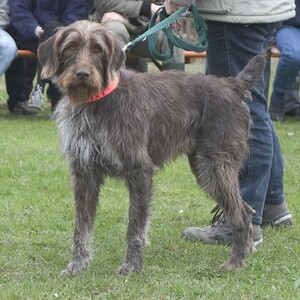
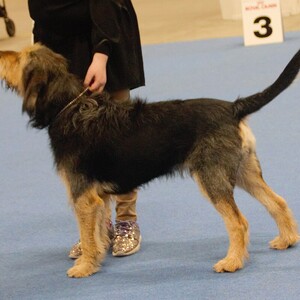
Otterhound. · Canarian / Wikimedia Commons, CC BY 4.0. Cropped and resized.
The Otterhound is a big, strong English hound with a harsh, waterproof, slightly oily coat and webbed feet. It was bred to hunt otters: it can follow a trail on land for up to 12 hours and can swim for 5 hours. The standard describes it as friendly and even-tempered; today it is a very rare breed.
Quick facts
| Common name | Otterhound |
| Scientific name | Canis lupus familiaris |
| Country of origin | United Kingdom |
| Official recognition | FCI, definitively since 12 September 1974 (group 6, large-sized hounds; standard no. 294); also recognised by the AKC |
| Lifespan | 10–13 years, according to the AKC |
| Size (males) | About 69 cm at the withers; about 52 kg according to the AKC |
| Size (females) | About 61 cm at the withers; about 36 kg according to the AKC |
| Coat type | Long (4–8 cm), dense, harsh, waterproof |
| Common colours | All hound colours: whole coloured, grizzle, sandy, red, wheaten, blue |
| Energy level | Moderate |
| Suited to an apartment? | No |
| Temperament | Friendly, even-tempered, independent, cheerful |
| Tendency to aggression | Very low; aggression is unacceptable |
| Good with children | Average |
| Good with other animals | Average |
| Genetic predispositions | Hip dysplasia, bloat, epilepsy, Glanzmann's thrombasthenia |
- Primary category:Dog breeds
- Explore this animal's categories:
History and origin
The FCI standard says it is generally believed that the Otterhound's ancestors combine a French influence with old lines of English hounds. It has a powerful voice, which it uses when it finds its quarry. Its main purpose, otter hunting, is now banned.
The otter's trail on land is called the “drag”, and in water the “wash”. An Otterhound can follow a drag for up to 12 hours and can swim for 5 hours on a wash. Wikipedia says the first Otterhounds similar to today's appeared in north-west England in the first half of the 19th century and that there are now only around 600 dogs in the world.
How the breed developed
- First half of the 19th century – The first Otterhounds of the modern type appear.
- Second half of the 19th century – French griffon blood is added, according to Wikipedia.
- 12 September 1974 – The FCI recognises the breed.
- Today – A vulnerable breed, with about 600 dogs in the world.
Breed rating
| Feature | Stars |
|---|---|
| Training and intelligence | ★★★☆☆ |
| Easy to train | ★★★★☆ |
| Intelligence | ★★★☆☆ |
| Independence | ★★★★☆ |
| Stubbornness | ★★★★☆ |
| Behaviour and temperament | ★★★★☆ |
| Affectionate with family | ★★★★★ |
| Friendly with children | ★★★☆☆ |
| Good with other dogs | ★★★☆☆ |
| Good with cats and other animals | ★★★☆☆ |
| Loyalty | ★★★★★ |
| Tendency to be aggressive | ★☆☆☆☆ |
| Tendency to bark | ★★★★★ |
| Needs and care | ★★★☆☆ |
| Shedding | ★★☆☆☆ |
| Needs frequent grooming | ★★☆☆☆ |
| Activity and lifestyle | ★★★☆☆ |
| Energy level | ★★★☆☆ |
| Daily exercise needs | ★★★★☆ |
| Suited to apartment life | ★☆☆☆☆ |
| Health and longevity | ★★★☆☆ |
| Life expectancy | ★★★☆☆ |
| Predisposition to genetic diseases | ★★★☆☆ |
| Working abilities and uses | ★★★☆☆ |
| Good hunting dog | ★★★★☆ |
| Good companion dog | ★★★★☆ |
Indicative rating: 5 stars means the highest level. It is based on the ratings the American Kennel Club gives the breed and on the FCI standard.
Physical characteristics
The standard describes it as a big, strong hound, built mainly for a long day's work in water, but able to gallop on land. The AKC says it has a broad chest and powerful shoulders that let it swim all day without tiring.
General appearance
The head is imposing, deeper than it is wide, with an open, friendly expression, covered in harsh hair with a small moustache and beard. The coat is 4–8 cm long, dense, harsh and waterproof, slightly oily, and is shown natural, untrimmed. The feet are large and webbed.
| Feature | Otterhound |
|---|---|
| Size | Very large |
| Height at the withers | males: ~69 cm; females: ~61 cm |
| Weight | males: ~52 kg; females: ~36 kg (AKC) |
| Coat | Harsh, waterproof, oily |
| Feet | Large, webbed |
| Nose | Large, black, very sensitive |
All recognised hound colours are permitted: whole coloured, grizzle, sandy, red, wheaten and blue, possibly with small white markings on the head, chest, feet and tail tip.
Training and socialisation
The standard describes it as friendly and even-tempered; any sign of aggression or nervousness is unacceptable.
The AKC says that, although it is big and strong, it can be very sensitive. Positive methods, with rewards and praise, give the best results. Like people, it likes to hear how wonderful and talented it is. Food and praise together work best.
Tips for effective training
- Praise it a lot. The AKC says it loves to be praised.
- Be patient. It is sensitive and independent.
- Use food and praise. Combined, they give the best results.
- Try tracking. It has an extraordinary nose.
Activity needs and lifestyle
The AKC says it needs physical and mental exercise. A large, well-fenced yard is a good start, but some dogs would rather lie in the shade than exercise on their own. Long walks, obedience classes, tracking and agility all help.
| Activity | How often | Why it matters |
|---|---|---|
| Long walks with sniffing | daily | Physical and mental activity |
| Swimming | whenever possible | A water dog |
| Tracking | weekly | An excellent nose |
Tips for a balanced life
- It needs a large, fenced yard.
- Think of the neighbours: it has a loud bark.
- Clean its beard after meals.
Care and health
Coat and skin care
The AKC says the coat should be brushed once or twice a week with a slicker brush and a medium comb. The beard must be cleaned, as it drags it on the ground and “keeps” bits of food in it. The nails are trimmed weekly.
Common health problems
The AKC says it is fairly healthy for a large breed. Problems may include:
| Condition | Description | Common symptoms |
|---|---|---|
| Hip dysplasia | The hip joint forms incorrectly and, over time, arthritis develops | Limping, difficulty getting up or jumping, hip pain |
| Gastric dilatation-volvulus (bloat) | The stomach fills with gas and may twist; this is a veterinary emergency | Swollen belly, trying to vomit without success, drooling, restlessness |
| Epilepsy | Repeated neurological seizures | Trembling, convulsions |
| Glanzmann's thrombasthenia | A hereditary clotting disorder, detected by a DNA test | Bleeding that is slow to stop |
Other care
- Ask for the DNA test for thrombasthenia.
- Clean its beard daily.
- Dry its ears after swimming.
Diet and nutrition
The AKC says some dogs gain weight easily, so calories and weight should be watched.
Tips for a healthy diet
The table gives a starting estimate, calculated with the formula from the Merck Veterinary Manual. The first two calorie columns show the calories per day for a healthy adult dog. The last column shows what this means in dry food with 3,500–4,000 kcal per kilogram.
| Dog's weight | Calories per day (neutered) | Calories per day (not neutered) | Dry food per day (approximate) |
|---|---|---|---|
| 36 kg | 1,650 kcal | 1,850 kcal | 410–530 g |
| 45 kg | 1,950 kcal | 2,190 kcal | 490–630 g |
| 52 kg | 2,170 kcal | 2,440 kcal | 540–700 g |
- Split the food into two meals a day to reduce the risk of bloat.
- Do not let it run right after a meal.
- Puppies need food suited to large breeds.
Foods to avoid
Some human foods are dangerous for dogs: chocolate, coffee, grapes and raisins, onions, garlic, xylitol (a sweetener used in chewing gum), macadamia nuts and alcohol.
Reproduction and development
Physical and emotional maturity
In dogs, sexual maturity usually comes between 6 and 12 months, but in large breeds it can be delayed until about two years. Very large breeds become adults only at around 2 years.
Mating and pregnancy
Pregnancy lasts about 63 days, counted from ovulation. Mating a female on her first heat is not recommended. The FCI standard requires that only healthy dogs of typical breed appearance are used for breeding.
Caring for the puppies
In large breeds, a litter has around 7 puppies on average. The puppies grow very fast, so they need growth food suited to large breeds. Socialisation starts in the first weeks.
Interesting facts
- It swims for 5 hours. It can swim for 5 hours on an otter's trail.
- A 12-hour trail. It can follow a trail on land for up to 12 hours.
- Snacks in its beard. The AKC says it keeps bits of food in its beard.
- Very rare. Wikipedia says there are only around 600 dogs in the world.
- It loves praise. The AKC says it likes to hear how talented it is.
Frequently asked questions
Does it still hunt otters?
No. Otter hunting is now banned.
How big does it get?
Males measure about 69 cm, females 61 cm.
Can it swim?
Yes, it has webbed feet and a waterproof coat.
How long does it live?
The AKC gives 10–13 years.