Castro Laboreiro DogCharacteristics, history, training and care
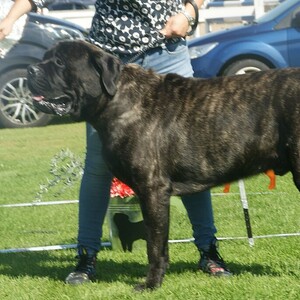
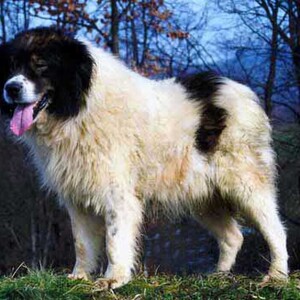
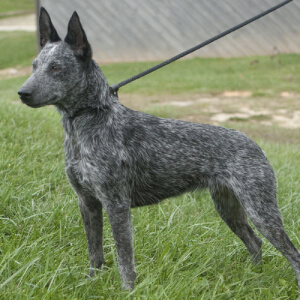
Castro Laboreiro Dog. · Canarian / Wikimedia Commons, CC BY-SA 4.0. Cropped and resized.
The Castro Laboreiro Dog is a Portuguese guard dog from the mountains in the far north of the country. It is one of the oldest breeds in the Iberian Peninsula and defended flocks from wolves. It is loyal and docile with the family, very vigilant and has an unmistakable alarm bark.
Quick facts
| Common name | Cão de Castro Laboreiro (Castro Laboreiro Dog) |
| Scientific name | Canis lupus familiaris |
| Country of origin | Portugal (Castro Laboreiro, Melgaço) |
| Official recognition | FCI, definitively since 24 May 1955 (group 2, mountain molossoids; standard no. 170) |
| Lifespan | No published data for the breed; large breeds usually live 10–13 years |
| Size (males) | 58–64 cm at the withers (+2 cm); 30–40 kg |
| Size (females) | 55–61 cm at the withers (+2 cm); 25–35 kg |
| Coat type | Short (about 5 cm), dense, no undercoat |
| Common colours | Brindle on a grey background (“mountain colour”); wolf colour is the most common |
| Energy level | Moderate to high |
| Suited to an apartment? | No |
| Temperament | Loyal, docile with the family, vigilant, noble, agile |
| Tendency to aggression | May be hostile towards strangers, without being quarrelsome |
| Good with children | Good with the family |
| Good with other animals | Good with the animals it guards |
| Genetic predispositions | No breed-specific diseases are known |
- Primary category:Dog breeds
- Explore this animal's categories:
History and origin
The breed takes its name from the village of Castro Laboreiro, in the municipality of Melgaço, in the far north of Portugal. It is a rugged, mountainous area, with altitudes of up to 1,400 metres, between the Minho, Trancoso, Laboreiro and Mouro rivers.
The dogs worked alongside shepherds in the mountains, defending the flocks from wolves and other large predators. Wikipedia says that, as wolves disappeared from many areas and farming changed, many dogs were abandoned. Today the breed is kept mainly as a companion and guard dog.
How the breed developed
- 19th century – The first written mentions of Castro Laboreiro dogs appear.
- 1882 – The writer Camilo Castelo Branco mentions them in the novella “A Brasileira de Prazins”.
- 1914 – The breed is shown at a dog show for the first time.
- 24 May 1955 – The FCI recognises the breed.
- 4 November 2008 – the current FCI standard is published.
Breed rating
| Feature | Stars |
|---|---|
| Training and intelligence | ★★★☆☆ |
| Easy to train | ★★★☆☆ |
| Intelligence | ★★★★☆ |
| Independence | ★★★★☆ |
| Stubbornness | ★★★☆☆ |
| Behaviour and temperament | ★★★★☆ |
| Affectionate with family | ★★★★★ |
| Friendly with children | ★★★★☆ |
| Good with other dogs | ★★★☆☆ |
| Good with cats and other animals | ★★★☆☆ |
| Loyalty | ★★★★★ |
| Tendency to be aggressive | ★★★☆☆ |
| Tendency to bark | ★★★★☆ |
| Needs and care | ★★☆☆☆ |
| Shedding | ★★☆☆☆ |
| Needs frequent grooming | ★☆☆☆☆ |
| Activity and lifestyle | ★★★★☆ |
| Energy level | ★★★★☆ |
| Daily exercise needs | ★★★★☆ |
| Suited to apartment life | ★☆☆☆☆ |
| Health and longevity | ★★★★☆ |
| Life expectancy | ★★★★☆ |
| Predisposition to genetic diseases | ★★☆☆☆ |
| Working abilities and uses | ★★★★★ |
| Good livestock guardian | ★★★★★ |
| Good companion dog | ★★★★☆ |
Indicative rating: 5 stars means the highest level. The breed has no AKC profile; the rating is based on the FCI standard (“loyal and docile with the family, very vigilant”).
Physical characteristics
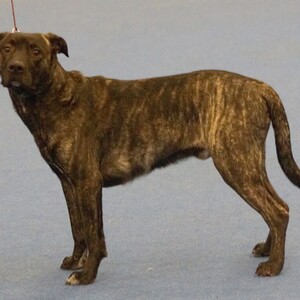
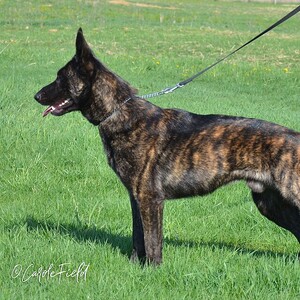
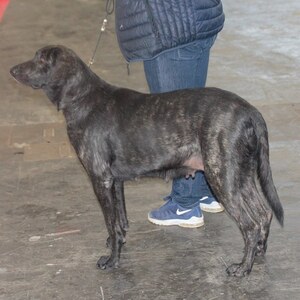
It is a vigorous dog with a slightly mastiff-like look and an often striking coat. Its expression is stern and serious, with the ruggedness of the mountains.
General appearance
The almond-shaped, slanting eyes are brown, from light to almost black, depending on the coat colour. The thin, almost triangular ears hang beside the head and turn forward when it is alert. The natural, bushy tail reaches the hock.
| Feature | Castro Laboreiro Dog |
|---|---|
| Size | Large |
| Height at the withers | males: 58–64 cm; females: 55–61 cm (tolerance +2 cm) |
| Weight | males: 30–40 kg; females: 25–35 kg |
| Coat | Short, dense, no undercoat; very hairy on the buttocks |
| Eyes | Almond-shaped, brown |
| Tail | Natural, bushy, reaching the hock |
The most common colour is wolf colour, and the most prized is “mountain colour”: brindle on a grey background, with lighter and darker black stripes. The hairs can have three colours, from pine-seed colour to reddish and mahogany. A small white patch on the chest is allowed.
Training and socialisation
The standard describes it as a loyal and docile companion for the family. Always vigilant, it is an ideal sentinel that often patrols the property.
It may be hostile towards strangers, without being quarrelsome. Early socialisation helps it stay balanced.
Tips for effective training
- Socialise it early. New people and situations, from the first months.
- Be calm and consistent. It responds well to a confident owner.
- Work on barking. It has a very powerful alarm bark.
- Give it a territory. It likes to patrol and keep watch.
Activity needs and lifestyle
It is a very agile and active dog, bred for the mountains. It needs space and daily exercise.
| Activity | How often | Why it matters |
|---|---|---|
| Long walks | daily | Exercise to match its agility |
| Time in a fenced yard | daily | It patrols its territory |
| Obedience exercises | a few minutes a day | Strengthen control |
Tips for a balanced life
- The fence must be high and solid.
- It suits a house with a yard, in the countryside.
- Think of the neighbours: the alarm bark carries a long way.
Care and health
Coat and skin care
The short coat, with no undercoat, is easy to care for, with one brushing a week.
Common health problems
There are no known hereditary diseases specific to the breed. Modern genetic studies have shown that the breed is distinct from other similar breeds in Portugal.
Other care
- Trim the nails regularly.
- Check the ears and teeth once a week.
- Check for ticks after outings in the mountains.
Diet and nutrition
Adjust the portion to its actual weight and how much it moves.
Tips for a healthy diet
The table gives a starting estimate, calculated with the formula from the Merck Veterinary Manual. The first two calorie columns show the calories per day for a healthy adult dog. The last column shows what this means in dry food with 3,500–4,000 kcal per kilogram.
| Dog's weight | Calories per day (neutered) | Calories per day (not neutered) | Dry food per day (approximate) |
|---|---|---|---|
| 25 kg | 1,250 kcal | 1,410 kcal | 310–400 g |
| 32 kg | 1,510 kcal | 1,700 kcal | 380–490 g |
| 40 kg | 1,780 kcal | 2,000 kcal | 440–570 g |
- Give it its food in two meals a day to reduce the risk of bloat.
- Fresh water should always be available.
- A dog is at the right weight when you can feel its ribs without pressing hard.
Foods to avoid
Some human foods are dangerous for dogs: chocolate, coffee, grapes and raisins, onions, garlic, xylitol (a sweetener used in chewing gum), macadamia nuts and alcohol.
Reproduction and development
Physical and emotional maturity
In dogs, sexual maturity usually comes between 6 and 12 months, but in large breeds it can be delayed until about two years. The body also reaches its adult form later than in small breeds.
Mating and pregnancy
Pregnancy lasts about 63 days, counted from ovulation. Mating a female on her first heat is not recommended. The FCI standard requires that only healthy dogs of typical breed appearance are used for breeding.
Caring for the puppies
In large breeds, a litter has around 7 puppies on average. Socialisation starts in the first weeks: gentle handling, everyday noises and new people.
Interesting facts
- A bark that rises. The standard says its alarm bark starts deep and rises to a higher pitch.
- “Mountain colour”. Breeders in Castro Laboreiro consider grey brindle a traditional trait of the breed.
- Wolves are still common. The standard says that, in its area of origin, wolf attacks are still frequent.
- It appears in a book from 1882. Camilo Castelo Branco wrote about “the very fierce dogs of Castro Laboreiro”.
- No undercoat. Unlike many mountain dogs, it has no undercoat.
In popular culture
In Portuguese literature
The Portuguese writer Camilo Castelo Branco mentions “the very fierce dogs of Castro Laboreiro” in the novella “A Brasileira de Prazins” (1882). It is one of the first written mentions of the breed.
Frequently asked questions
Where does the breed's name come from?
From the village of Castro Laboreiro, in the mountains of northern Portugal.
How big does it get?
Males measure 58–64 cm and weigh 30–40 kg; females measure 55–61 cm and weigh 25–35 kg.
Is it a good guard dog?
Yes. The standard calls it an ideal sentinel that often patrols.
What colour is it?
Usually brindle on a grey background, called “mountain colour”, or wolf colour.