Household cockroachesBlattodea (specii sinantrope) — habitat, diet and reproduction
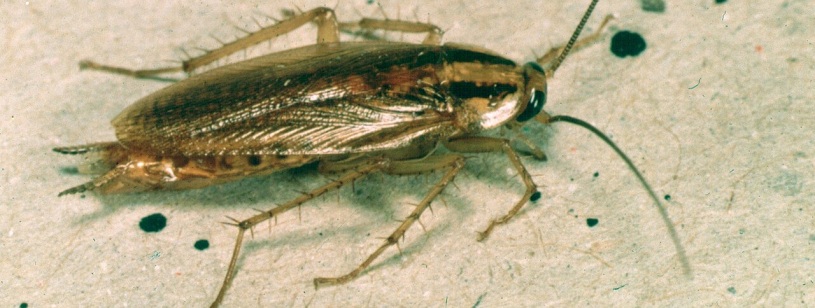
German cockroach (Blattella germanica) viewed from above. · Clemson University - USDA Cooperative Extension Slide Series, / CC BY 3.0 us (https://creativecommons.org/licenses/by/3.0/us/deed.en). Cropped and resized. Source: https://commons.wikimedia.org/wiki/File:Blattella_germanica_1236168.jpg
Household cockroaches are several insect species adapted to living near people. Familiar examples include German, oriental and American cockroaches. They seek food, water and narrow shelters. These accounts focus on building-associated species within the order Blattodea.
Quick facts
| Common name | Household cockroaches |
| Scientific names | Blattella germanica; Blatta orientalis; Periplaneta americana |
| Lifespan | Varies; adult German cockroaches often live around six months |
| Length | German: around 1–1.6 cm; oriental: 2–3 cm; American: around 4 cm |
| Appearance | Flattened body, long antennae and running legs |
| Diet | Omnivorous; varied organic material |
| Activity | Mostly nocturnal |
| Conservation status | No single status applies to this group of building-associated species |
| Distribution | Worldwide, aided by transport and buildings |
| Habitat | Kitchens, bathrooms, basements and service spaces |
| Order | Blattodea |
| Reproduction | Egg cases called oothecae; nymphs grow through moulting |
Interesting facts
- Different species prefer different parts of buildings.
- A pale individual may have recently moulted and will darken as its covering hardens.
- German females carry egg cases until close to hatching.
- Having wings does not necessarily mean flying; German cockroaches usually run.
Records and extremes
German cockroaches can develop from egg to adult in around three months under suitable conditions. Temperature and food alter the timetable.
American cockroaches average around 4 cm and develop more slowly. A single size or lifespan cannot describe all household species.
Flattened bodies fit narrow shelters, with tiny nymphs occupying even finer cracks.
Characteristics
| Species | Identification | Frequent locations |
|---|---|---|
| German | Pale brown with two dark stripes behind the head | Warm kitchens and bathrooms |
| Oriental | Very dark brown or black, robust body | Cool damp basements |
| American | Reddish brown with a pale border behind the head | Service spaces, drains and large buildings |
Long antennae explore surroundings. Three pairs of legs support rapid movement. Nymphs resemble adults but lack fully developed wings.
Behaviour
Many forage at night and shelter by day. Individuals often follow wall edges, retreat when disturbed and aggregate in hiding places.
German cockroaches can complete their cycle indoors; oriental and American species also use outdoor sites.
Objects and movement between apartments can spread infestations. Locating entry routes and shelters helps explain repeated sightings.
Habitat and distribution
Heated buildings allow some species to persist in cold regions. Transport has spread them widely.
Oriental cockroaches favour damp sites close to ground level. American cockroaches use drainage systems and sheltered sites, sometimes outdoors.
Diet and feeding
Food scraps, grease, pet food and other organic materials support these omnivores. Oriental cockroaches frequently consume decaying matter.
Water matters too. Leaks and condensation create favourable conditions, so removing food residues and repairing plumbing reduce resources.
Reproduction and life cycle
Eggs are enclosed in an ootheca. German females carry around 30–40 eggs in a case until near hatching.
Other species deposit cases earlier. Nymphs grow through successive moults, without a pupal stage.
Temperature, moisture and food affect development. Eggs, nymphs and adults can coexist, making continued monitoring useful after visible adults disappear.
Name and history
Linnaeus described the German cockroach in 1767. Its name reflects early European descriptions.
A 2024 genetic study inferred a South Asian origin around 2,100 years ago, followed by spread linked to transport and buildings.
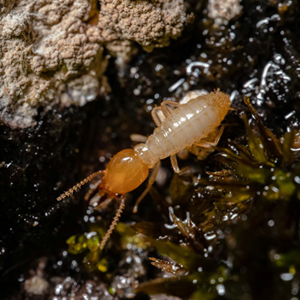
Modern Blattodea also includes termites. Household pest species form only part of this diverse order.
Conservation and threats
Building-associated species matter for hygiene and indoor allergens. Body fragments and droppings can worsen asthma symptoms in sensitised people.
Prevention combines sealed food storage, leak repair and closure of cracks. Monitoring traps help locate activity; persistent infestations may need professional attention.
Many other cockroaches live in natural habitats and contribute to decomposition. Identification distinguishes an outdoor visitor from a species breeding indoors.
Frequently asked questions
Are they all one species?
No. Size, colour, habitat and reproduction differ between species.
Is a white cockroach a different species?
It may simply have recently moulted; the covering darkens as it hardens.
Did German cockroaches originate in Germany?
Genetic research points to South Asia.
Can all species fly?
Flight ability varies, and many primarily run.
What is the case carried by a female?
It is an ootheca containing eggs.
Is cleaning alone enough?
It helps, but water, hiding places and entry routes also need attention.