Wire Fox TerrierCharacteristics, history, training and care
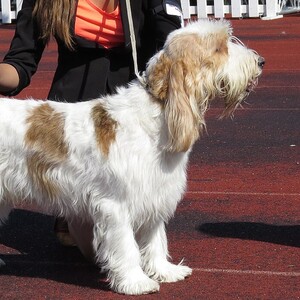
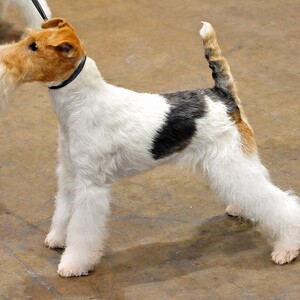
Wire Fox Terrier. · State Farm / Wikimedia Commons, CC BY 2.0. Cropped and resized.
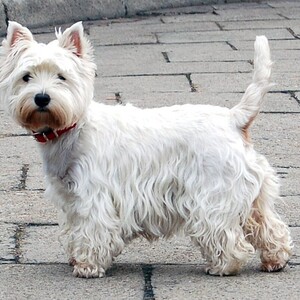
The Wire Fox Terrier is a small English terrier, mainly white, with a wiry coat and V-shaped ears. The FCI standard describes it as alert, quick, with a keen expression, “on the tiptoe of expectation”, friendly, forthcoming and fearless. Wikipedia says it resembles the Smooth Fox Terrier, but the two are thought to have developed separately.
Quick facts
| Common name | Wire Fox Terrier |
| Scientific name | Canis lupus familiaris |
| Country of origin | United Kingdom (England) |
| Official recognition | FCI, definitively since 13 May 1955 (group 3, terriers; standard no. 169); also recognised by the AKC |
| Lifespan | 12–15 years, according to the AKC |
| Size (males) | no more than 39 cm at the withers; ideally 8.25 kg |
| Size (females) | slightly smaller |
| Coat type | Dense, very wiry, with a soft undercoat |
| Common colours | Mainly white, with black, black and tan, or tan markings |
| Energy level | High |
| Suited to an apartment? | Yes, with plenty of exercise |
| Temperament | Alert, lively, friendly, forthcoming, fearless |
| Tendency to aggression | Low towards people |
| Good with children | Very good, according to the AKC |
| Good with other animals | Moderate; prey drive |
| Genetic predispositions | Heart disease, luxating patella |
- Primary category:Dog breeds
- Explore this animal's categories:
History and origin
Wikipedia says the breed comes from England and that, although it resembles the Smooth Fox Terrier, the two are thought to have developed separately. The AKC says it was originally bred for hunting, to bolt game from its earth.
Wikipedia adds that it has won the top award at the Westminster show more times than any other breed (15 in all). Its popularity soared after “The Thin Man” films, in which the Charles family's dog, Asta, was a Wire Fox Terrier.
How the breed developed
- Origins – A hunting terrier in England.
- 13 May 1955 – The FCI recognises the breed.
- Today – The breed with the most Best in Show titles at Westminster.
Breed rating
| Feature | Stars |
|---|---|
| Training and intelligence | ★★★★☆ |
| Easy to train | ★★★★★ |
| Intelligence | ★★★★★ |
| Independence | ★★★★☆ |
| Stubbornness | ★★★★★ |
| Behaviour and temperament | ★★★☆☆ |
| Affectionate with family | ★★★★☆ |
| Friendly with children | ★★★★☆ |
| Good with other dogs | ★★★★☆ |
| Good with cats and other animals | ★★★★☆ |
| Loyalty | ★★★★☆ |
| Tendency to be aggressive | ★★☆☆☆ |
| Tendency to bark | ★★★★☆ |
| Needs and care | ★★★★☆ |
| Shedding | ★★★★☆ |
| Needs frequent grooming | ★★★★☆ |
| Activity and lifestyle | ★★★★☆ |
| Energy level | ★★★★☆ |
| Daily exercise needs | ★★★★☆ |
| Suited to apartment life | ★★★★☆ |
| Health and longevity | ★★★★★ |
| Life expectancy | ★★★★☆ |
| Predisposition to genetic diseases | ★☆☆☆☆ |
| Working abilities and uses | ★★★★☆ |
| Good companion dog | ★★★★☆ |
| Good companion dog | ★★★☆☆ |
Indicative rating: 5 stars means the highest level. It is based on the ratings the American Kennel Club gives the breed and on the FCI standard.
Physical characteristics
The standard describes it as active and lively, with bone and strength “in a small compass”, never cloddy. The AKC describes it as “7–8 kg of coiled-spring energy”, a sturdy, symmetrical hunter with a short back and round, dark eyes that sparkle with fire and intelligence.
General appearance
The coat is dense and very wiry, from 2 cm on the shoulders to 4 cm on the withers, back, ribs and quarters, with a shorter, softer undercoat. The hair on the jaws is crisp and fairly long, to give the muzzle a strong look.
| Feature | Wire Fox Terrier |
|---|---|
| Size | Small |
| Height at the withers | no more than 39 cm |
| Weight | ideally 8.25 kg (males) |
| Coat | Wiry |
| Colour | White with patches |
| Type | Terrier |
White predominates, with black, black and tan, or tan markings. Brindle, red, liver or slate-blue markings are not desirable.
Training and socialisation
The standard describes it as alert, quick, friendly, forthcoming and fearless. The AKC says training calls for consistency, patience and a good sense of humour: it is very clever but independent and gets bored quickly, so lessons must be fun. It responds well to positive methods and shuts down if treated harshly.
The AKC warns that it should never be let off the lead, because once it catches the scent of an animal, it forgets all its training.
Tips for effective training
- Do not let it off the lead. It forgets its training when it scents game.
- Make lessons fun. It gets bored quickly.
- Be positive. It shuts down under harshness.
- Keep your sense of humour. The AKC says plenty of humour is needed.
Activity needs and lifestyle
The AKC says that, like most terriers, it needs plenty of exercise: long walks, chasing a tennis ball in the yard or play in a large, well-fenced area.
| Activity | How often | Why it matters |
|---|---|---|
| Long walks | daily | Fitness |
| Ball games | daily | Energy |
| Search games | several times a week | Terrier instinct |
Tips for a balanced life
- Always keep it on a lead.
- The fence must be secure.
- Strip or clip the coat regularly.
Care and health
Coat and skin care
The AKC says grooming depends on what you want: show dogs must be hand-stripped regularly, by the owner or a specialist, while pet dogs can be machine-clipped into a similar shape with much less effort.
Common health problems
The AKC says the breed is generally healthy, but the following can occur:
| Condition | Description | Common symptoms |
|---|---|---|
| Heart disease | Conditions of the heart | Tiredness, coughing |
| Patellar luxation | The kneecap slips out of place | Suddenly holds a hind leg up for a few steps, then uses it again |
Other care
- Ask for the parents' health tests.
- Brush its teeth regularly.
- Go for yearly check-ups.
Diet and nutrition
The AKC recommends good-quality food suited to the dog's age, and attention to its weight.
Tips for a healthy diet
The table gives a starting estimate, calculated with the formula from the Merck Veterinary Manual. The first two calorie columns show the calories per day for a healthy adult dog. The last column shows what this means in dry food with 3,500–4,000 kcal per kilogram.
| Dog's weight | Calories per day (neutered) | Calories per day (not neutered) | Dry food per day (approximate) |
|---|---|---|---|
| 7 kg | 480 kcal | 540 kcal | 120–150 g |
| 7.7 kg | 520 kcal | 580 kcal | 130–170 g |
| 8.5 kg | 560 kcal | 630 kcal | 140–180 g |
- Treats count towards the daily portion.
- Split the food into two meals a day.
- A dog is at the right weight when you can feel its ribs under the coat without pressing hard.
Foods to avoid
Some human foods are dangerous for dogs: chocolate, coffee, grapes and raisins, onions, garlic, xylitol (a sweetener used in chewing gum), macadamia nuts and alcohol.
Reproduction and development
Physical and emotional maturity
In dogs, sexual maturity usually comes between 6 and 12 months. Small breeds become adults faster than large ones, usually at around one year.
Mating and pregnancy
Pregnancy lasts about 63 days, counted from ovulation. Mating a female on her first heat is not recommended. The FCI standard requires that only healthy dogs of typical breed appearance are used for breeding.
Caring for the puppies
In small breeds, a litter has 3–4 puppies on average. The puppies are very small and fragile in the first weeks, so they must be kept warm and handled with care. Socialisation starts early: gentle handling, everyday noises and new people.
Interesting facts
- Tintin's Snowy. The dog in the comic books is a Wire Fox Terrier.
- Asta from “The Thin Man”. The film greatly boosted its popularity.
- The Westminster record. The most Best in Show titles.
- Coiled-spring energy. That is how the AKC describes it.
- Always on the tiptoe of expectation. The phrase comes from the standard.
In popular culture
Snowy (Milou) from “The Adventures of Tintin”
Wikipedia says Snowy, Tintin's dog, is a Wire Fox Terrier.
Asta from “The Thin Man”
Wikipedia says Asta, the Charles family's dog in “The Thin Man” film series, was a Wire Fox Terrier.
Frequently asked questions
What breed is Tintin's Snowy?
A Wire Fox Terrier.
Is it good with children?
Yes; the AKC gives it the top score.
How do you care for the coat?
By hand-stripping or machine clipping.
How long does it live?
The AKC gives 12–15 years.