
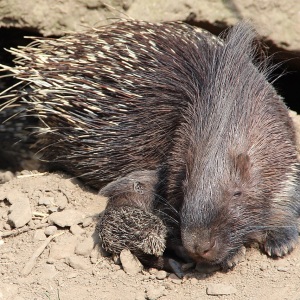
 Crested porcupineHystrix cristata
Spiny animals
Hedgehogs, echidnas, lowland streaked tenrecs and sea urchins are spiny animals. Spines can make an animal harder for a predator to grasp, but their structure and use differ among these groups.
Examples of spiny animals
- Hedgehogs: their spines are modified hairs. Curling into a ball protects more vulnerable parts of the body.
- Echidnas: spines grow among the fur. Hiding or digging can leave the spiny back difficult to reach.
- Lowland streaked tenrecs: these Malagasy mammals have spines and striped fur. They are tenrecs, a separate group from hedgehogs.
- Sea urchins: these marine invertebrates have movable spines attached to a hard skeleton.
Different kinds of spines
In hedgehogs and echidnas, spines are modified hairs. Sea urchin spines are mineralised skeletal structures. A similar appearance therefore conceals major differences in anatomy.
Defence may combine spines with curling, hiding or digging. Hedgehogs cannot shoot their spines at an attacker.
Are spines the same as scales?
No. Scales, horns, claws and spines are different structures, even when they help protect the animal. Pangolins, for example, are covered in large scales rather than spines.
Frequently asked questions
Which animals have spines?
Examples include hedgehogs, echidnas, lowland streaked tenrecs and sea urchins, although their spines differ in structure.
Can hedgehogs shoot their spines?
No. Hedgehogs do not launch their spines; they can curl up to protect their bodies.
Are sea urchins closely related to hedgehogs?
No. Hedgehogs are mammals, while sea urchins are invertebrates belonging to the echinoderms.
Sources: San Diego Zoo — hedgehog · San Diego Zoo — echidna · Monterey Bay Aquarium — purple sea urchin · IUCN Afrotheria Specialist Group — tenrecs
Crested porcupineHystrix cristata
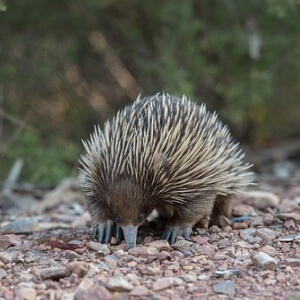 EchidnaTachyglossidae
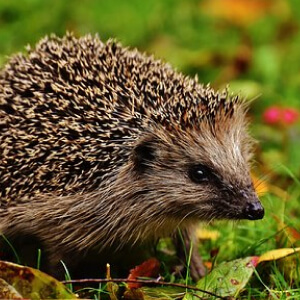 HedgehogErinaceinae
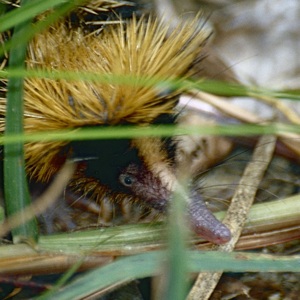 Lowland streaked tenrecHemicentetes semispinosus
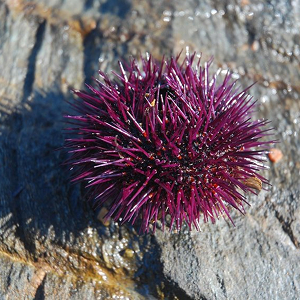 Sea urchinEchinoidea