HedgehogInteresting facts and information
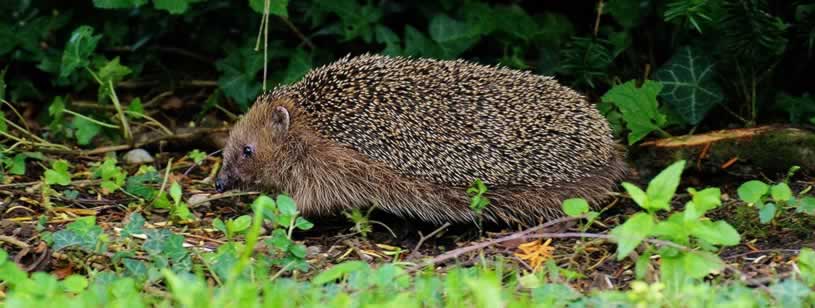
Hedgehogs are small, mainly nocturnal mammals with a covering of protective spines. Different species occur in Europe, Asia and Africa. They belong to the order Eulipotyphla, together with shrews and moles, rather than to the rodents. Related profile: Animals of Europe. Related profile: Animals of Asia. Related profile: Animals of Africa.
Many hedgehogs eat insects and other small invertebrates. When threatened, they can curl up so that their spines face outward. This is a defence, but it does not make them invulnerable. Related profile: Snail.
Quick facts
| Common name | Hedgehog |
| Scientific name | Spiny hedgehogs: subfamily Erinaceinae; examples include Erinaceus europaeus and Atelerix albiventris |
| Typical lifespan | Usually 2-5 years in the wild, up to about 10 years in captivity |
| Maximum speed | Up to about 9 km/h over short distances |
| Length | 15-30 cm, depending on the species |
| Weight | About 300 g to 1.2 kg |
| Diet type | Mainly insectivore (insects, worms, slugs, snails), with some fruit and carrion |
| Main predators | Badgers, foxes, eagle owls and dogs, depending on the region |
| Conservation status | Varies by species; western European hedgehog: Near Threatened in the IUCN 2024 assessment |
| Distribution | Europe, Asia, Africa; introduced in New Zealand |
| Living environment | Woodland edges, meadows, gardens, steppes, savannas, deserts |
Interesting facts
- Not rodents – Hedgehogs belong to Eulipotyphla, together with shrews and moles, not to the rodents such as mice. Related profile: Mouse. Related profile: Water shrew. Related profile: Mole.
- They have over 5,000 spines - The spines are hollow, made of keratin, and are shed and replaced gradually.
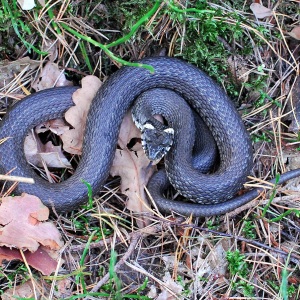
- Defence and snake encounters – Spines can offer protection, but hedgehogs are not immune to all venoms and bites can harm them.
- They "self-anoint" - When a hedgehog finds a new smell or taste, it chews the object, makes frothy saliva and licks it onto its spines. Nobody knows for sure why, but it may help with camouflage or defence.
- They can swim and climb - Although they look clumsy, hedgehogs can swim and climb walls and fences.
- Poor eyesight, but an excellent sense of smell and good hearing - They find prey in the dark mainly by smell and sound.
Records and remarkable features
- European hedgehog – Erinaceus europaeus is one of the best-known spiny hedgehogs; its size varies with age, sex and season, and it is heaviest before hibernation.
- Four-toed hedgehog – Atelerix albiventris is a small African hedgehog, often kept as a pet under the name "African pygmy hedgehog".
- Lifespan – Wild hedgehogs usually live only a few years, while pets can live longer.
- Long night walks - A hedgehog can travel 1-3 km in one night in search of food.
Physical characteristics and adaptations
The hedgehog is one of the easiest mammals to recognise, thanks to its spines, which protect it from predators. Its body and behaviour allow it to live in many environments, from European woodland to African deserts. Related profile: Desert animals.
Key physical adaptations
- Protective spines - An adult European hedgehog has about 5,000-7,000 spines. Each one is a modified hair, hollow inside but very strong.
- Special muscles - The hedgehog can tighten a ring of skin muscle to roll into a tight ball, leaving only its spines exposed.
- Short legs and sharp claws - Help it dig and search for food in the ground.
- A moist, sensitive nose - Picks up the faint smells of insects and other prey, even underground.
- Good hearing - Helps it detect the movement of worms and insects in leaves and soil.
- Poor eyesight - It relies more on smell and hearing than on sight.
- Sharp teeth - Ideal for eating insects and other invertebrates.
Browse more animals by letter. Related profile: Animals beginning with A.
Differences between hedgehog species
| Species | Size | Habitat |
|---|---|---|
| European hedgehog (Erinaceus europaeus) | 20-30 cm, up to about 1.2 kg | Woodland edges, farmland and gardens in Europe |
| Four-toed hedgehog (Atelerix albiventris) | 15-22 cm, up to about 600 g | Savanna and dry areas of Africa |
| Long-eared hedgehog (Hemiechinus auritus) | 12-27 cm, up to about 500 g | Steppes and deserts of Central Asia, the Middle East and North Africa |
| Desert hedgehog (Paraechinus aethiopicus) | 14-25 cm, up to about 500 g | Deserts and dry areas in North Africa and the Middle East |
Habits and behaviour
The hedgehog is a solitary, nocturnal animal that spends most of its active time looking for food.
Daily life
- Active at night - It spends the day in a nest of leaves under bushes, logs or sheds and comes out to forage after dark.
- Living alone - Hedgehogs live and feed alone and meet mainly to mate.
- Tireless explorers - They can travel 1-3 km in one night in search of food.
Social interactions
- Shared ranges - Hedgehogs are not territorial; their home ranges overlap, but they usually avoid each other.
- Snuffles and huffs - They snuffle, grunt, huff and hiss, especially when they are disturbed or courting.
- Single mothers - Only the females look after the young; males play no part after mating.
Defence techniques
- Rolling into a ball - A spiny ball is an effective defence against most predators.
- Self-anointing - Hedgehogs spread frothy saliva mixed with new smells on their spines, possibly for camouflage or defence.
- Avoiding trouble - A hedgehog would rather hide than fight.
Habitat and geographic distribution
Hedgehogs are very adaptable and live in many habitats, from woodland and meadows to deserts and town gardens.
Regional distribution
| Region | Species present |
|---|---|
| Europe | Erinaceus europaeus, Erinaceus roumanicus |
| Central and South Asia | Hemiechinus auritus, Paraechinus hypomelas |
| North Africa and sub-Saharan Africa | Atelerix albiventris, Paraechinus aethiopicus |
| Middle East | Hemiechinus auritus, Paraechinus aethiopicus |
Habitat types
- Woodland edges and hedgerows - Favourite habitats of the European hedgehog.
- Meadows and farmland - Areas with plenty of insects and hiding places.
- Towns and gardens - Many hedgehogs have adapted to living near people.
- Deserts and savannas - Some species cope well with heat and little water.
Discover the animals that live in Romania, including the northern white-breasted hedgehog. Related profile: Animals of Romania.
Climate and habitat change
- Habitat loss - Intensive farming, the loss of hedgerows and urban growth reduce food and shelter for hedgehogs.
- Warmer winters disturb hibernation - In some areas, mild weather wakes hedgehogs too early, when there is little food.
- Pesticides reduce food - Farm and garden chemicals reduce the insects and other invertebrates that hedgehogs eat.
Diet and feeding
The hedgehog eats mainly insects and other invertebrates, but it is an opportunist and also takes other food, depending on the season and habitat. Related profile: Omnivores.
What does the hedgehog eat?
| Food group | Examples and context | How often |
|---|---|---|
| Insects and worms | Beetles, caterpillars, earthworms, earwigs, grasshoppers, ants. Related profile: Grasshopper. Related profile: Ant. | Very often |
| Slugs and snails | Garden snails and slugs. Related profile: Molluscs. | Often |
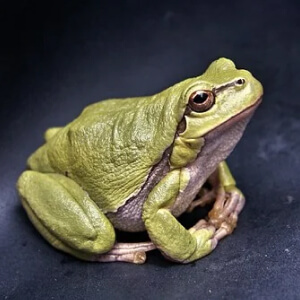
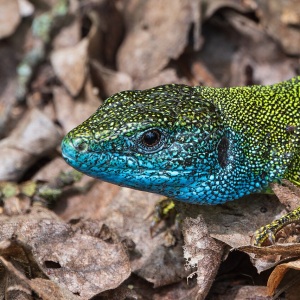
| Amphibians and small reptiles | Tadpoles, small frogs, lizards. Related profile: Frog. Related profile: Lizard. | Occasionally |
| Eggs and chicks | Eggs and chicks of ground-nesting birds, such as quail | Occasionally |
| Fruit and seeds | Fallen fruit and berries | Seasonal |
| Fungi | Some mushrooms | Rare |
| Carrion and leftovers | Dead animals, meaty cat food left in gardens | Occasionally |
Hunting and feeding methods
- Finding food by smell and hearing - At night, the hedgehog sniffs and listens for insects under leaves or in the soil.
- Digging - It uses its claws and snout to dig into moist soil for worms and larvae.
- Wet-night feasts - On damp nights, when slugs and worms come out, the hedgehog finds food easily.
- Chewing carefully - Its small teeth are not made for big bites, so it chews its food into small pieces.
Reproduction and life cycle
The hedgehog lives alone, and mating takes place in the warm season, when there is enough food to raise the young.
Breeding season
- In temperate climates, European hedgehogs breed from about April to September, mostly in May to July.
- Males seek out females and court them with loud snorting.
- During courtship, the male circles the female, sometimes for hours, in what is called the "hedgehog carousel"; the female may reject him by bristling her spines.
- After mating, the male leaves and takes no part in raising the young.
Pregnancy and birth
| Feature | Details |
|---|---|
| Pregnancy | About 30-40 days |
| Hoglets per litter | 3-7 (average 4-5) |
| Weight at birth | 10-25 g |
| Nursing period | 4-6 weeks |
Raising the young
- Young hedgehogs, called hoglets, are born with developing spines beneath a protective layer of skin. Their first soft spines emerge shortly after birth.
- At about two weeks old, the hoglets open their eyes and their spines become stronger.
- At 3-4 weeks, they start leaving the nest with their mother to look for food.
- At about 6-8 weeks, they become independent and go their own way.
Survival
- Young hedgehogs are vulnerable to predators, disease and environmental hazards; survival varies among populations.
- In the wild, hedgehogs usually live 2-5 years, rarely 7 or more; in captivity, they can live to about 10.
Name and history
Origin of the name
- The English name "hedgehog" first appeared in the 15th century; earlier, the animal was called an "urchin".
- "Hedgehog" means "hedge pig": it often lives in hedges, and it has a pig-like snout and grunts while it feeds. The Latin name Erinaceus means "hedgehog".
- In French it is called hérisson, in German Igel and in Romanian arici.
Taxonomic classification
| Classification | Name |
|---|---|
| Kingdom | Animalia |
| Phylum | Chordata |
| Class | Mammalia |
| Order | Eulipotyphla |
| Family | Erinaceidae |
| Genus | Erinaceus, Atelerix, Hemiechinus, Paraechinus |
Evolution and fossils
- Relatives of hedgehogs have existed for more than 50 million years, making them one of the oldest groups of living mammals.
- Fossil hedgehogs have been found in Europe, Asia, Africa and even North America, where hedgehogs no longer live.
- Modern hedgehogs still look quite similar to their ancient relatives.
Cultural significance and mythology
- Romanian folklore - In a Romanian creation legend, the wise hedgehog advises God to squeeze the Earth to fit under the sky, and this is how the mountains and valleys were formed.
- An old myth - Ancient and medieval writers claimed that hedgehogs carry fruit on their spines; in reality, they do not.
- The hedgehog and the fox - The Greek poet Archilochus wrote that "the fox knows many things, but the hedgehog knows one big thing", a saying later made famous by the philosopher Isaiah Berlin.
Hedgehogs as symbols
- Protection and self-defence - Its spines are a symbol of protection against danger.
- Wisdom and cleverness - In fairy tales, the hedgehog often appears as a clever animal or wise adviser.
- Toughness and survival - Its ability to live in difficult conditions makes it a symbol of resilience.
Conservation status and threats
Hedgehog conservation differs between species. The western European hedgehog was assessed as Near Threatened by the IUCN in 2024.
Conservation status
| Region | Assessment scope | Trend |
|---|---|---|
| Europe | Western European hedgehog: Near Threatened, IUCN 2024 | Declining in several countries |
| Asia and Africa | Most species are assessed as Least Concern | Generally stable, but little studied |
| United Kingdom | Covered by the European assessment | Sharp decline; rural populations have fallen by half or more since 2000 |
Main pressures
- Road traffic - Many hedgehogs are killed on roads, especially at night.
- Habitat loss - Intensive farming, the loss of hedgerows and urban growth reduce the places where hedgehogs can live and feed.
- Pesticides - Fewer insects and slugs means less food for hedgehogs.
- Garden dangers and pets - Garden machines, netting and ponds without exits can injure or trap hedgehogs, and dogs sometimes attack them. Related profile: Dog.
- Climate change - Mild winters can upset hibernation, waking hedgehogs when there is little food.
Protection measures
- Hedgehog highways - Small holes (about 13 cm wide) in garden fences let hedgehogs move between gardens.
- Using fewer pesticides - Protects hedgehogs' natural food.
- Awareness campaigns - In the UK, projects such as Hedgehog Street teach people how to help hedgehogs.
- Monitoring populations - In the UK, scientists use camera traps and surveys to estimate hedgehog numbers.
In popular culture
The hedgehog is one of the most popular animals and appears in many films, books and video games.
Film and animation
- Hedgehog in the Fog (1975) - A famous Soviet animated short film by Yuri Norstein about a little hedgehog lost in the fog.
- Alice in Wonderland (Disney, 1951) - In a famous scene, the Queen of Hearts plays croquet using hedgehogs as balls.
- Peter Rabbit (2018) - The film includes Mrs Tiggy-Winkle, the hedgehog from Beatrix Potter's stories.
- Sonic the Hedgehog (2020 and sequels) - Films about the famous blue hedgehog from the video games.
Books and literature
- The Tale of Mrs. Tiggy-Winkle (Beatrix Potter, 1905) - A classic children's story about a hedgehog washerwoman in the English Lake District.
- "The Hare and the Hedgehog" (Brothers Grimm) - A fairy tale in which a clever hedgehog beats a boastful hare in a race.
Video games
- Sonic the Hedgehog (Sega, 1991) - One of the most famous characters in gaming, a blue hedgehog with incredible speed.
Mascots and symbols
- Sonic - The blue hedgehog has been Sega's mascot since 1991.
- Toys and souvenirs - The hedgehog is a popular character in soft toys, books and figurines around the world.
Did you know? About hedgehog
- Hedgehogs usually live alone, although behaviour differs with species and circumstances.
- An adult European hedgehog has about 5,000-7,000 spines.
- Spines are modified hairs and are replaced gradually over time; there is no single one-year schedule for every spine.
- Muscles in the skin raise and lower the spines, depending on how threatened the hedgehog feels.
- When frightened, a hedgehog rolls into a spiky ball to protect its soft belly.
- Different hedgehogs are native to Europe, Asia and Africa. Hedgehogs in New Zealand were introduced by people.
- Hedgehog spines are not porcupine quills: they do not come out easily and are not venomous.
- Hedgehogs rely mainly on hearing and smell; their eyesight is quite poor.
- Gardeners in Britain love hedgehogs because they eat slugs, snails and beetles.
- Some hedgehogs hibernate during cold periods, while others, in hot places, may rest during heat and drought.
- While they search for food, hedgehogs snuffle and grunt like little pigs, which is how they got their name.
- Spines and other defences can help in some encounters with snakes, but hedgehogs are not immune to all snake venom.
- Hedgehogs are nocturnal and spend most of the day asleep in a nest of leaves.
- Their long, pointed snout helps them root for food in leaves and soil.
- At birth, hoglets have soft spines, which harden within a few weeks.
- Hedgehogs are lactose intolerant, so they should never be given cow's milk; water and meaty pet food are better.
- They can swim, climb and run surprisingly fast over short distances.
- Toe number differs between species; the four-toed hedgehog has four toes on each hind foot.
- The largest European hedgehogs can reach about 30 cm in length.
- Breeding season depends on the species and climate; European hedgehogs usually breed in warmer months.
- Pregnancy lasts about a month, and a typical litter has 4-5 hoglets.