Sea urchinInteresting facts and information
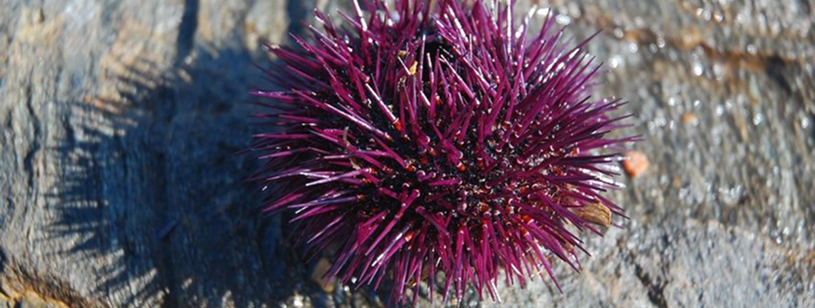
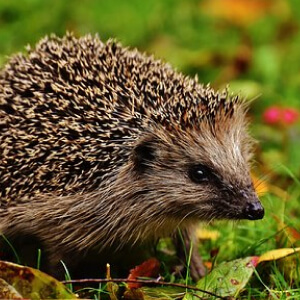
Sea urchins (Echinoidea) are marine echinoderms related to sea stars and sea cucumbers. They live on the seabed and have a hard internal shell, called a test, with movable spines and tube feet. Related profile: Hedgehog.
Different sea urchins live in shallow coastal water or the deep sea. Many graze on algae, while some also consume other organic material and small animals.
Grazing sea urchins help shape marine communities. High densities can remove kelp and create areas known as urchin barrens. Some species are also harvested for food.
Quick facts
| Common name | Sea urchins |
| Scientific name | Echinoidea (class of echinoderms) |
| Typical lifespan | Varies greatly by species; some species are very long-lived |
| Maximum speed | Slow movement using tube feet and spines |
| Dimensions | Usually about 3 - 10 cm across; up to about 30 cm in the largest species |
| Weight | From a few grams to over 1 kg |
| Diet type | Often algae and other organic material; diet differs by species |
| Main predators | Sea stars, fish, crabs, lobsters, sea otters, humans |
| Conservation status | Assess separately by species and region; harvesting and environmental change affect some populations |
| Distribution | All oceans, from the Arctic to the Antarctic |
| Habitat | Coral reefs, rocky areas, kelp forests, sandy or muddy seabed, deep sea |
- Primary category:Invertebrates
- Explore this animal's categories:
Interesting facts
- Long lives – Some sea urchin species are long-lived; studies of the red sea urchin of the North Pacific suggest that some individuals live for more than 100 years.
- Defence – Movable spines help protect sea urchins. Some species also have venom-delivering structures.
- Walking on tube feet - Although they seem still, sea urchins move slowly using hundreds of tube feet, small flexible "legs" worked by water pressure.
- Teeth that can carve rock - Their mouth, called "Aristotle's lantern", has five hard teeth; some species use them to scrape hollows in rock where they shelter.
- Seeing with the whole body - Sea urchins have no eyes, but light-sensitive cells in their tube feet allow them to sense light and shapes.
- Shaping ecosystems - When there are too many sea urchins, they can eat whole kelp forests, leaving bare areas called "urchin barrens".
- Venom – Some species can cause serious injury. Do not handle an unfamiliar sea urchin. Related profile: Hedgehog.
Records and remarkable features
- Different sizes – Sea urchin size depends on the species and on whether the spines are included in the measurement.
- Small sea urchins – Some species are only a few millimetres across.
- Longevity – Life expectancy varies substantially among species.
- Venomous species – The flower urchin (Toxopneustes pileolus) has venom-delivering pedicellariae, small pincer-like structures; they are different from ordinary spines.
- Regrowing spines - Sea urchins can regrow broken spines and repair damage to their shell.
Characteristics
Sea urchins are echinoderms with a round or flattened body covered in movable spines. The spines protect them and also help them move slowly over the seabed.
Main physical characteristics:
| Characteristic | Details |
|---|---|
| Body shape | Round, oval or flat (as in sand dollars), with a hard internal shell called a "test" |
| Size | Usually about 3-10 cm across, up to about 30 cm in the largest species (without spines) |
| Weight | From a few grams to over 1 kg |
| Colour | Variable (purple, red, green, black, brown, white) |
| Spines | Movable spines; venom systems occur in some species |
| Movement system | Tube feet operated by a water vascular system |
| Mouth | "Aristotle's lantern", a jaw structure with five teeth |
| Eyes | No eyes, but light-sensitive cells over the body, especially in the tube feet |
Special adaptations:
- Defence structures – Spines help deter predators; some species also deliver venom through specialised structures.
- Aristotle's lantern - A strong jaw with five teeth that keep growing, used to scrape algae off rocks; some species use it to dig into rock.
- Water vascular system - An internal system of water-filled canals works the tube feet, which they use to move, grip and pass food to the mouth.
- Pedicellariae - Tiny pincers among the spines keep the surface clean and, in some species, inject venom.
Habits and behaviour
Sea urchins live on the seabed, where they play an important role in marine ecosystems.
Social behavior:
- Mostly solitary - Many sea urchins may live close together, but they do not form organised groups.
- Large gatherings - When there are many of them, they can form dense "fronts" that move slowly through kelp forests, eating as they go.
- Hiding places - Some species shelter in rock crevices or bore holes in rock, while heart urchins and sand dollars bury themselves in sand.
Feed and consumer techniques:
- Grazers - Most sea urchins eat algae and help stop algae from overgrowing reefs.
- Omnivorous species - Some also eat small invertebrates, organic debris and dead animals.
- Strong grazing - Where their predators have disappeared, sea urchins can multiply and eat all the kelp, creating urchin barrens.
Defense and Survival Strategies:
- Defence – Spines and, in some species, venom-delivering structures discourage predators.
- Camouflage - Some species hold pieces of shell, seaweed or stones over their bodies with their tube feet.
- Repair - If injured, they can regrow spines and repair their shell.
Habitat and geographic distribution
Sea urchins live in all the world's oceans, from rock pools on the shore to depths of more than 5,000 metres.
Habitat types:
| Habitat | Predominant species |
|---|---|
| Coral reefs | Diadema antillarum (long-spined sea urchin) |
| Rocky areas | Strongylocentrotus droebachiensis (green sea urchin) |
| Sandy seabed | Echinocardium cordatum (heart urchin) |
| Deeper waters | Brisaster latifrons (a burrowing heart urchin) |
Geographic distribution:
- Pacific and Atlantic Oceans - Large populations live, for example, off California, Japan, Chile and in the Mediterranean.
- Arctic and Antarctic - Some species live in very cold water.
- Tropical reefs - Long-spined sea urchins help control algae on Caribbean reefs.
- The deep sea - Some species live more than 5,000 metres deep, under very high pressure.
Impact of climate change and human activities:
- Disease - The long-spined sea urchin of the Caribbean suffered huge die-offs in 1983 and again in 2022.
- Loss of predators - Where sea otters, large fish, lobsters or sunflower sea stars disappear, sea urchin numbers can explode and kelp forests disappear.
- Pollution - Pollutants can harm sea urchin larvae and reproduction.
- Fishing - Some species, such as Paracentrotus lividus in the Mediterranean, are heavily harvested for food.
Sea urchins are widespread and resilient, but changes in their numbers can have big effects on marine ecosystems.
Diet and feeding
Most sea urchins feed mainly on algae and organic matter, but some species also eat small invertebrates.
Types of food consumed:
| Food group | Examples |
|---|---|
| Seaweeds | Brown, red and green algae, especially kelp |
| Organic detritus | Decaying plant and animal matter |
| Small invertebrates | Small crustaceans, molluscs, sea worms |
| Corals and sponges (occasionally) | Some species graze on corals, sponges and other encrusting animals |
Feeding methods:
- Aristotle's lantern - Sea urchins use their five teeth to scrape algae off rocks.
- Catching drifting algae - Many species catch pieces of seaweed drifting past with their tube feet and spines.
- Scavenging - Some species eat dead fish and other remains, helping to recycle organic matter.
- Feeding at night - Many sea urchins hide by day and feed at night to avoid predators.
Sea urchins play a key role in marine ecosystems by controlling the growth of algae.
Reproduction and life cycle
Sea urchins release eggs and sperm into the water, and their larvae drift in the plankton for weeks or months before settling on the seabed.
Life cycle stages:
| Stage | Approximate duration | Characteristics |
|---|---|---|
| Spawning | Usually seasonal | Males and females release sperm and eggs into the water. |
| External fertilisation | Minutes to hours | Fertilised eggs float in the water. |
| Planktonic larva | Several weeks to months | Tiny larvae called echinoplutei feed on phytoplankton. |
| Metamorphosis and settlement | At the end of the larval stage | The larvae turn into tiny sea urchins and settle on the seabed. |
| Sexual maturity | About 1-5 years | Sea urchins become able to reproduce. |
| Lifespan | A few years to over 100 years | Small species often live only a few years, while some large species live for a century or more. |
Reproductive behavior:
- Synchronised spawning - Many sea urchins in an area release their eggs and sperm at the same time, which increases the chance of fertilisation.
- Many eggs - A large female can release millions of eggs in a season.
- Planktonic development - The larvae drift for weeks before settling.
- Slow growth - Many sea urchins grow slowly and take years to reach full size.
Because their larvae depend on conditions at sea, the number of young sea urchins can vary greatly from year to year.
Name and history
Sea urchins have been known since ancient times; Aristotle described their mouthparts. Their name comes from their resemblance to a hedgehog.
Origin and etymology of the name:
- "Sea urchin" - "Urchin" is an old English word for hedgehog, and the name refers to the round, spiny body.
- The scientific name Echinoidea comes from the Greek echinos, meaning "hedgehog".
- "Aristotle's lantern" - The name of the mouth comes from Aristotle, who compared the shell of the sea urchin to a lantern.
Taxonomic classification:
| Taxonomic category | Name |
|---|---|
| Kingdom | Animalia |
| Phylum | Echinodermata |
| Class | Echinoidea |
| Order | Varies by species |
Sea urchin in history and culture:
- Ancient Greece and Rome - Sea urchins were eaten as a delicacy.
- Folklore - In England, fossil sea urchins were called "shepherd's crowns" or "fairy loaves" and were kept in houses for good luck.
- Science - Sea urchin eggs and embryos have been used for more than a century to study fertilisation and development.
Sea urchins have lived in the oceans for about 450 million years, and their fossils are common in many rocks.
Cultural significance and mythology
Sea urchins are harvested for their edible gonads, often called roe. They are used in several cuisines; this practical food use should be distinguished from claims about mystical or medicinal powers.
Conservation status and threats
Many sea urchin species are widespread and not threatened, but overfishing, disease and climate change affect some populations, with effects on whole marine ecosystems.
Conservation status
| Species | Status (IUCN) |
|---|---|
| Edible sea urchin (Paracentrotus lividus) | Not assessed; heavily harvested in places |
| Long-spined sea urchin (Diadema antillarum) | Severe die-offs in 1983 and 2022 |
| Green sea urchin (Strongylocentrotus droebachiensis) | Not assessed; harvested in the North Atlantic |
| Purple sea urchin (Strongylocentrotus purpuratus) | Not assessed; very abundant off California after the loss of its predators |
Main threats:
- Overfishing - Sea urchins are harvested in large numbers in Japan, Chile, France, Italy and the USA for their roe (uni).
- Grazing pressure – High sea urchin densities can remove kelp. The role of sea otters is particularly important in some North Pacific kelp ecosystems.
- Disease - Disease outbreaks can kill huge numbers of sea urchins.
- Global warming - Warmer water can change sea urchin numbers and allow some species to spread to new areas.
Conservation efforts:
- Fishing rules - Some countries have closed seasons and catch limits for sea urchins.
- Ecosystem management – Restoration work may address predator loss, grazing pressure and habitat recovery; introducing predators is not a general solution.
- Protected areas - Marine reserves where fishing is restricted help keep balanced ecosystems.
- Restoration - In the Caribbean, long-spined sea urchins are bred and released to help restore coral reefs.
Keeping sea urchin numbers in balance is important for the health of kelp forests and coral reefs.
In popular culture
Sea urchins are known for their unusual look, their role in gastronomy and their fossils.
Sea urchins in gastronomy:
- "Uni" in Japanese cuisine - Sea urchin roe is a prized delicacy, served as sushi and sashimi.
- Mediterranean dishes - In Italy, France and Spain, sea urchins are eaten raw or with pasta.
- South America - In Chile and Peru, sea urchins (erizos) are a popular seafood.
Sea urchin as a cultural symbol:
- Art and design - Sea urchin shells and fossils are used in jewellery and decorations.
- Science - The purple sea urchin was one of the first marine animals to have its genome sequenced, in 2006.