Swedish VallhundCharacteristics, history, training and care
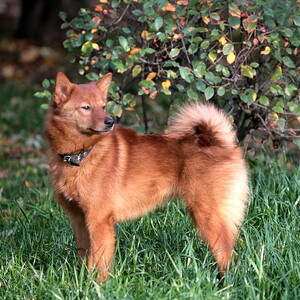
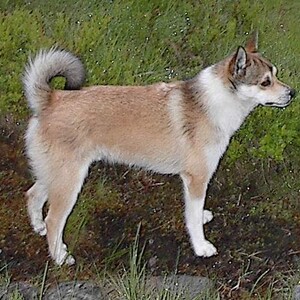
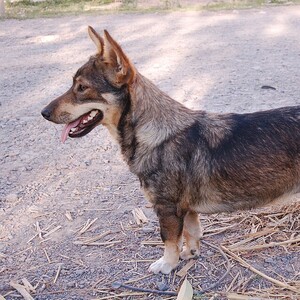
Swedish Vallhund. · Matt Lemmon / Wikimedia Commons, CC BY-SA 2.0. Cropped and resized.
The Swedish Vallhund (Västgötaspets) is a small, long, low herding dog that drives cattle by nipping at their heels. Wikipedia says the name means “herding dog” and that it has been bred as a cattle drover for more than 1,000 years. The FCI standard describes it as watchful, energetic, fearless and alert, and the AKC calls it loyal, affectionate and clever.
Quick facts
| Common name | Swedish Vallhund (Västgötaspets) |
| Scientific name | Canis lupus familiaris |
| Country of origin | Sweden |
| Official recognition | FCI, definitively since 3 January 1954 (group 5, Nordic watchdogs and herders; standard no. 14); Swedish Kennel Club since 1943; also recognised by the AKC |
| Lifespan | 12–15 years, according to the AKC |
| Size (males) | ideally 33 cm at the withers; 9–16 kg according to the AKC |
| Size (females) | ideally 31 cm at the withers |
| Coat type | Harsh, close-lying topcoat, soft and very dense undercoat |
| Common colours | Grey, greyish brown, greyish yellow, reddish yellow, reddish brown |
| Energy level | High |
| Suited to an apartment? | Yes, with enough exercise |
| Temperament | Watchful, energetic, fearless, loyal, affectionate |
| Tendency to aggression | Low |
| Good with children | Very good, according to the AKC |
| Good with other animals | Moderate |
| Genetic predispositions | Hip dysplasia, Swedish Vallhund retinopathy |
- Primary category:Dog breeds
- Explore this animal's categories:
History and origin
The FCI standard says the Vallhund is a genuine Swedish breed, although its relationship with the Welsh Corgi remains unclear: it will never be known whether the Vikings took dogs like it to Britain or brought Corgis back from the British Isles. Modern research believes it is of Swedish origin.
In the early 1940s, Count Björn von Rosen learnt that this old herding dog still existed. A few dogs of uniform type were found, mainly on the plains of Vara, in Västergötland, and the headmaster K. G. Zettersten began breeding them. Wikipedia says that in 1942 the breed was almost extinct, and in 1943 the Swedish Kennel Club recognised it.
How the breed developed
- Viking Age – A herding dog in Sweden.
- 1942 – The breed is almost extinct.
- 1943 – Recognised by the Swedish Kennel Club.
- 3 January 1954 – The FCI recognises the breed.
- 2017 – A genetic test for retinopathy becomes available.
Breed rating
| Feature | Stars |
|---|---|
| Training and intelligence | ★★★★☆ |
| Easy to train | ★★★★★ |
| Intelligence | ★★★★★ |
| Independence | ★★★★☆ |
| Stubbornness | ★★★★☆ |
| Behaviour and temperament | ★★★☆☆ |
| Affectionate with family | ★★★★☆ |
| Friendly with children | ★★★★☆ |
| Good with other dogs | ★★★☆☆ |
| Good with cats and other animals | ★★★☆☆ |
| Loyalty | ★★★★☆ |
| Tendency to be aggressive | ★★☆☆☆ |
| Tendency to bark | ★★★★☆ |
| Needs and care | ★★★★☆ |
| Shedding | ★★★★☆ |
| Needs frequent grooming | ★★★★☆ |
| Activity and lifestyle | ★★★★☆ |
| Energy level | ★★★★☆ |
| Daily exercise needs | ★★★★☆ |
| Suited to apartment life | ★★★☆☆ |
| Health and longevity | ★★★★☆ |
| Life expectancy | ★★★★☆ |
| Predisposition to genetic diseases | ★★☆☆☆ |
| Working abilities and uses | ★★★★☆ |
| Good companion dog | ★★★★☆ |
| Good companion dog | ★★★☆☆ |
Indicative rating: 5 stars means the highest level. It is based on the ratings the American Kennel Club gives the breed and on the FCI standard.
Physical characteristics
The AKC says that, with its dense sable coat, solid build and simple look, the Vallhund is a timeless breed, as much at home in a modern back garden as on the prow of a Viking ship 1,200 years ago. It is long and low, but less so than its distant cousins, the Corgis.
General appearance
The topcoat is of medium length, harsh, tight and close-lying, with a soft, very dense undercoat. The coat is short on the head and the front of the legs and longer on the neck, chest and back of the hind legs.
| Feature | Swedish Vallhund |
|---|---|
| Size | Small |
| Height at the withers | males: 33 cm; females: 31 cm |
| Weight | 9–16 kg (AKC) |
| Coat | Double, harsh |
| Colour | Grey or reddish sable |
| Body | Long and low |
The standard accepts grey, greyish brown, greyish yellow, reddish yellow or reddish brown. Lighter hair of the same shade appears on the muzzle, throat, chest, belly and legs.
Training and socialisation
The standard describes it as watchful, energetic, fearless and alert. The AKC says most want to work with their owner, one of the breed's traits, and do best with positive, reward-based training.
As a cattle dog, it is strong-willed, as it has to be to do its job, so the aim is for it to enjoy working alongside its owner.
Tips for effective training
- Use rewards. It wants to understand what you want.
- Be consistent. It is strong-willed.
- Teach it not to nip at heels. It is its cattle-driving instinct.
- Give it a sport. Agility or herding.
Activity needs and lifestyle
The AKC says exercise needs vary from dog to dog. It is not a breed made to run all day, but it is a farm dog and needs regular exercise: a good daily walk, with fetch or a sport.
| Activity | How often | Why it matters |
|---|---|---|
| Walk | daily | Fitness |
| Fetch | daily | Energy |
| Agility or herding | weekly | Instinct |
Tips for a balanced life
- Do not leave food out all day.
- Be ready for heavy moulting.
- Supervise it with young children.
Care and health
Coat and skin care
The AKC says it needs only a thorough brushing now and then and a bath when it gets dirty. Twice a year it sheds its undercoat, in “drifts” of hair; a warm bath and a massage help then.
Common health problems
The AKC says the breed is generally healthy, and responsible breeders screen their dogs for:
| Condition | Description | Common symptoms |
|---|---|---|
| Hip dysplasia | The hip joint forms incorrectly and, over time, arthritis develops | Limping, difficulty getting up or jumping, hip pain |
| Swedish Vallhund retinopathy | Inherited eye disease; genetic test since 2017 | Poor vision |
Other care
- Ask for the genetic test for retinopathy.
- Ask for the parents' hip tests.
- Keep it at the right weight.
Diet and nutrition
The AKC says Vallhunds need less food than you might think, even though they are very active, and they put on weight easily. Food should not be left out all day.
Tips for a healthy diet
The table gives a starting estimate, calculated with the formula from the Merck Veterinary Manual. The first two calorie columns show the calories per day for a healthy adult dog. The last column shows what this means in dry food with 3,500–4,000 kcal per kilogram.
| Dog's weight | Calories per day (neutered) | Calories per day (not neutered) | Dry food per day (approximate) |
|---|---|---|---|
| 9 kg | 580 kcal | 650 kcal | 140–190 g |
| 12 kg | 720 kcal | 810 kcal | 180–230 g |
| 16 kg | 900 kcal | 1,010 kcal | 220–290 g |
- Measure its portions.
- Treats count towards the daily portion.
- A dog is at the right weight when you can feel its ribs under the coat without pressing hard.
Foods to avoid
Some human foods are dangerous for dogs: chocolate, coffee, grapes and raisins, onions, garlic, xylitol (a sweetener used in chewing gum), macadamia nuts and alcohol.
Reproduction and development
Physical and emotional maturity
In dogs, sexual maturity usually comes between 6 and 12 months. Small breeds become adults faster than large ones, usually at around one year.
Mating and pregnancy
Pregnancy lasts about 63 days, counted from ovulation. Mating a female on her first heat is not recommended. The FCI standard requires that only healthy dogs of typical breed appearance are used for breeding.
Caring for the puppies
In small breeds, a litter has 3–4 puppies on average. The puppies are very small and fragile in the first weeks, so they must be kept warm and handled with care. Socialisation starts early: gentle handling, everyday noises and new people.
Interesting facts
- The Vikings' dog. The AKC pictures it on Viking ships.
- A cousin of the Corgi. The relationship between them is still unclear.
- Saved in 1942. Björn von Rosen and K. G. Zettersten saved it.
- It eats little. It needs less food than you might think.
- “Herding dog”. That is what Vallhund means.
Frequently asked questions
Is it related to the Corgi?
They look alike, but their relationship is unclear.
Is it good with children?
Yes; the AKC gives it the top score.
Does it shed?
Yes, a lot, twice a year.
How long does it live?
The AKC gives 12–15 years.