Irish TerrierCharacteristics, history, training and care
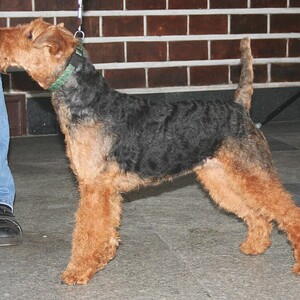
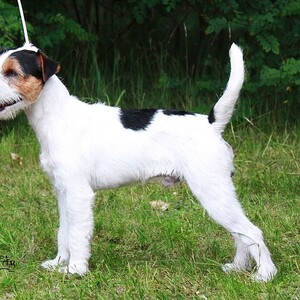
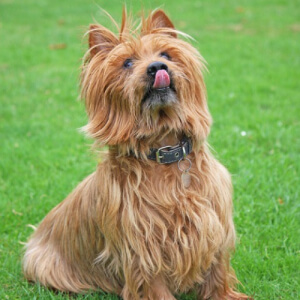
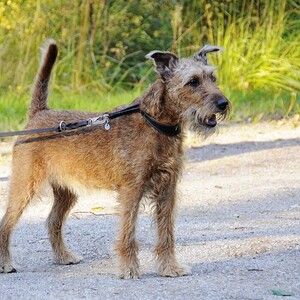
Irish Terrier. · Sini Merikallio / Wikimedia Commons, CC BY-SA 2.0. Cropped and resized.
The Irish Terrier is a long-legged, racy and elegant terrier with a harsh, fiery red coat. It is considered one of the oldest terrier breeds. It is remarkably loyal, good-natured and affectionate with people, but if attacked it has the courage of a lion. In the First World War it was a messenger dog at the front.
Quick facts
| Common name | Irish Terrier |
| Scientific name | Canis lupus familiaris |
| Country of origin | Ireland |
| Official recognition | FCI, definitively since 28 January 1955 (group 3, large and medium-sized terriers; standard no. 139); also recognised by the AKC |
| Lifespan | 13–15 years, according to the AKC |
| Size (males) | about 45.5 cm at the withers; 12.25 kg |
| Size (females) | about 45.5 cm at the withers; 11.4 kg |
| Coat type | Dense, wiry, with a “broken” look, close-lying, with an undercoat |
| Common colours | Red, wheaten red or yellow red, whole-coloured |
| Energy level | High |
| Suited to an apartment? | Yes, if it goes out several times a day |
| Temperament | Loyal, good-natured, affectionate with people, very brave |
| Tendency to aggression | Low with people; can be quarrelsome with other dogs |
| Good with children | Very good |
| Good with other animals | Poor with other dogs, according to the AKC |
| Genetic predispositions | Hyperkeratosis (cracked pads), cystinuria (bladder stones), both rare |
- Primary category:Dog breeds
- Explore this animal's categories:
History and origin
The FCI standard says Ireland has four terrier breeds, very different from those of the Continent and England, and the Irish Terrier is possibly the oldest of them. Before the 1880s the colour was not fixed: besides red, there were black and tan and brindle dogs. At the end of the 19th century these were bred out, so that in the 20th century they were all red.
Wikipedia says the 1873 Dublin show had the first separate class for the Irish Terrier and that in the 1880s it was the fourth most popular breed in Britain and Ireland. Its reputation grew during the First World War, when it was used as a messenger dog amid the noise and chaos of the trenches.
How the breed developed
- 1873 – The Dublin show has the first separate class for the breed.
- The 1880s – It is the fourth most popular breed in Britain and Ireland.
- Late 19th century – The red colour becomes fixed.
- 1914–1918 – It serves as a messenger dog at the front.
- 28 January 1955 – The FCI recognises the breed.
Breed rating
| Feature | Stars |
|---|---|
| Training and intelligence | ★★★☆☆ |
| Easy to train | ★★★☆☆ |
| Intelligence | ★★★★☆ |
| Independence | ★★★★☆ |
| Stubbornness | ★★★★☆ |
| Behaviour and temperament | ★★★★☆ |
| Affectionate with family | ★★★★★ |
| Friendly with children | ★★★★★ |
| Good with other dogs | ★☆☆☆☆ |
| Good with cats and other animals | ★★☆☆☆ |
| Loyalty | ★★★★★ |
| Tendency to be aggressive | ★★★☆☆ |
| Tendency to bark | ★★★☆☆ |
| Needs and care | ★★★★☆ |
| Shedding | ★★☆☆☆ |
| Needs frequent grooming | ★☆☆☆☆ |
| Activity and lifestyle | ★★★★☆ |
| Energy level | ★★★★☆ |
| Daily exercise needs | ★★★★☆ |
| Suited to apartment life | ★★★★☆ |
| Health and longevity | ★★★★☆ |
| Life expectancy | ★★★★★ |
| Predisposition to genetic diseases | ★★☆☆☆ |
| Working abilities and uses | ★★★★☆ |
| Good guard dog | ★★★★★ |
| Good companion dog | ★★★★☆ |
Indicative rating: 5 stars means the highest level. It is based on the ratings the American Kennel Club gives the breed and on the FCI standard.
Physical characteristics
The AKC says the Irish Terrier is the prototype of the long-legged terrier: sturdy, yet lithe and graceful, with a very well-balanced overall picture. Wikipedia says the standards describe it as “racy, red and rectangular”, with a longer body than the Fox Terrier.
General appearance
The dense, wiry coat has a “broken” look, but lies close to the body, so dense that when you part it with your fingers the skin cannot be seen. On the face the hair is short, with a small beard.
| Feature | Irish Terrier |
|---|---|
| Size | Medium |
| Height at the withers | about 45.5 cm |
| Weight | males: 12.25 kg; females: 11.4 kg |
| Coat | Wiry, dense, with an undercoat |
| Colour | Red |
| Shape | Rectangular, long-legged |
The Irish Terrier is whole-coloured red, wheaten red or yellow red. The AKC says the tight red coat is as fiery as the breed's temperament.
Training and socialisation
The standard says that, although it is brave and holds its own with other dogs, it is remarkably loyal, good-natured and affectionate with people; if attacked, it has the courage of a lion and fights to the end. Its reputation as a quarrelsome dog, even in the show ring, is undeserved.
The AKC says it is very smart and eager to please, but also wilful, independent and challenging. Early, consistent socialisation and obedience training help it become a well-behaved member of the family.
Tips for effective training
- Socialise it with other dogs. The AKC gives it the lowest score for getting on with dogs.
- Always keep it on the lead. The AKC recommends walks on the lead only.
- Be consistent. It is wilful and independent.
- Give it a job. It needs mental activity.
Activity needs and lifestyle
The AKC says it is lively, playful and full of energy, an athlete that needs regular exercise. Ideally it has a fenced garden; otherwise it must be walked on the lead several times a day.
| Activity | How often | Why it matters |
|---|---|---|
| Walks on the lead | several times a day | High energy |
| Play in a fenced yard | daily | Uses up energy |
| Training or dog sport | weekly | Mental activity |
Tips for a balanced life
- It adapts well to both town and country.
- Keep it on the lead near other dogs.
- Its coat protects it well from bad weather.
Care and health
Coat and skin care
The AKC says the coat needs regular brushing, stripping and tidying. Ideally the topcoat is hand-stripped, to keep its wiry texture and water resistance.
Common health problems
The AKC says the breed is generally healthy. Rarely, the following may occur:
| Condition | Description | Common symptoms |
|---|---|---|
| Hyperkeratosis | The paw pads harden and crack; there is a genetic test | Cracked, painful pads |
| Cystinuria | Hereditary disease that causes bladder stones | Difficult or bloody urination |
Other care
- Check the paw pads regularly.
- Brush its teeth regularly.
- Trim the nails when they start to touch the floor.
Diet and nutrition
The AKC recommends good-quality food suited to the dog's age and activity level, with fresh water always available.
Tips for a healthy diet
The table gives a starting estimate, calculated with the formula from the Merck Veterinary Manual. The first two calorie columns show the calories per day for a healthy adult dog. The last column shows what this means in dry food with 3,500–4,000 kcal per kilogram.
| Dog's weight | Calories per day (neutered) | Calories per day (not neutered) | Dry food per day (approximate) |
|---|---|---|---|
| 11 kg | 680 kcal | 760 kcal | 170–220 g |
| 12 kg | 720 kcal | 810 kcal | 180–230 g |
| 13 kg | 770 kcal | 860 kcal | 190–250 g |
- Give it its food in two meals a day.
- Training treats count towards the daily portion.
- A dog is at the right weight when you can feel its ribs without pressing hard.
Foods to avoid
Some human foods are dangerous for dogs: chocolate, coffee, grapes and raisins, onions, garlic, xylitol (a sweetener used in chewing gum), macadamia nuts and alcohol.
Reproduction and development
Physical and emotional maturity
In dogs, sexual maturity usually comes between 6 and 12 months. Most breeds become adults at around 13–15 months.
Mating and pregnancy
Pregnancy lasts about 63 days, counted from ovulation. Mating a female on her first heat is not recommended. The FCI standard requires that only healthy dogs of typical breed appearance are used for breeding.
Caring for the puppies
In dogs, a litter has 5–6 puppies on average, and the number rises with the size of the breed. Socialisation starts in the first weeks: gentle handling, everyday noises and new people.
Interesting facts
- A messenger at the front. In the First World War it carried messages through the trenches.
- The courage of a lion. The standard says that, if attacked, it fights to the end.
- “Brocaire Rua”. In Irish, the name means “the red terrier”.
- Once very popular. In the 1880s it was the fourth most popular breed in Britain and Ireland.
- One of four. Ireland has four terrier breeds.
In popular culture
The messenger dog of the trenches
The FCI standard says the Irish Terrier's reputation grew during the First World War, when it was used as a messenger dog amid the noise and terrible confusion of trench warfare, proving its intelligence and courage.
Frequently asked questions
What colour is the Irish Terrier?
It is whole-coloured red, wheaten red or yellow red.
How big does it get?
It measures about 45.5 cm and weighs 11.4–12.25 kg.
Does it get along with other dogs?
Not always; the AKC gives it a low score for getting on with dogs.
How long does it live?
The AKC gives 13–15 years.