German Longhaired PointerCharacteristics, history, training and care
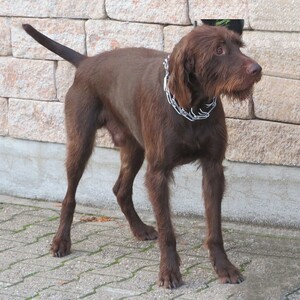
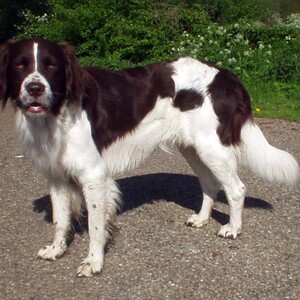
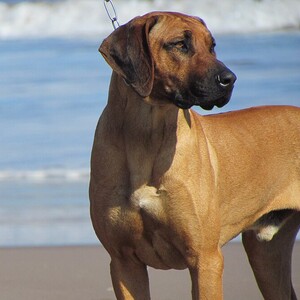
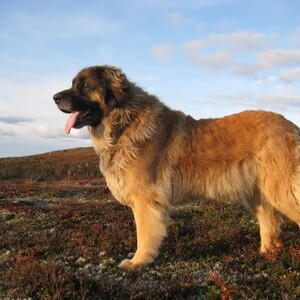
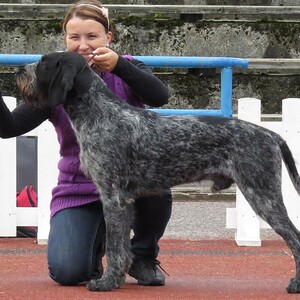
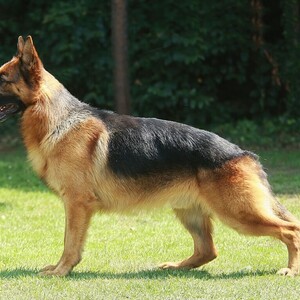
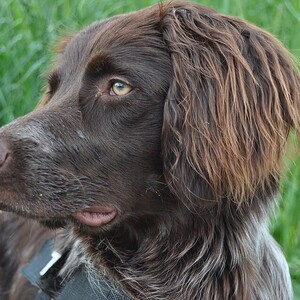
German Longhaired Pointer. · Indierocka / Wikimedia Commons, public domain. Cropped and resized.
The German Longhaired Pointer (Deutsch Langhaar) is a German pointing dog, related to the short-haired and wire-haired pointers. The AKC describes it as a setter of continental Europe: it has a full tail and a long coat. It is even-tempered, calm, good-natured and easy to train, an all-round hunting dog.
Quick facts
| Common name | German Longhaired Pointer (Deutsch Langhaar) |
| Scientific name | Canis lupus familiaris |
| Country of origin | Germany |
| Official recognition | FCI, definitively since 18 December 1954 (group 7, continental pointing dogs, with a working trial; standard no. 117); also recognised by the AKC |
| Lifespan | 12–14 years, according to the AKC |
| Size (males) | 60–70 cm at the withers, ideally 63–66 cm |
| Size (females) | 58–66 cm at the withers, ideally 60–63 cm |
| Weight | on average 30 kg |
| Coat type | 3–5 cm long on the body, close-lying; wavy on the ears; feathering on the legs and tail |
| Common colours | Solid brown, brown and white, dark or light roan, ticked |
| Energy level | High |
| Suited to an apartment? | Not really; it needs plenty of exercise |
| Temperament | Even-tempered, calm, good-natured, easy to train |
| Tendency to aggression | Very low |
| Good with children | Very good |
| Good with other animals | Good with dogs; strong hunting instinct |
| Genetic predispositions | No known specific inherited diseases, according to the AKC |
- Primary category:Dog breeds
- Explore this animal's categories:
History and origin
The FCI standard says the German Longhaired Pointer combines lines of bird dogs, hawking dogs and water dogs, as well as hounds, which is why it is so versatile. Pure breeding has been carried out since 1879. In 1897 Baron von Schorlemer wrote the first standard, laying the foundations of today's breed.
Wikipedia says Friedrich von Schorlemer-Alst founded the breed club, Club Langhaar, in 1893. The breed is closely related to the German Shorthaired Pointer, the German Wirehaired Pointer and the Large Münsterländer. Between 2010 and 2024, an average of about 509 puppies a year were registered in Germany.
How the breed developed
- 1879 – Pure breeding begins.
- 1893 – Club Langhaar is founded.
- 1897 – Baron von Schorlemer writes the first standard.
- 18 December 1954 – The FCI recognises the breed.
- 10 November 2011 – The current FCI standard is published.
Breed rating
| Feature | Stars |
|---|---|
| Training and intelligence | ★★★★★ |
| Easy to train | ★★★★★ |
| Intelligence | ★★★★☆ |
| Independence | ★★★☆☆ |
| Stubbornness | ★★☆☆☆ |
| Behaviour and temperament | ★★★★☆ |
| Affectionate with family | ★★★★★ |
| Friendly with children | ★★★★★ |
| Good with other dogs | ★★★★☆ |
| Good with cats and other animals | ★★★☆☆ |
| Loyalty | ★★★★★ |
| Tendency to be aggressive | ★☆☆☆☆ |
| Tendency to bark | ★★★☆☆ |
| Needs and care | ★★★★☆ |
| Shedding | ★★★☆☆ |
| Needs frequent grooming | ★★☆☆☆ |
| Activity and lifestyle | ★★★★☆ |
| Energy level | ★★★★☆ |
| Daily exercise needs | ★★★★★ |
| Suited to apartment life | ★★☆☆☆ |
| Health and longevity | ★★★★☆ |
| Life expectancy | ★★★★☆ |
| Predisposition to genetic diseases | ★★☆☆☆ |
| Working abilities and uses | ★★★★☆ |
| Good hunting dog | ★★★★★ |
| Good companion dog | ★★★★☆ |
Indicative rating: 5 stars means the highest level. It is based on the ratings the American Kennel Club gives the breed and on the FCI standard.
Physical characteristics
The standard describes it as strong, muscular, with flowing lines. Smaller dogs must have enough substance, but overly massive, heavy dogs are not wanted. The muzzle and skull are the same length.
General appearance
The AKC says it resembles a setter, with a full tail and a long coat with a dense topcoat and a moderate undercoat. Unlike the setter, it loves swimming and is also used for duck hunting. The hair on the ears is wavy.
| Feature | German Longhaired Pointer |
|---|---|
| Size | Large |
| Height at the withers | males: 60–70 cm; females: 58–66 cm |
| Weight | on average 30 kg |
| Coat | 3–5 cm long, close-lying |
| Ears | With wavy hair |
| Tail | Full, feathered |
The accepted colours are solid brown, brown and white or with markings (mainly on the chest and feet), dark roan, light roan and ticked (many small brown spots on a white background), with a brown head.
Training and socialisation
The standard describes it as even-tempered, calm, good-natured and easy to train. The AKC gives it the top score for trainability.
The AKC says it is a hunting dog that searches for, points, tracks and retrieves game, and that it can switch easily from calm indoors to enthusiasm in the field. It has a very strong hunting instinct.
Tips for effective training
- Give it fieldwork. The AKC says it suits keen hunters.
- Use rewards. It learns very easily.
- Let it swim. It loves water.
- Be consistent. Clear rules help it control its enthusiasm.
Activity needs and lifestyle
The AKC says it has a lot of energy and a great desire to hunt. It needs a great deal of exercise and attention and suits families of keen hunters, not those who hunt only occasionally.
| Activity | How often | Why it matters |
|---|---|---|
| Long walks or running | daily | High energy |
| Fieldwork | several times a week | Strong hunting instinct |
| Swimming and retrieving from water | weekly | It loves water |
Tips for a balanced life
- Check the coat for burrs after every outing.
- Tangles easily form at the base of the ears.
- It suits a keen hunter.
Care and health
Coat and skin care
The AKC says the long coat attracts burrs, which sometimes have to be cut out, and tangles easily form at the base of the ears. The full tail can be injured in dense vegetation. Otherwise, a brushing and an occasional bath are enough.
Common health problems
The AKC says it is a robust breed with no congenital problems known so far. As with any large, active dog, the following are worth watching:
| Condition | Description | Common symptoms |
|---|---|---|
| Hip dysplasia | The hip joint forms incorrectly and, over time, arthritis develops | Limping, difficulty getting up or jumping, hip pain |
| Gastric dilatation-volvulus (bloat) | The stomach fills with gas and may twist; this is a veterinary emergency | Swollen belly, trying to vomit without success, drooling, restlessness |
Other care
- Check the ears and tail after hunting.
- Look for ticks and burrs after outings.
- Trim the nails if they do not wear down on their own.
Diet and nutrition
The AKC says it has the same needs as all hunting breeds: two meals a day of good-quality food.
Tips for a healthy diet
The table gives a starting estimate, calculated with the formula from the Merck Veterinary Manual. The first two calorie columns show the calories per day for a healthy adult dog. The last column shows what this means in dry food with 3,500–4,000 kcal per kilogram.
| Dog's weight | Calories per day (neutered) | Calories per day (not neutered) | Dry food per day (approximate) |
|---|---|---|---|
| 25 kg | 1,250 kcal | 1,410 kcal | 310–400 g |
| 30 kg | 1,440 kcal | 1,620 kcal | 360–460 g |
| 35 kg | 1,610 kcal | 1,810 kcal | 400–520 g |
- Split the food into two meals a day to reduce the risk of bloat.
- Increase the portion on hunting days.
- A dog is at the right weight when you can feel its ribs under the coat without pressing hard.
Foods to avoid
Some human foods are dangerous for dogs: chocolate, coffee, grapes and raisins, onions, garlic, xylitol (a sweetener used in chewing gum), macadamia nuts and alcohol.
Reproduction and development
Physical and emotional maturity
In dogs, sexual maturity usually comes between 6 and 12 months, but in large breeds it can be delayed until about two years. The body also reaches its adult form later than in small breeds.
Mating and pregnancy
Pregnancy lasts about 63 days, counted from ovulation. Mating a female on her first heat is not recommended. The FCI standard requires that only healthy dogs of typical breed appearance are used for breeding.
Caring for the puppies
In large breeds, a litter has around 7 puppies on average. Socialisation starts in the first weeks: gentle handling, everyday noises and new people.
Interesting facts
- The continental “setter”. The AKC describes it as a setter of continental Europe.
- It loves water. Unlike setters, it loves swimming.
- An all-round dog. It searches for, points, tracks and retrieves game.
- Four German relatives. It is related to the German Shorthaired and Wirehaired Pointers and the Large Münsterländer.
- Rare. In Germany, an average of about 509 puppies are born each year.
Frequently asked questions
What does “Deutsch Langhaar” mean?
It means “German long-haired”, that is, the German Longhaired Pointer.
How big does it get?
Males measure 60–70 cm, females 58–66 cm; the average weight is 30 kg.
Is it a family dog?
Yes, it is calm and good with children, but it needs a great deal of exercise and hunting.
How long does it live?
The AKC gives 12–14 years.