Old Danish PointerCharacteristics, history, training and care
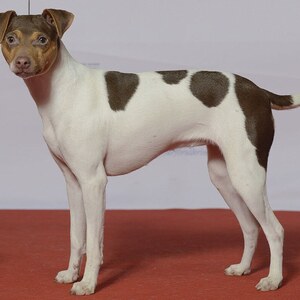
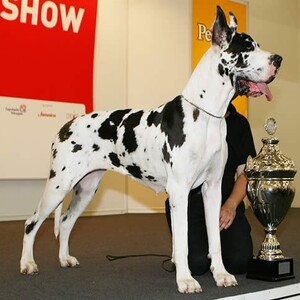
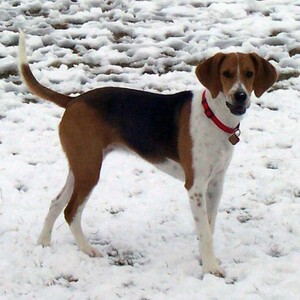
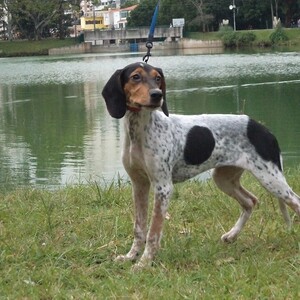
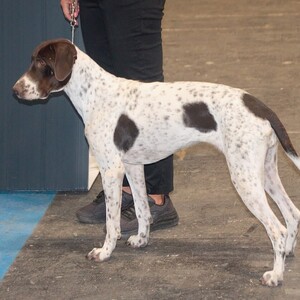
Old Danish Pointer. · Canarian / Wikimedia Commons, CC BY-SA 4.0. Cropped and resized.
The Old Danish Pointer (Gammel Dansk Hønsehund) is a medium-sized pointing dog, rectangular and powerful, white with brown patches or ticking. It was developed in Denmark around 1710. The standard describes it as calm, steady, determined and courageous, and the AKC says it switches easily from hunting to calm family life.
Quick facts
| Common name | Old Danish Pointer (Gammel Dansk Hønsehund) |
| Scientific name | Canis lupus familiaris |
| Country of origin | Denmark |
| Official recognition | FCI, definitively since 2 April 1969 (group 7, continental pointing dogs, with working trial; standard no. 281); AKC, in the Foundation Stock Service since April 2026 |
| Lifespan | No published data for the breed; large breeds usually live 10–12 years |
| Size (males) | 54–60 cm at the withers (preferably over 56 cm); 30–35 kg |
| Size (females) | 50–56 cm at the withers (preferably over 52 cm); 26–31 kg |
| Coat type | Short, dense, slightly harsh |
| Common colours | White with brown patches or ticking |
| Energy level | Moderate |
| Suited to an apartment? | Not really |
| Temperament | Calm, steady, determined, courageous |
| Tendency to aggression | Low |
| Good with children | Very good, according to the AKC |
| Good with other animals | Very good with other dogs, according to the AKC |
| Genetic predispositions | No breed-specific diseases are known |
- Primary category:Dog breeds
- Explore this animal's categories:
History and origin
The FCI standard says the origin of the breed goes back to around 1710, when Morten Bak, of Glenstrup, near Randers and Hobro, crossed the dogs of travelling Romani people with local farm dogs for 8 generations. In this way he obtained a pure breed of white and brown piebald dogs, called “Bakhounds” or Old Danish Pointers.
Farmers called their farm dogs “bloodhounds”, but they were probably descendants of the nobility's hounds, mostly of St. Hubert stock. The Romani people's dogs probably descended from Spanish pointers and from hounds, so the St. Hubert hound contributed to the breed in many ways.
How the breed developed
- Around 1710 – Morten Bak begins breeding the breed.
- 8 generations – The white and brown dogs, the “Bakhounds”, are fixed.
- 2 April 1969 – The FCI recognises the breed.
- April 2026 – It enters the AKC Foundation Stock Service.
Breed rating
| Feature | Stars |
|---|---|
| Training and intelligence | ★★★★☆ |
| Easy to train | ★★★★☆ |
| Intelligence | ★★★★☆ |
| Independence | ★★★☆☆ |
| Stubbornness | ★★☆☆☆ |
| Behaviour and temperament | ★★★★☆ |
| Affectionate with family | ★★★★☆ |
| Friendly with children | ★★★★★ |
| Good with other dogs | ★★★★★ |
| Good with cats and other animals | ★★★☆☆ |
| Loyalty | ★★★★★ |
| Tendency to be aggressive | ★☆☆☆☆ |
| Tendency to bark | ★★★☆☆ |
| Needs and care | ★★★☆☆ |
| Shedding | ★★★☆☆ |
| Needs frequent grooming | ★☆☆☆☆ |
| Activity and lifestyle | ★★★☆☆ |
| Energy level | ★★★☆☆ |
| Daily exercise needs | ★★★★★ |
| Suited to apartment life | ★★☆☆☆ |
| Health and longevity | ★★★☆☆ |
| Life expectancy | ★★★★☆ |
| Predisposition to genetic diseases | ★★☆☆☆ |
| Working abilities and uses | ★★★☆☆ |
| Good hunting dog | ★★★★★ |
| Good companion dog | ★★★★★ |
Indicative rating: 5 stars means the highest level. It is based on the ratings the American Kennel Club gives the breed and on the FCI standard.
Physical characteristics
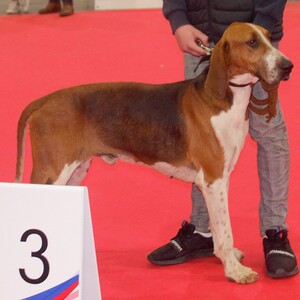
The standard describes it as a medium-sized, rectangular and powerful dog. One of the most pleasing features of the breed is the marked difference between the sexes: the male is powerful and massive, while the female is lighter, livelier and more capricious.
General appearance
The head is short and broad. The coat is short and dense, slightly harsh to the touch, and covers the body completely.
| Feature | Old Danish Pointer |
|---|---|
| Size | Medium to large |
| Height at the withers | males: 54–60 cm; females: 50–56 cm |
| Weight | males: 30–35 kg; females: 26–31 kg |
| Coat | Short, dense |
| Head | Short and broad |
| Body | Rectangular, powerful |
The colour is white with brown markings: a few large patches or many brown ticks on white. The shade of brown may vary, but brown and dark brown are preferred.
Training and socialisation
The standard says it gives the impression of a calm, steady, determined and courageous dog. When hunting it moves forward fairly slowly, always keeps in touch with the hunter and does its job as a pointing dog without needlessly disturbing the ground.
The AKC says it is intelligent, attentive, eager to learn and happy to cooperate. It learns fastest and most lastingly with gentle, friendly and motivating training.
Tips for effective training
- Be gentle and friendly. That is how it learns best.
- Use rewards. It is happy to cooperate.
- Give it a job. The AKC gives it top marks for its need for mental activity.
- Do not rush it. It hunts slowly, on purpose.
Activity needs and lifestyle
The AKC says one of its most valuable traits is that it switches easily from “work mode” to “home mode”. If it gets enough exercise, it is calm, quiet and peaceful indoors.
| Activity | How often | Why it matters |
|---|---|---|
| Long walks | daily | Exercise |
| Fieldwork or search games | several times a week | Pointing instinct |
| Brain games | daily | Great need for mental activity |
Tips for a balanced life
- It suits active families.
- It needs a fenced yard.
- It is calm indoors if it gets enough exercise.
Care and health
Coat and skin care
The short, dense coat is brushed once a week with a rubber grooming mitt. The AKC gives it a low score for grooming needs.
Common health problems
There are no large published health studies for the breed and no known breed-specific diseases. As with any large, active dog, it is worth watching for:
| Condition | Description | Common symptoms |
|---|---|---|
| Hip dysplasia | The hip joint forms incorrectly and, over time, arthritis develops | Limping, difficulty getting up or jumping, hip pain |
Other care
- Check the ears regularly.
- Check for ticks after outings in nature.
- Trim the nails regularly.
Diet and nutrition
A large hunting dog needs good-quality food suited to its level of effort.
Tips for a healthy diet
The table gives a starting estimate, calculated with the formula from the Merck Veterinary Manual. The first two calorie columns show the calories per day for a healthy adult dog. The last column shows what this means in dry food with 3,500–4,000 kcal per kilogram.
| Dog's weight | Calories per day (neutered) | Calories per day (not neutered) | Dry food per day (approximate) |
|---|---|---|---|
| 26 kg | 1,290 kcal | 1,450 kcal | 320–410 g |
| 30 kg | 1,440 kcal | 1,620 kcal | 360–460 g |
| 35 kg | 1,610 kcal | 1,810 kcal | 400–520 g |
- Split the food into two meals a day.
- Do not let it run right after a meal.
- A dog is at the right weight when you can feel its ribs without pressing hard.
Foods to avoid
Some human foods are dangerous for dogs: chocolate, coffee, grapes and raisins, onions, garlic, xylitol (a sweetener used in chewing gum), macadamia nuts and alcohol.
Reproduction and development
Physical and emotional maturity
In dogs, sexual maturity usually comes between 6 and 12 months, but in large breeds it can be delayed until about two years. The body also reaches its adult form later than in small breeds.
Mating and pregnancy
Pregnancy lasts about 63 days, counted from ovulation. Mating a female on her first heat is not recommended. The FCI standard requires that only healthy dogs of typical breed appearance are used for breeding.
Caring for the puppies
In large breeds, a litter has around 7 puppies on average. Socialisation starts in the first weeks: gentle handling, everyday noises and new people.
Interesting facts
- The “hen dog”. The AKC says the Danish name translates as “old Danish hen dog”.
- Created by one man. Morten Bak crossed dogs for 8 generations.
- It hunts slowly. The AKC says its slow style is deliberate, not a lack of passion.
- Very different male and female. The female is much lighter and livelier.
- Among the oldest pointers. The AKC says it is one of the oldest pointing breeds in Europe.
Frequently asked questions
Who created the breed?
Morten Bak, of Glenstrup, around 1710.
How big does it get?
Males measure 54–60 cm and weigh 30–35 kg; females measure 50–56 cm and weigh 26–31 kg.
Is it a family dog?
The AKC says it is calm and patient with children, if it gets enough exercise.
What does it hunt?
Birds; it is a versatile pointing dog.