Kazakh TazyCharacteristics, history, training and care
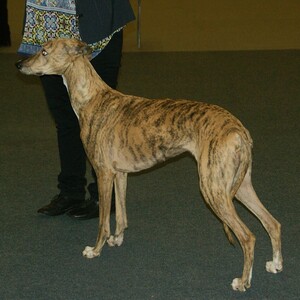
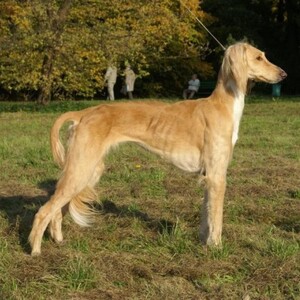
Kazakh Tazy. · Marcin Błaszkowski / Wikimedia Commons, CC BY-SA 3.0. Cropped and resized.
The Kazakh Tazy is an elegant sighthound of medium to large size from Kazakhstan, with a short coat on the body and fringes on the ears. It has been used for hunting for a very long time and is considered one of the “seven treasures” of the Kazakh people. The FCI provisionally accepted it in 2024.
Quick facts
| Common name | Kazakh Tazy |
| Scientific name | Canis lupus familiaris |
| Country of origin | Kazakhstan |
| Official recognition | FCI, provisionally accepted since September 2024 (group 10, long-haired or fringed sighthounds; standard no. 372) |
| Lifespan | No published data for the breed; large breeds usually live 10–12 years |
| Size (males) | 63–70 cm at the withers (±2 cm) |
| Size (females) | 58–65 cm at the withers (±2 cm) |
| Coat type | Soft, smooth, short on the body; fringes on the ears and legs |
| Common colours | Yellow (from light fawn to red), grey, white, black |
| Energy level | High when hunting, calm at home |
| Suited to an apartment? | Not really |
| Temperament | Balanced, agile, self-confident, somewhat reserved with strangers |
| Tendency to aggression | Low; aggressive dogs are disqualified |
| Good with children | No specific data |
| Good with other animals | Poor with small animals; strong hunting instinct |
| Genetic predispositions | No breed-specific diseases are known |
- Primary category:Dog breeds
- Explore this animal's categories:
History and origin
The FCI standard says the breed's area of origin was the whole of Central Asia. On the territory of Kazakhstan, the hunting sighthound has been known since ancient times, and its history is tied to the life of the nomadic peoples. Images of tazy-type dogs appear in rock drawings from the late Iron Age to the 17th–19th centuries.
The Tazy is mentioned in the oral folk tradition of the Kazakhs, “Zheti Kazyna” (“Seven Treasures”), and is considered one of the seven treasures of the Kazakh people, a symbol of loyalty and friendship. Wikipedia says that in nomadic times it was prized because it could catch wolves, and that a Kazakh was said to have given 47 horses for a single Tazy.
How the breed developed
- Antiquity – Tazy-type dogs appear in rock drawings in Central Asia.
- 17th–19th centuries – The tazy still appears in rock drawings.
- 2014 – A Tazy show is held in Astana to make the breed better known.
- September 2024 – The FCI provisionally accepts the breed.
Breed rating
| Feature | Stars |
|---|---|
| Training and intelligence | ★★★☆☆ |
| Easy to train | ★★★☆☆ |
| Intelligence | ★★★★☆ |
| Independence | ★★★★☆ |
| Stubbornness | ★★★☆☆ |
| Behaviour and temperament | ★★★★☆ |
| Affectionate with family | ★★★★☆ |
| Friendly with children | ★★★☆☆ |
| Good with other dogs | ★★★☆☆ |
| Good with cats and other animals | ★☆☆☆☆ |
| Loyalty | ★★★★★ |
| Tendency to be aggressive | ★★☆☆☆ |
| Tendency to bark | ★★☆☆☆ |
| Needs and care | ★★★☆☆ |
| Shedding | ★★☆☆☆ |
| Needs frequent grooming | ★★☆☆☆ |
| Activity and lifestyle | ★★★★☆ |
| Energy level | ★★★★☆ |
| Daily exercise needs | ★★★★★ |
| Suited to apartment life | ★★☆☆☆ |
| Health and longevity | ★★★☆☆ |
| Life expectancy | ★★★★☆ |
| Predisposition to genetic diseases | ★★☆☆☆ |
| Working abilities and uses | ★★★★☆ |
| Good hunting dog | ★★★★★ |
| Good companion dog | ★★★☆☆ |
Indicative rating: 5 stars means the highest level. The breed has no AKC profile, so the rating is based on the FCI standard.
Physical characteristics
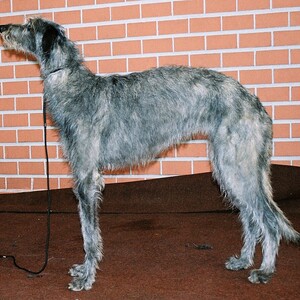
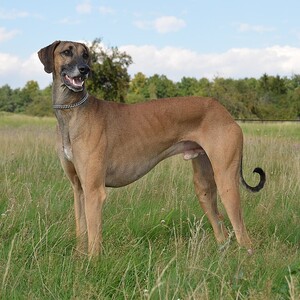
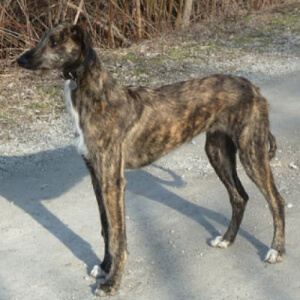
The standard describes it as a well-proportioned dog of medium to above-medium size, with lean, very well-developed muscles and a harmonious, elegant and graceful appearance.
General appearance
On the body the hair is soft, smooth and short, about 3 cm on the loins; in summer it has almost no undercoat, while in winter the undercoat can be abundant. On the ears, soft, wavy hair forms fringes, the so-called “burka”, which hang 5–6 cm below the ear.
| Feature | Kazakh Tazy |
|---|---|
| Size | Large |
| Height at the withers | males: 63–70 cm; females: 58–65 cm |
| Coat | Short on the body, with fringes on the ears |
| Body | Lean, muscular, elegant |
| Ears | Fringed (“burka”) |
| Type | Sighthound |
The accepted colours are yellow, in all shades, from light fawn to red, all shades of grey, white and black. Black shading, light markings and small white patches on the muzzle, forehead, neck, chest, feet and tip of the tail are allowed.
Training and socialisation
The standard describes it as balanced and agile, with great speed in judging a situation and making decisions. It can be somewhat reserved with strangers. At home it is calm and unobtrusive, very self-confident, and does not tolerate mistreatment.
When hunting it is passionate, easy to handle, fast and very hardy over long distances. It can hunt alone, in a group or together with birds of prey.
Tips for effective training
- Be gentle. It does not tolerate mistreatment.
- Keep it on the lead. Its sighthound instinct makes it chase anything that runs.
- Let it run safely. Only in fully fenced areas.
- Socialise it from a young age. It is somewhat reserved with strangers.
Activity needs and lifestyle
Wikipedia says it can run long distances at 12–15 km per hour. It needs exercise every day and, from time to time, a free run in a safe place.
| Activity | How often | Why it matters |
|---|---|---|
| Long walks on the lead | daily | Great stamina |
| Free run in a fenced area | several times a week | Its need for speed |
| Coursing (chasing a lure) | occasionally | Sighthound instinct |
Tips for a balanced life
- The fence must be high.
- Protect it from the cold: in summer it has very little undercoat.
- Do not leave it unsupervised with small animals.
Care and health
Coat and skin care
The short, soft coat is brushed once a week. The fringes on the ears and legs are combed so that they do not tangle.
Common health problems
There are no published health studies for the breed and no known breed-specific diseases. Wikipedia says the breed has high genetic diversity. As with any sighthound, it is worth watching for:
| Condition | Description | Common symptoms |
|---|---|---|
| Running injuries | Scratches, cuts and strains after running | Lameness, blood on the paws |
| Gastric dilatation-volvulus (bloat) | The stomach fills with gas and may twist; this is a veterinary emergency | Swollen belly, trying to vomit without success, drooling, restlessness |
Other care
- Check its paws after running.
- Check for ticks after outings in nature.
- Trim the nails regularly.
Diet and nutrition
An active sighthound needs good-quality food and more energy during hunting periods.
Tips for a healthy diet
The table gives a starting estimate, calculated with the formula from the Merck Veterinary Manual. The first two calorie columns show the calories per day for a healthy adult dog. The last column shows what this means in dry food with 3,500–4,000 kcal per kilogram.
| Dog's weight | Calories per day (neutered) | Calories per day (not neutered) | Dry food per day (approximate) |
|---|---|---|---|
| 20 kg | 1,060 kcal | 1,190 kcal | 260–340 g |
| 25 kg | 1,250 kcal | 1,410 kcal | 310–400 g |
| 30 kg | 1,440 kcal | 1,620 kcal | 360–460 g |
- Split the food into two meals a day.
- Do not let it run right after a meal.
- In sighthounds the ribs are easy to see; the important thing is that it is not too thin.
Foods to avoid
Some human foods are dangerous for dogs: chocolate, coffee, grapes and raisins, onions, garlic, xylitol (a sweetener used in chewing gum), macadamia nuts and alcohol.
Reproduction and development
Physical and emotional maturity
In dogs, sexual maturity usually comes between 6 and 12 months, but in large breeds it can be delayed until about two years. The body also reaches its adult form later than in small breeds.
Mating and pregnancy
Pregnancy lasts about 63 days, counted from ovulation. Mating a female on her first heat is not recommended. The FCI standard requires that only healthy dogs of typical breed appearance are used for breeding.
Caring for the puppies
In large breeds, a litter has around 7 puppies on average. Socialisation starts in the first weeks: gentle handling, everyday noises and new people.
Interesting facts
- One of the “seven treasures”. The Kazakhs consider it one of the seven treasures of their people.
- More than a dog. Wikipedia says it was taboo to call it just a “dog”.
- 47 horses. A Kazakh was said to have given 47 horses for a Tazy.
- It hunts with birds of prey. The standard particularly values hunting alongside birds.
- A rare breed. Wikipedia says there are fewer than 300 purebred dogs.
In popular culture
“Zheti Kazyna”
In the oral folk tradition of the Kazakhs, “Zheti Kazyna” (“Seven Treasures”), the Tazy is one of the seven treasures of the people, a symbol of loyalty and friendship.
Frequently asked questions
Is the Tazy the same as the Saluki?
No. Wikipedia says it resembles the Saluki, but it is a different, related breed.
How big does it get?
Males measure 63–70 cm and females 58–65 cm at the withers.
Is it officially recognised?
The FCI provisionally accepted it in September 2024.
What did it hunt?
Hare, foxes, hoofed game and, in the past, wolves.