MoleInteresting facts and information
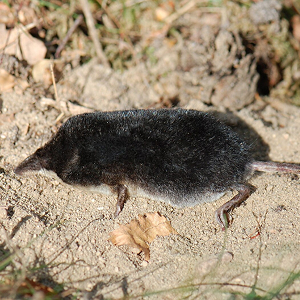
Moles belong to the family Talpidae, which also includes related mammals with different ways of life. Burrowing moles have powerful front limbs and small eyes. This overview compares examples such as the European mole, eastern mole and star-nosed mole.
Burrowing moles feed on animals such as earthworms and insect larvae. Their digging changes soil, and can also conflict with gardening or farming. The family includes species with different habitats and anatomy.
Quick facts
| Common name | Mole |
| Scientific name | Talpidae |
| Typical lifespan | Usually about 3 years in the wild; up to about 6-7 years |
| Maximum speed | Moves quickly along its tunnels, forwards or backwards |
| Dimensions | About 10-20 cm long (without tail) |
| Weight | About 50-130 g, depending on the species |
| Diet type | Carnivore (earthworms, insects, larvae) |
| Main predators | Owls, buzzards, herons, foxes, weasels, cats, dogs |
| Conservation status | Assess separately by species and population; different taxa and regions have different needs |
| Main species | European mole (Talpa europaea), eastern mole (Scalopus aquaticus), star-nosed mole (Condylura cristata) |
| Distribution | Europe, Asia, North America |
| Habitat | Grassland, woodland, farmland, gardens and wetlands, depending on the species |
- Primary category:Mammals
- Explore this animal's categories:
Interesting facts
- Moles are digging machines - A mole can dig up to about 20 metres of new tunnel in a day, using its huge, shovel-like front feet.
- A fast metabolism - Moles need a lot of energy and may eat about half to all of their own body weight in food every day.
- Not blind, but nearly - Moles have tiny eyes, sometimes hidden under fur or skin, that can tell light from dark but see very little.
- A super-sensitive nose - The star-nosed mole (Condylura cristata) has 22 fleshy tentacles on its nose, the most sensitive touch organ known in any mammal; it can identify and eat prey in a fraction of a second.
- Gardeners of the soil - Moles' tunnels let air and water into the soil and mix it, which can benefit plants.
- Living with little oxygen - Moles' blood holds oxygen especially well, which helps them breathe in stuffy underground tunnels.
- Living larders - European moles bite earthworms so they cannot move, and store them alive in underground chambers; one larder contained hundreds of worms.
- Swimming moles - The star-nosed mole of North America is semi-aquatic: it swims well and even sniffs underwater by blowing and re-inhaling bubbles.
- No hibernation - Moles stay active all winter, digging deeper tunnels when the ground freezes.
Records and remarkable features
- The eastern mole (Scalopus aquaticus) is a burrowing mole with specialised digging forelimbs; a verified maximum digging-speed comparison is not given here.
- The star-nosed mole is one of the fastest eaters in the animal world: it can find and swallow a small prey item in about a fifth of a second.
- Moles have an extra "thumb", a long bone in the wrist that makes their front paws even wider for digging.
Characteristics
Moles are small mammals that eat insects and worms and are perfectly adapted to life underground. Their bodies are built for digging, with strong front legs, a compact body and a metabolism adapted to tunnels with little oxygen.
Main physical characteristics
- A cylindrical, compact body - Its streamlined shape and lack of outer ears help a mole move easily through tunnels.
- Velvety fur - Unlike most mammals, a mole's fur can lie in any direction, so it can move forwards or backwards in its tunnels without its fur rubbing the wrong way.
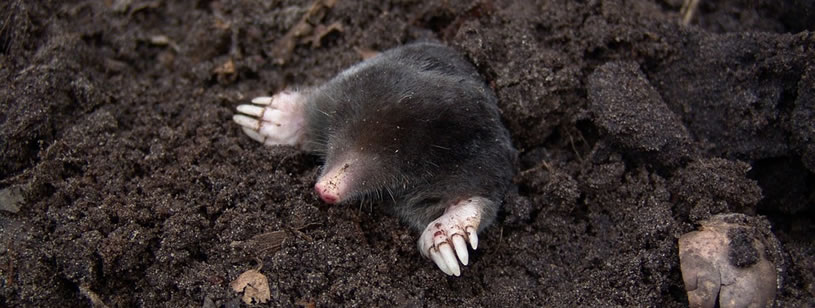
- Powerful front legs - Huge, broad front paws with strong claws let moles shovel large amounts of soil.
- Tiny eyes - Moles are not completely blind, but they see very little apart from light and dark.
- A very sensitive snout - Covered with tiny touch sensors and whiskers; in the star-nosed mole, it has 22 fleshy tentacles.
- Sharp teeth - Moles have pointed teeth for catching and chewing earthworms and insects.
Special adaptations for survival
- Special blood - Moles' haemoglobin carries oxygen especially well and helps them cope with the carbon dioxide that builds up in their tunnels.
- Feeling vibrations - Instead of sight, moles rely on touch, smell and vibrations in the soil to find prey and sense danger.
- Food stores - European moles store paralysed earthworms in their tunnels so they have fresh food when worms are scarce.
Habits and behaviour
Moles are solitary, territorial animals that live almost entirely underground. They are active all year, constantly building and extending their network of tunnels.
Social behaviour and way of life
- Solitary - Moles live alone, and each one defends its own tunnel system.
- Large territories - A single mole's tunnels can cover a large area, sometimes several thousand square metres.
- Day and night - European moles have several periods of activity and rest throughout the day and night, about every four hours.
Tunnels and nests
- Shallow and deep tunnels - Moles dig shallow tunnels near the surface for feeding and deeper tunnels for shelter.
- Nest chambers - Besides their main tunnels, moles have chambers lined with dry grass and leaves for resting and raising young.
- Molehills - The piles of soil we see on lawns and fields are earth pushed up from the tunnels below.
Defence and survival methods
- Speed in the tunnels - Moles can scurry quickly along their tunnels, forwards or backwards, to escape danger.
- Staying underground - By rarely coming to the surface, moles avoid most predators.
- Food stores - Their worm larders help them survive when hunting is poor.
Habitat and geographic distribution
Moles live in temperate and subtropical regions of Europe, Asia and North America. They prefer soft, damp soil that is easy to dig.
Habitat types
- Meadows and fields - Their soil is often rich in earthworms and insects.
- Deciduous woodland - Moles also live in woods, where the soil is damp and easy to dig.
- Gardens and farmland - Moles are common in cultivated areas, where there is plenty of food.
- Wetlands - The star-nosed mole prefers marshes and wet meadows and can swim.
Geographic distribution
| Region | Example species | Situation |
|---|---|---|
| Europe | Talpa europaea (European mole), Talpa romana (Roman mole) | Common in most areas |
| North America | Scalopus aquaticus (eastern mole), Condylura cristata (star-nosed mole) | Common |
| Asia | Mogera wogura (Japanese mole), Talpa altaica (Siberian mole) | Many species; some are poorly known |
| Japan | Mogera tokudae (Sado mole), Mogera imaizumii (small Japanese mole) | The Sado mole is Endangered |
Impact of climate change and human activities
- Changing soils - Droughts can make the ground too hard to dig and drive earthworms deeper.
- Urban growth - Towns and roads destroy natural mole habitats.
- Persecution - Moles are often trapped or poisoned in gardens, golf courses and farmland.
Moles are adaptable, but habitat destruction and pesticides that affect their food can harm their populations.
Diet and feeding
Moles are efficient predators of small animals living in the soil. Because of their fast metabolism, they need to eat almost constantly.
Main food
- Earthworms - The main food of most moles in temperate regions.
- Insects and larvae - Beetles, beetle grubs, leatherjackets and other insects living in the soil.
- Slugs and snails - Also eaten when moles find them.
- Water animals - The star-nosed mole also catches aquatic insects, worms and small crustaceans.
- Plants - Moles eat very little plant material, mostly by accident.
Hunting techniques
- Patrolling tunnels - Earthworms and insects fall into the tunnels, and the mole finds them by touch and smell as it patrols.
- Quick capture - Moles grab worms with their teeth and use their front paws to squeeze soil out of them before eating.
- Food storage - European moles bite the heads of earthworms so they cannot crawl away, keeping them fresh in their larders.
Diet by habitat
| Habitat | Main food |
|---|---|
| Meadows and fields | Earthworms, insect larvae |
| Woodland | Earthworms, beetles, slugs |
| Marshes | Aquatic insects, worms, small crustaceans |
| Gardens and farmland | Earthworms, beetle grubs, leatherjackets |
Reproduction and life cycle
Moles have quite short lives, but they breed every year, so their populations usually remain stable.
Mating
- Breeding season - In Europe, mating usually takes place in spring, mainly from March to May.
- Searching for mates - Males extend their tunnels to find females, which they locate by scent.
- A short meeting - After mating, the male leaves, and the female raises the young alone.
Pregnancy and birth
- Pregnancy - About 4 weeks.
- Number of young - Usually 3-7 per litter.
- Birthplace - The female builds a nest in a large chamber of the tunnel system, lined with grass and dry leaves.
Development of the young
- Helpless babies - The young are born blind and hairless and depend completely on their mother.
- Fast growth - At about 3 weeks, they open their eyes and start exploring the tunnels.
- Independence - At about 5-6 weeks, they leave their mother and set out to find their own territories, often crossing open ground where many are caught by predators.
Longevity
- In the wild - Most moles live about 3 years, and a few reach 5-6 years.
- In captivity - They can live up to about 6-7 years.
Name and history
People have known and studied moles for centuries, mainly because of their impact on fields and gardens.
Origin of the name
- The English word "mole" comes from Middle English molle, a Germanic word; an older English name for the mole is "mouldwarp", meaning "earth-thrower".
- The scientific name Talpidae comes from the Latin talpa, "mole".
Taxonomic classification
| Taxonomic category | Name |
|---|---|
| Kingdom | Animalia |
| Phylum | Chordata |
| Class | Mammalia |
| Order | Eulipotyphla |
| Family | Talpidae |
| Main genera | Talpa, Scalopus, Condylura, Mogera |
| Notable species | Talpa europaea, Scalopus aquaticus, Condylura cristata |
Discovery and documentation
- Ancient times - Greek writers, including Aristotle, noticed that the mole's eyes were hidden under its skin.
- 1702 - King William III of England died after his horse stumbled on a molehill; his opponents toasted "the little gentleman in the black velvet waistcoat".
- The 19th century - Naturalists began detailed studies of moles and their effects on soil.
Moles in folklore
- A link with the underworld - Because moles live in darkness underground, European folklore sometimes linked them with death and the underworld.
- Good or bad luck - In some places, moles in a field were seen as a sign of healthy, fertile soil; in others, as a pest that ruins crops.
- Mole catchers - In the English countryside, professional mole catchers were once a familiar sight.
Moles are still studied today for their impact on the environment and their ability to live in tight, oxygen-poor tunnels.
Cultural significance and mythology
Moles appear in the folklore and culture of many peoples, linked both with fertile soil and with darkness and the underground world.
Moles in mythology and superstition
- Fertile soil - In many cultures, molehills were seen as a sign of healthy soil rich in worms.
- The underworld - Because they live underground, moles were sometimes linked with death and spirits.
- Good or bad omens - In some farming traditions, moles in a field promised a good harvest, while in others they were blamed for damaged crops.
Moles in modern symbolism
- Hard work - Moles are symbols of tireless work and of overcoming obstacles.
- Working in secret - Because they work unseen underground, moles stand for quiet, hidden effort.
- Spies - A "mole" is a secret agent working inside an organisation for its enemies, a term made famous by John le Carré's spy novels.
Conservation status and threats
Most moles are fairly widespread, but some species, especially those with small ranges, are threatened by habitat destruction and pesticides.
Conservation status
- European mole (Talpa europaea) - Common and stable, though often persecuted in farmland and gardens.
- Eastern mole (Scalopus aquaticus) - Common in North America and not threatened.
- Star-nosed mole (Condylura cristata) - Stable, but depends on healthy wetlands.
- Sado mole (Mogera tokudae) - Endangered; it lives only on Sado Island and a nearby area of Japan.
- Pyrenean desman (Galemys pyrenaicus) - An unusual aquatic relative of moles, listed as Endangered because of river pollution and dams.
Main threats
- Habitat destruction - Urban growth and intensive farming reduce the places where moles can dig.
- Pesticides and chemicals - Farm chemicals can harm moles directly or reduce their food.
- Persecution - Moles are often seen as pests and are trapped or poisoned.
- Climate change - Higher temperatures and droughts can affect soil moisture and food supply.
Conservation efforts
- Rules on poisons - Some countries restrict the use of toxic chemicals against moles.
- Protecting habitats - Protected areas, natural meadows and wetlands help mole populations.
- Research - Scientists monitor rare species, such as the Sado mole and the Pyrenean desman.
In popular culture
Moles appear in many books, films, cartoons and video games, usually as friendly or mysterious characters.
Moles in books and animation
- The Wind in the Willows (Kenneth Grahame, 1908) - Mole is the gentle, curious hero who leaves his underground home to explore the riverbank.
- The Little Mole (Krtek) - A much-loved Czech cartoon character created by Zdeněk Miler in 1957 and popular across Eastern Europe.
- The Story of the Little Mole Who Knew It Was None of His Business (Werner Holzwarth, 1989) - A funny German picture book about a mole looking for whoever pooped on his head.
- Once Upon a Forest (1993) - Edgar, a young mole, helps save his forest home.
Moles in video games
- Mole Mania (Nintendo, 1996) - A puzzle game in which players control a digging mole.
- Animal Crossing - Mr Resetti, a grumpy mole, scolds players who quit the game without saving.
- Monty Mole (1984) - A classic British computer game in which a mole searches for coal.
Moles in language
- "Making a mountain out of a molehill" - An English saying that means making a small problem seem much bigger than it is.