English SetterCharacteristics, history, training and care
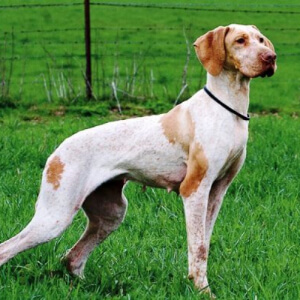
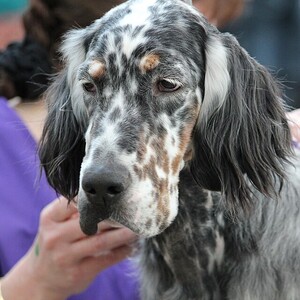
English Setter. · daveynin / Wikimedia Commons, CC BY 2.0. Cropped and resized.
The English Setter is an elegant pointing dog with a silky white coat flecked with small spots of colour, known as “belton”. It was bred to hunt quail, pheasant and partridge. It is very friendly, gentle, devoted and sensitive, a wonderful companion for an active family.
Quick facts
| Common name | English Setter |
| Scientific name | Canis lupus familiaris |
| Country of origin | United Kingdom |
| Official recognition | FCI, definitively since 6 March 1963 (group 7, British pointing dogs, with a working trial; standard no. 2); also recognised by the AKC |
| Lifespan | about 12 years, according to the AKC; a 2024 British study found 13.1 years |
| Size (males) | 65–68 cm at the withers; about 29–36 kg (AKC) |
| Size (females) | 61–65 cm at the withers; about 20–25 kg (AKC) |
| Coat type | Long, silky, slightly wavy, with abundant feathering |
| Common colours | White with black, orange, lemon or liver (belton); tricolour |
| Energy level | Moderate to high |
| Suited to an apartment? | It can adapt, if it gets plenty of exercise |
| Temperament | Very friendly, gentle, active, sensitive |
| Tendency to aggression | Very low |
| Good with children | Good |
| Good with other animals | Good with dogs; hunting instinct towards birds |
| Genetic predispositions | Hip and elbow dysplasia, congenital deafness, bloat |
- Primary category:Dog breeds
- Explore this animal's categories:
History and origin
Wikipedia says the English Setter was a pointing dog trained in England more than 400 years ago, and some works of art from the early 15th century show setter-type dogs. Its job was to “set”, that is, to show the hunter where the birds were.
Its modern look is owed to Edward Laverack (1800–1877), who created his own line in the 19th century, and to Richard Purcell Llewellin (1840–1925), who crossed Laverack's best dogs with other lines. This is why the breed is sometimes also called the “Laverack Setter” or the “Llewellin Setter”.
How the breed developed
- Early 15th century – Setter-type dogs appear in works of art.
- 19th century – Edward Laverack and Richard Purcell Llewellin create the modern lines.
- 6 March 1963 – The FCI recognises the breed.
- 8 September 2026 – the current FCI standard is published.
Breed rating
| Feature | Stars |
|---|---|
| Training and intelligence | ★★★★☆ |
| Easy to train | ★★★★☆ |
| Intelligence | ★★★★☆ |
| Independence | ★★★☆☆ |
| Stubbornness | ★★★☆☆ |
| Behaviour and temperament | ★★★★☆ |
| Affectionate with family | ★★★★★ |
| Friendly with children | ★★★★☆ |
| Good with other dogs | ★★★★☆ |
| Good with cats and other animals | ★★★☆☆ |
| Loyalty | ★★★★★ |
| Tendency to be aggressive | ★☆☆☆☆ |
| Tendency to bark | ★★★☆☆ |
| Needs and care | ★★★★☆ |
| Shedding | ★★★☆☆ |
| Needs frequent grooming | ★★★☆☆ |
| Activity and lifestyle | ★★★★☆ |
| Energy level | ★★★☆☆ |
| Daily exercise needs | ★★★★☆ |
| Suited to apartment life | ★★★☆☆ |
| Health and longevity | ★★★★☆ |
| Life expectancy | ★★★★☆ |
| Predisposition to genetic diseases | ★★★☆☆ |
| Working abilities and uses | ★★★★☆ |
| Good hunting dog | ★★★★☆ |
| Good companion dog | ★★★★★ |
Indicative rating: 5 stars means the highest level. It is based on the ratings the American Kennel Club gives the breed and on the FCI standard.
Physical characteristics
The AKC describes it as an elegant yet solid, beautiful and charming dog, a well-balanced hunter. Wikipedia says working lines are usually finer and carry less coat than show lines.
General appearance
The long, oval head is carried high, with dark eyes and a gentle expression. The ears, set at eye level, hang in an elegant fold. The coat forms long feathering on the ears, chest, legs, belly and tail.
| Feature | English Setter |
|---|---|
| Size | Large |
| Height at the withers | males: 65–68 cm; females: 61–65 cm |
| Weight | males: about 29–36 kg; females: 20–25 kg |
| Coat | Long, silky, feathered |
| Eyes | Dark, gentle expression |
| Tail | Reaching the hock, feathered |
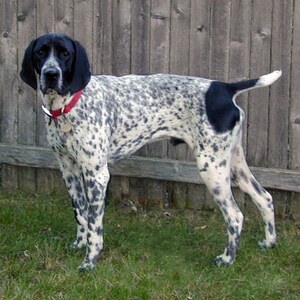
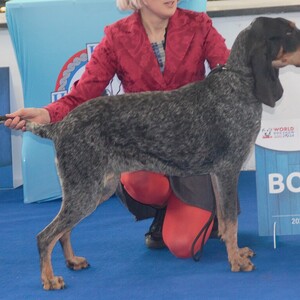
The colours are black and white (blue belton), orange and white (orange belton), lemon and white (lemon belton), liver and white (liver belton) or tricolour. Dogs without large patches on the body, flecked all over with small spots, are preferred. The word “belton” is used only for this breed.
Training and socialisation
The standard describes it as very active, with a good game sense, extremely friendly and gentle. The AKC says it is a sensible, devoted and good-natured companion.
It is very sensitive and takes reprimands to heart, so it learns best with rewards. Its nose and hunting instinct can carry it away, so training must start early and be consistent.
Tips for effective training
- Use rewards. The AKC says punishment affects it a great deal.
- Start training early. The hunting instinct shows up quickly.
- Be consistent. Clear rules help it listen.
- Hide the food. The AKC says it likes to “inspect” the kitchen worktop.
Activity needs and lifestyle
The AKC says it needs regular exercise: ideally a run or an energetic play session in a large, securely fenced area. Alternatively, it can run on a lead beside a bicycle, jog with its owner or go on long walks and hikes.
| Activity | How often | Why it matters |
|---|---|---|
| Running in a fenced area | daily | Burns off energy |
| Long walks or jogging | daily | Regular exercise |
| Fieldwork or scent games | weekly | Hunting instinct |
Tips for a balanced life
- Do not overexert it before it is fully grown.
- Check the coat for burrs after walks.
- It suits an active family.
Care and health
Coat and skin care
The AKC says the long, silky coat should be brushed at least once a week with a soft brush, and tangles worked out with a long-toothed metal comb. Untreated tangles can lead to skin problems. The hair around the feet and ears should be trimmed regularly.
Common health problems
The AKC says English Setters are generally healthy, and responsible breeders test their dogs for:
| Condition | Description | Common symptoms |
|---|---|---|
| Hip dysplasia | The hip joint forms incorrectly and, over time, arthritis develops | Limping, difficulty getting up or jumping, hip pain |
| Elbow dysplasia | The elbow joint develops incorrectly and arthritis appears | Limping on the front legs, especially after exercise |
| Congenital deafness | Inherited deafness in one or both ears | Does not react to sounds |
| Gastric dilatation-volvulus (bloat) | The stomach fills with gas and may twist; this is a veterinary emergency | Swollen belly, trying to vomit without success, drooling, restlessness |
Other care
- Check the ears regularly.
- Brush its teeth regularly.
- Trim the nails when they start to touch the floor.
Diet and nutrition
The AKC says puppies should be fed small portions three times a day, and twice a day after one year. English Setters easily overeat and gain weight, so their weight must be watched throughout their lives.
Tips for a healthy diet
The table gives a starting estimate, calculated with the formula from the Merck Veterinary Manual. The first two calorie columns show the calories per day for a healthy adult dog. The last column shows what this means in dry food with 3,500–4,000 kcal per kilogram.
| Dog's weight | Calories per day (neutered) | Calories per day (not neutered) | Dry food per day (approximate) |
|---|---|---|---|
| 20 kg | 1,060 kcal | 1,190 kcal | 260–340 g |
| 28 kg | 1,360 kcal | 1,530 kcal | 340–440 g |
| 36 kg | 1,650 kcal | 1,850 kcal | 410–530 g |
- Keep food away from the worktop and the table.
- Training treats count towards the daily portion.
- A dog is at the right weight when you can feel its ribs under the coat without pressing hard.
Foods to avoid
Some human foods are dangerous for dogs: chocolate, coffee, grapes and raisins, onions, garlic, xylitol (a sweetener used in chewing gum), macadamia nuts and alcohol.
Reproduction and development
Physical and emotional maturity
In dogs, sexual maturity usually comes between 6 and 12 months, but in large breeds it can be delayed until about two years. The body also reaches its adult form later than in small breeds.
Mating and pregnancy
Pregnancy lasts about 63 days, counted from ovulation. Mating a female on her first heat is not recommended. The FCI standard requires that only healthy dogs of typical breed appearance are used for breeding.
Caring for the puppies
In large breeds, a litter has around 7 puppies on average. Socialisation starts in the first weeks: gentle handling, everyday noises and new people.
Interesting facts
- The word “belton”. The small flecks of colour are called “belton”, a term used only for this breed.
- Over 400 years. It was being trained in England more than 400 years ago.
- Two famous lines. Laverack and Llewellin gave their names to the lines from which the modern breed comes.
- Working vs. show. Hunting dogs are finer and have less coat.
- Worktop inspector. The AKC says it likes to look for food on the kitchen worktop.
Frequently asked questions
What does “belton” mean?
It is the name for the small flecks of colour on the English Setter's white coat.
How big does it get?
Males measure 65–68 cm, females 61–65 cm at the withers.
Is it a family dog?
Yes. It is very friendly, gentle and devoted, but it needs plenty of exercise.
How long does it live?
The AKC gives about 12 years; a 2024 British study found 13.1 years.