PudelpointerCharacteristics, history, training and care
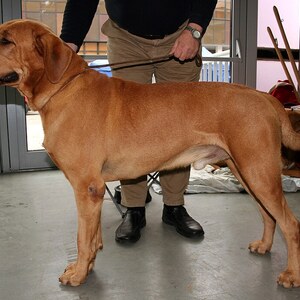
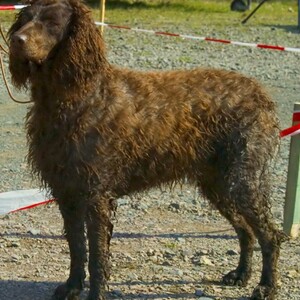
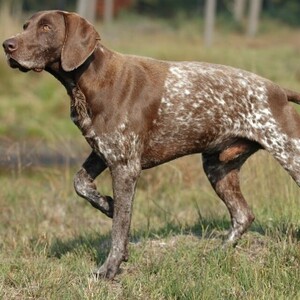
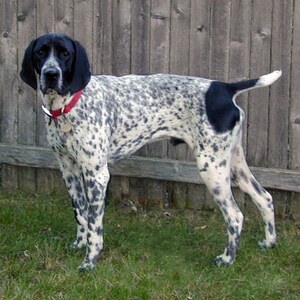
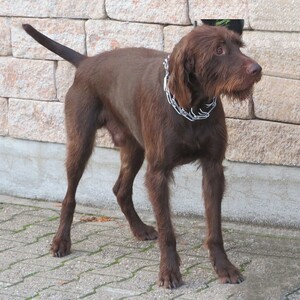
Pudelpointer. · Sciencia58 / Wikimedia Commons, CC BY-SA 4.0. Cropped and resized.
The Pudelpointer is a wire-haired German pointing dog, created from just two breeds: the Poodle and the Pointer. It took the intelligence and love of water of the Poodle and the nose, wide-ranging search and firm point of the Pointer. The standard describes it as neither shy nor aggressive, calm, self-controlled and with a clear hunting instinct.
Quick facts
| Common name | Pudelpointer |
| Scientific name | Canis lupus familiaris |
| Country of origin | Germany |
| Official recognition | FCI, definitively since 13 November 1959 (group 7, continental pointing dogs, with working trial; standard no. 216); has a breed profile at the AKC |
| Lifespan | about 14 years, according to the AKC |
| Size (males) | 60–68 cm at the withers; 20–32 kg according to the AKC |
| Size (females) | 55–63 cm at the withers; 20–32 kg according to the AKC |
| Coat type | Harsh, close-lying, of medium length, with a dense undercoat |
| Common colours | Brown, “dead leaf”, black |
| Energy level | High |
| Suited to an apartment? | Not really |
| Temperament | Calm, self-controlled, balanced, passionate about hunting |
| Tendency to aggression | Low; neither shy nor aggressive |
| Good with children | Average |
| Good with other animals | Average; hunting instinct |
| Genetic predispositions | Hip dysplasia, epilepsy |
- Primary category:Dog breeds
- Explore this animal's categories:
History and origin
Wikipedia says that in 1881 the German breeder Baron von Zedlitz (“Hegewald”) set to work on his ideal dog for tracking, pointing and retrieving, good on land and in water. From 7 Poodles and 90 Pointers he created the Pudelpointer. The first sire was Tell, an English Pointer belonging to Emperor Frederick III, and the first dam a hunting Poodle bitch, Molly.
The FCI standard says the breed developed in complete isolation from other pointing breeds. Although the Poodle was used only at the beginning, its traits have survived to this day, and the country of origin places great importance on health, especially on preventing hip dysplasia and epilepsy.
How the breed developed
- 1881 – Baron von Zedlitz begins breeding the dogs.
- The beginnings – Tell (a Pointer) and Molly (a Poodle) are the first parents.
- 13 November 1959 – The FCI recognises the breed.
- 9 November 2004 – The current FCI standard is published.
Breed rating
| Feature | Stars |
|---|---|
| Training and intelligence | ★★★★★ |
| Easy to train | ★★★★☆ |
| Intelligence | ★★★★☆ |
| Independence | ★★★☆☆ |
| Stubbornness | ★★☆☆☆ |
| Behaviour and temperament | ★★★★★ |
| Affectionate with family | ★★★★★ |
| Friendly with children | ★★★☆☆ |
| Good with other dogs | ★★★☆☆ |
| Good with cats and other animals | ★★☆☆☆ |
| Loyalty | ★★★★★ |
| Tendency to be aggressive | ★☆☆☆☆ |
| Tendency to bark | ★★★☆☆ |
| Needs and care | ★★★☆☆ |
| Shedding | ★★★☆☆ |
| Needs frequent grooming | ★☆☆☆☆ |
| Activity and lifestyle | ★★★★☆ |
| Energy level | ★★★★★ |
| Daily exercise needs | ★★★★★ |
| Suited to apartment life | ★★☆☆☆ |
| Health and longevity | ★★★★☆ |
| Life expectancy | ★★★★☆ |
| Predisposition to genetic diseases | ★★☆☆☆ |
| Working abilities and uses | ★★★☆☆ |
| Good hunting dog | ★★★★★ |
| Good companion dog | ★★★★☆ |
Indicative rating: 5 stars means the highest level. It is based on the ratings the American Kennel Club gives the breed and on the FCI standard.
Physical characteristics
It is a large, wire-haired pointing dog, built for work in the field, in the forest and in water. The head is balanced, with a flat skull and pronounced brows.
General appearance
The coat is close-lying, flat, harsh and of medium length, with a dense undercoat; at the withers it is 4–6 cm long. On the head it has a beard and a topknot like a wood shaving. Thanks to its harshness and density, the coat gives it the best possible protection against weather and injury.
| Feature | Pudelpointer |
|---|---|
| Size | Large |
| Height at the withers | males: 60–68 cm; females: 55–63 cm |
| Weight | 20–32 kg (AKC) |
| Coat | Harsh, with an undercoat |
| Head | With a beard and topknot |
| Ancestors | Poodle and Pointer |
The colour is solid: brown, “dead leaf” or black. Small white markings are allowed.
Training and socialisation
The standard describes it as neither shy nor aggressive, calm, self-controlled, with a balanced temperament and a clear hunting instinct, with no fear of game or gunfire.
The AKC says that in Germany it has always ranked very highly in working and field tests, valued for its willingness and energy. The AKC gives it top marks for ease of training.
Tips for effective training
- Use rewards. It learns very easily.
- Give it a job. It is a versatile hunting dog.
- Let it swim. It inherited the Poodle's love of water.
- Practise the recall. It has a very good nose.
Activity needs and lifestyle
The AKC says that, as a hunting dog, it needs regular exercise: play in a fenced yard, walks several times a day, swimming, hiking or fetch.
| Activity | How often | Why it matters |
|---|---|---|
| Long walks | daily | Energy |
| Swimming and retrieving | weekly | A water dog |
| Tracking work | several times a week | A fine nose |
Tips for a balanced life
- It is best suited to hunters.
- It needs a fenced yard.
- Dry its ears after swimming.
Care and health
Coat and skin care
The AKC says the harsh coat, with its dense undercoat, sheds seasonally. Besides weekly grooming, an occasional bath keeps it clean. The nails should be trimmed regularly.
Common health problems
The AKC says most Pudelpointers are healthy; in Germany the emphasis is on preventing:
| Condition | Description | Common symptoms |
|---|---|---|
| Hip dysplasia | The hip joint forms incorrectly and, over time, arthritis develops | Limping, difficulty getting up or jumping, hip pain |
| Epilepsy | Repeated neurological seizures | Trembling, convulsions |
Other care
- Check the ears after time in water.
- Clean the beard after meals.
- Trim the nails regularly.
Diet and nutrition
The AKC says some dogs gain weight easily, so calories and weight should be watched.
Tips for a healthy diet
The table gives a starting estimate, calculated with the formula from the Merck Veterinary Manual. The first two calorie columns show the calories per day for a healthy adult dog. The last column shows what this means in dry food with 3,500–4,000 kcal per kilogram.
| Dog's weight | Calories per day (neutered) | Calories per day (not neutered) | Dry food per day (approximate) |
|---|---|---|---|
| 20 kg | 1,060 kcal | 1,190 kcal | 260–340 g |
| 26 kg | 1,290 kcal | 1,450 kcal | 320–410 g |
| 32 kg | 1,510 kcal | 1,700 kcal | 380–490 g |
- Split the food into two meals a day.
- Do not let it run right after a meal.
- A dog is at the right weight when you can feel its ribs under the coat without pressing hard.
Foods to avoid
Some human foods are dangerous for dogs: chocolate, coffee, grapes and raisins, onions, garlic, xylitol (a sweetener used in chewing gum), macadamia nuts and alcohol.
Reproduction and development
Physical and emotional maturity
In dogs, sexual maturity usually comes between 6 and 12 months, but in large breeds it can be delayed until about two years. The body also reaches its adult form later than in small breeds.
Mating and pregnancy
Pregnancy lasts about 63 days, counted from ovulation. Mating a female on her first heat is not recommended. The FCI standard requires that only healthy dogs of typical breed appearance are used for breeding.
Caring for the puppies
In large breeds, a litter has around 7 puppies on average. Socialisation starts in the first weeks: gentle handling, everyday noises and new people.
Interesting facts
- From two breeds. Poodle and Pointer, nothing else.
- The emperor's dog. The first sire, Tell, belonged to Emperor Frederick III.
- 90 Pointers. Zedlitz used 7 Poodles and 90 Pointers.
- A topknot like a wood shaving. The topknot on its head looks like a curl of shaved wood.
- Not afraid of gunfire. The standard requires it not to be frightened by guns.
Frequently asked questions
Which breeds does it come from?
From the Poodle and the Pointer.
How big does it get?
Males measure 60–68 cm and females 55–63 cm.
Is it a family dog?
It is calm and balanced, but above all a hunting dog.
How long does it live?
The AKC gives about 14 years.