Croatian SheepdogCharacteristics, history, training and care
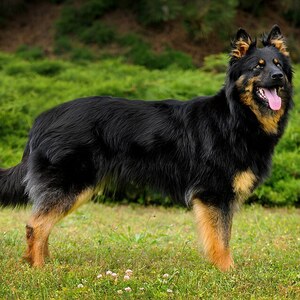
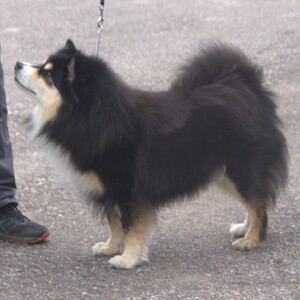
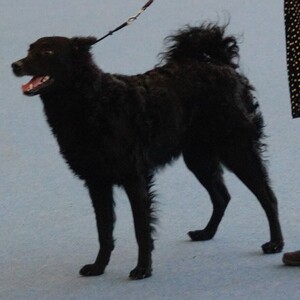
Croatian Sheepdog. · Canarian / Wikimedia Commons, CC BY 4.0. Cropped and resized.
The Croatian Sheepdog is a medium-sized herding dog with a black, wavy or curly coat and a head with a fox-like expression. It developed over the centuries in eastern Slavonia, in Croatia. It is alert, energetic, intelligent and obedient, a good watchdog and a dog always ready to work.
Quick facts
| Common name | Croatian Sheepdog (Hrvatski ovčar) |
| Scientific name | Canis lupus familiaris |
| Country of origin | Croatia (eastern Slavonia) |
| Official recognition | FCI, definitively since 30 August 1967 (group 1, sheepdogs; standard no. 277); also recognised by the AKC |
| Lifespan | 13–14 years, according to the AKC |
| Size (males) | 45–50 cm at the withers (tolerance ±3 cm) |
| Size (females) | 43–48 cm at the withers (tolerance ±3 cm) |
| Weight | about 13–20 kg (AKC) |
| Coat type | Wavy or curly, 6–14 cm long, with a dense undercoat; short on the head and legs |
| Common colours | Black; a small white patch on the chest is allowed |
| Energy level | High |
| Suited to an apartment? | Not really; it needs a lot of space |
| Temperament | Alert, energetic, intelligent, obedient |
| Tendency to aggression | Low; suspicious of strangers |
| Good with children | Average |
| Good with other animals | Average |
| Genetic predispositions | No breed-specific diseases are known |
- Primary category:Dog breeds
- Explore this animal's categories:
History and origin
The FCI standard says the breed probably developed over several centuries from descendants of the “peat dog” (Canis familiaris palustris), in eastern Slavonia. A 1719 manuscript by Bishop Petar Bakić, which quotes an even older manuscript from 1374, says the breed was brought by the peoples who settled in the region.
Professor Stjepan Romić began systematic breeding of the breed in 1935. The dogs were first shown at the Zagreb show in October 1949, and Dr Otto Rohr wrote the first standard in 1951.
How the breed developed
- 1374 – A manuscript by Bishop Petar mentions these dogs.
- 1719 – Bishop Petar Bakić writes about the origin of the breed.
- 1935 – Stjepan Romić begins systematic breeding.
- October 1949 – The breed is shown at the first state show, in Zagreb.
- 1951 – Otto Rohr writes the first standard.
- 30 August 1967 – The FCI recognises the breed.
- 3 November 2014 – The current FCI standard is published.
Breed rating
| Feature | Stars |
|---|---|
| Training and intelligence | ★★★★☆ |
| Easy to train | ★★★★☆ |
| Intelligence | ★★★★★ |
| Independence | ★★★☆☆ |
| Stubbornness | ★★★☆☆ |
| Behaviour and temperament | ★★★★☆ |
| Affectionate with family | ★★★☆☆ |
| Friendly with children | ★★★☆☆ |
| Good with other dogs | ★★★☆☆ |
| Good with cats and other animals | ★★★☆☆ |
| Loyalty | ★★★★★ |
| Tendency to be aggressive | ★★☆☆☆ |
| Tendency to bark | ★★★☆☆ |
| Needs and care | ★★★★☆ |
| Shedding | ★★☆☆☆ |
| Needs frequent grooming | ★☆☆☆☆ |
| Activity and lifestyle | ★★★★☆ |
| Energy level | ★★★★★ |
| Daily exercise needs | ★★★★★ |
| Suited to apartment life | ★★☆☆☆ |
| Health and longevity | ★★★★☆ |
| Life expectancy | ★★★★☆ |
| Predisposition to genetic diseases | ★★☆☆☆ |
| Working abilities and uses | ★★★★☆ |
| Good herding and guard dog | ★★★★★ |
| Good companion dog | ★★★☆☆ |
Indicative rating: 5 stars means the highest level. It is based on the ratings the American Kennel Club gives the breed and on the FCI standard.
Physical characteristics
The standard describes it as a medium-sized, spitz-type, rustic dog with a fox-like expression to the head. It gives the impression of a proud, agile, strong and compact dog, but never a heavy one. The body is slightly longer than it is tall.
General appearance
The oval eyes are black or dark chestnut. The triangular ears may be erect or semi-erect. The long coat forms a mane on the neck, feathering on the forelegs and “trousers” on the hind legs. Some dogs are born with a short tail.
| Feature | Croatian Sheepdog |
|---|---|
| Size | Medium |
| Height at the withers | males: 45–50 cm; females: 43–48 cm |
| Weight | about 13–20 kg |
| Coat | Wavy or curly, with a dense undercoat |
| Eyes | Oval, black or dark chestnut |
| Ears | Triangular, erect or semi-erect |
The coat is black. A few scattered, barely visible white hairs are allowed, as is a small white patch on the chest of no more than 5 cm. White markings on other parts of the body are not accepted.
Training and socialisation
The AKC describes it as alert, energetic, intelligent, obedient and adaptable, always keen when it has a job to do. These qualities make it easy to train.
It is suspicious of strangers, which makes it an excellent watchdog. Early socialisation helps it accept the family's guests.
Tips for effective training
- Give it a job. It excels at flyball, obedience, herding and frisbee.
- Tire it out properly. The AKC says a tired Croatian Sheepdog does not go looking for trouble.
- Watch out for holes. It loves to dig.
- Keep the fence high. It is an extraordinary jumper.
Activity needs and lifestyle
The AKC says it is calm indoors but very energetic outside, where it needs to run. For hundreds of years it has worked around the house and yard, with the flocks.
| Activity | How often | Why it matters |
|---|---|---|
| Free running in a fenced area | daily | Burns off energy |
| Flyball, frisbee or obedience | several times a week | Physical and mental activity |
| Herding work | occasionally | Its basic instinct |
Tips for a balanced life
- It suits an active family with a garden.
- The fence must be high.
- In summer the black coat heats up quickly, so give it shade.
Care and health
Coat and skin care
The AKC gives it a low score for grooming: the curly coat should be brushed once a week. During the moult, the undercoat is removed more often.
Common health problems
No hereditary diseases specific to the breed are known. The standard disqualifies inturned or outturned eyelids (entropion or ectropion). As with any active dog, it is worth watching for:
| Condition | Description | Common symptoms |
|---|---|---|
| Hip dysplasia | The hip joint forms incorrectly and, over time, arthritis develops | Limping, difficulty getting up or jumping, hip pain |
| Patellar luxation | The kneecap slips out of place | Suddenly holds a hind leg up for a few steps, then uses it again |
Other care
- Check the ears and teeth once a week.
- Trim the nails if they do not wear down on their own.
- Check the black coat for ticks after outings.
Diet and nutrition
An energetic working dog needs good-quality food suited to its workload. The portion goes up on days with a lot of work.
Tips for a healthy diet
The table gives a starting estimate, calculated with the formula from the Merck Veterinary Manual. The first two calorie columns show the calories per day for a healthy adult dog. The last column shows what this means in dry food with 3,500–4,000 kcal per kilogram.
| Dog's weight | Calories per day (neutered) | Calories per day (not neutered) | Dry food per day (approximate) |
|---|---|---|---|
| 13 kg | 770 kcal | 860 kcal | 190–250 g |
| 16 kg | 900 kcal | 1,010 kcal | 220–290 g |
| 20 kg | 1,060 kcal | 1,190 kcal | 260–340 g |
- Give it its food in two meals a day.
- Fresh water should always be available.
- A dog is at the right weight when you can feel its ribs without pressing hard.
Foods to avoid
Some human foods are dangerous for dogs: chocolate, coffee, grapes and raisins, onions, garlic, xylitol (a sweetener used in chewing gum), macadamia nuts and alcohol.
Reproduction and development
Physical and emotional maturity
In dogs, sexual maturity usually comes between 6 and 12 months. Most breeds become adults at around 13–15 months.
Mating and pregnancy
Pregnancy lasts about 63 days, counted from ovulation. Mating a female on her first heat is not recommended. The FCI standard requires that only healthy dogs of typical breed appearance are used for breeding.
Caring for the puppies
In dogs, a litter has 5–6 puppies on average, and the number rises with the size of the breed. Socialisation starts in the first weeks: gentle handling, everyday noises and new people.
Interesting facts
- Mentioned in 1374. It is one of the breeds with the oldest written mention.
- A fox-like expression. The standard describes the head as having a fox-like expression.
- Always black. The only accepted colour is black.
- An excellent jumper. The AKC mentions its extraordinary jumping ability.
- Some are born with a short tail. The standard also accepts dogs born with a naturally short tail.
Frequently asked questions
Where does the Croatian Sheepdog come from?
From eastern Slavonia, in Croatia.
How big does it get?
Males measure 45–50 cm and females 43–48 cm; they weigh about 13–20 kg.
Is it easy to train?
Yes, it is intelligent, obedient and eager to work.
What colour is it?
It is black, sometimes with a small white patch on the chest.
How long does it live?
The AKC gives 13–14 years.