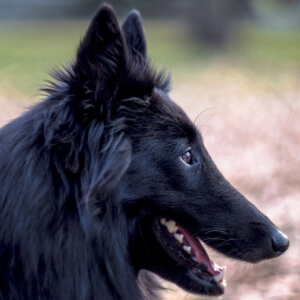
Belgian ShepherdCharacteristics, history, training and care
The Belgian Shepherd is a working and herding dog described by the FCI in four varieties: Groenendael, Laekenois, Malinois and Tervueren. Some kennel organisations classify these dogs separately. Coat differences do not remove their need for exercise, training and suitable care.
Quick facts
| Common name | Belgian Shepherd |
| Scientific name | Canis lupus familiaris |
| Country of origin | Belgium |
| Official Recognition | FCI: one Belgian Shepherd breed with four varieties; AKC classification differs |
| Typical lifespan | About 12-14 years |
| Dimensions (Male) | About 60-66 cm / 25-30 kg |
| Dimensions (Female) | About 56-62 cm / 20-25 kg |
| Coat type | Varies by variety: long (Groenendael, Tervuren), short (Malinois) or rough (Laekenois) |
| Common colours | Black (Groenendael); fawn to mahogany with black tips (Tervuren, Malinois); fawn (Laekenois) |
| Energy Level | Very high |
| Suitable for an apartment? | Depends on exercise, training, health and the individual dog |
| Temperament | Smart, protective, loyal |
| Behaviour towards unfamiliar people and dogs | Individual behaviour varies; socialisation, training and management matter |
| Compatibility with children | Depends on the individual; adult supervision and suitable handling are essential |
| Compatibility with other animals | Depends on socialisation, prey drive and the animals involved |
| Health considerations | Hip and elbow dysplasia, epilepsy, bloat |
- Primary category:Dog breeds
- Explore this animal's categories:
History and Origin
The Belgian Shepherd is a Belgian herding dog, originally used to guard and drive sheep and to protect farms.
Evolution of the breed
- Created in Belgium at the end of the 19th century - In 1891, Professor Adolphe Reul and the new Belgian Shepherd Dog Club began to sort Belgian herding dogs into types; today the FCI recognises four varieties: Groenendael (long black coat), Tervuren (long fawn or grey coat with black tips), Malinois (short coat) and Laekenois (rough, wiry coat).
- Service dogs - Thanks to their intelligence and alertness, Belgian Shepherds have worked for the police since the early 1900s and served in the First World War.
- Worldwide popularity - Today, the Belgian Shepherd is valued both as a companion and as a working dog in police work, search and rescue and dog sports.
Breed Evaluation
The Belgian Shepherd is an intelligent, hard-working and protective dog, suited to active families and people looking for a working partner. These are general editorial ratings, not measured scores; individual dogs vary.
| Characteristic | Stars |
|---|---|
| Training and Intelligence | ★★★★★ |
| Easy to train | ★★★★★ |
| Intelligence | ★★★★★ |
| Level of independence | ★★★☆☆ |
| Level of stubbornness | ★★★☆☆ |
| Behavior and Temperament | ★★★★★ |
| Affectionate with family | ★★★★★ |
| Friendly with children | ★★★★★ |
| Compatible with other dogs | ★★★★☆ |
| Compatible with cats and other animals | ★★★☆☆ |
| Degree of loyalty | ★★★★★ |
| Tendency to be aggressive | ★★☆☆☆ |
| Tendency to bark | ★★★☆☆ |
| Needs and Care | ★★★☆☆ |
| Shedding level | ★★★★☆ |
| Requires frequent care | ★★★☆☆ |
| Activity and Lifestyle | ★★★★★ |
| Energy level | ★★★★★ |
| Daily exercise requirement | ★★★★★ |
| Suitable for apartment living | ★★☆☆☆ |
| Health and Longevity | ★★★★☆ |
| Life expectancy | ★★★★☆ |
| Predisposition to genetic diseases | ★★★☆☆ |
| Work and Utility Features | ★★★★★ |
| Good guard dog | ★★★★★ |
| Good companion dog | ★★★★★ |
Physical Characteristics
The Belgian Shepherd is an elegant, athletic and powerful dog with a proud, alert look.
General appearance
- A square, well-muscled body, built for speed and endurance.
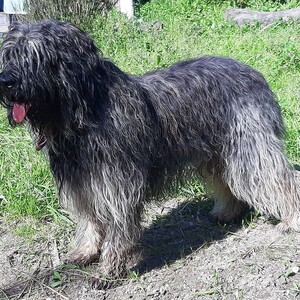
- A double coat that varies by variety: long in the Groenendael and Tervuren, short in the Malinois and rough in the Laekenois.
- Pointed, erect, triangular ears, showing its natural alertness.
- Dark brown, almond-shaped eyes with an intelligent expression.
- A long tail, carried low at rest and raised when the dog is excited.
| Characteristic | Belgian Shepherd |
|---|---|
| Size | Medium to large (about 56-66 cm at the shoulder) |
| Weight | About 20-30 kg |
| Coat | Double; long, short or rough, depending on the variety |
| Muzzle | Medium length, tapering |
| Shedding tendency | Moderate to high |
| Build | Light, strong and athletic |
The Belgian Shepherd is an elegant but strong dog with an alert, confident presence.
Training and Socialization
The Belgian Shepherd is very intelligent and eager to learn, so it is easy to train, but it needs an experienced owner who can give it consistency and mental challenges.
Tips for effective training
- Start early - Puppies should start learning basic commands from about 8 weeks to build obedience and trust.
- Positive training methods - This breed responds very well to praise, rewards and play.
- Advanced tasks - As a working dog, it can learn complex commands, tracking, search and rescue and herding.
- Wide socialisation - It should meet new people, other animals and many situations to prevent shyness or reactivity.
- Mental stimulation - When bored, it may chew things or bark excessively.
Varied, challenging training turns the Belgian Shepherd into a balanced, disciplined and reliable companion.
Activity and Lifestyle Needs
As a high-energy working dog, the Belgian Shepherd needs plenty of exercise and mental challenges to stay balanced.
| Activity | Recommended duration |
|---|---|
| Daily walks | At least 60-90 min |
| Interactive games | About 30 min |
| Obedience training | About 15-30 min |
| Dog sports (agility, tracking, herding, canicross) | Recommended |
Recommendations for a balanced lifestyle
- Not ideal for apartments - It does better in a house with a large garden.
- Good for active owners - It suits people who run, hike or do dog sports.
- Can develop separation anxiety - If left alone too long, it may become destructive and hyperactive.
- A working dog - It is widely used in police work, search and rescue and other jobs.
Without enough activity, the Belgian Shepherd may develop problems such as digging, excessive barking or frustration.
Care and Health
The Belgian Shepherd is not hard to care for, but some inherited diseases should be monitored.
Fur and skin care
- Brushing 2-3 times a week - Long-coated varieties need regular brushing to prevent tangles, especially during seasonal shedding.
- Occasional baths - The coat tends to shed dirt, so frequent baths are not needed.
- Checking ears and claws – Ears should be cleaned regularly and claws trimmed if they don't grow naturally.
Common health problems
| Condition | Description | Common symptoms |
|---|---|---|
| Hip and elbow dysplasia | Abnormal development of the joints | Lameness, stiff gait |
| Epilepsy | A neurological disorder that occurs in the breed | Recurrent seizures |
| Bloat (gastric torsion) | A serious emergency that may need surgery | Swollen belly, breathing difficulty |
| Anesthesia sensitivity | Lean, active dogs can react strongly to some anaesthetics | The vet should know the breed before surgery |
Other aspects of care
- Weight control - As an active dog, it should be fed to keep healthy muscle, not extra weight.
- Regular veterinary checks - Yearly check-ups help find possible inherited problems.
The Belgian Shepherd is a strong, healthy breed, but its joints and digestion should be monitored.
Diet and Nutrition
The Belgian Shepherd needs a balanced diet with good-quality protein to support its activity and muscles.
Recommendations for a healthy diet
Choose a complete, balanced diet suited to age, size and health. Plan home-prepared diets and supplements with a qualified veterinarian; raw pet food can carry harmful bacteria.
| Food type | Daily Amount (Adults) | Frequency |
|---|---|---|
| Premium dry food | Individual amount; follow complete-food guidance and veterinary advice | 2 meals/day |
| Home cooked food | Individual amount; follow complete-food guidance and veterinary advice | 2 meals/day |
| Raw food: bacterial contamination is a concern | Individual amount; follow complete-food guidance and veterinary advice | 2 meals/day |
Forbidden foods
Chocolate, grapes and raisins, onions and xylitol - toxic to dogs. ; Cooked bones - can splinter and cause intestinal blockage. ; Fatty food - can lead to digestive problems and pancreatitis. ; Overfeeding - can cause weight gain, which affects the joints.
The Belgian Shepherd should be fed properly to keep its energy and healthy joints.
Reproduction and Development
Breeding requires veterinary planning, suitable health screening and care for the mother and puppies. Pregnancy and birth can involve complications.
Physical and emotional maturity
- Physical maturity: It is usually fully grown at about 18-24 months.
- Emotional maturity: It usually becomes calmer and easier to manage at about 2-3 years.
Mating and Gestation
- Breeding decisions require veterinary assessment of maturity, health and suitable screening; a fixed age does not establish that breeding is appropriate.
- Duration of gestation: Approximately 58-68 days, usually about 63 days.
- Average number of puppies: Usually about 6-10 puppies.
Puppy care
- The first 3 weeks: Puppies depend completely on their mother for warmth, milk and protection.
- Between 4-8 weeks: They begin to play and explore, and early socialisation is essential for a stable temperament.
- Moving to a new home: When puppies go to their new homes, basic training should begin, including commands and house rules.
Early socialisation and training are essential for a balanced, sociable Belgian Shepherd.
Curiosities and Interesting Facts
- Four in one - The FCI treats the Groenendael, Tervuren, Malinois and Laekenois as one breed with four coat varieties, while the AKC treats them as separate breeds.
- Named after places - The varieties are named after Belgian towns and villages: Groenendael, Tervuren, Mechelen (Malines) and Laeken.
- A war dog - Belgian Shepherds served in the First World War as messenger, ambulance and guard dogs.
- A sports star - It does very well in agility, obedience, tracking and herding.
- Very expressive - It communicates a lot through body language, using its ears, eyes and posture.
- A royal link - The rare Laekenois variety is named after Laeken, home of a Belgian royal castle; the dogs once guarded linen drying in the fields there.
The Dog in Popular Culture
The Belgian Shepherd is best known for its work with the police and military and its success in dog sports.
Belgian Shepherd in Modern Media and Culture
- Working dogs - Belgian Shepherds, especially Malinois, are used by police and military units around the world to find explosives and missing people.
- Dog sports - The breed has won many championships in agility, obedience and protection sports.
Importance in modern culture
- A symbol of canine intelligence - It is considered one of the most intelligent and versatile working breeds.
- A dog for experienced owners - Although excellent for work, it is not suitable for inactive or inexperienced owners.