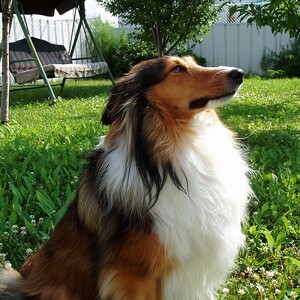
Long-haired Pyrenean SheepdogCharacteristics, history, training and care
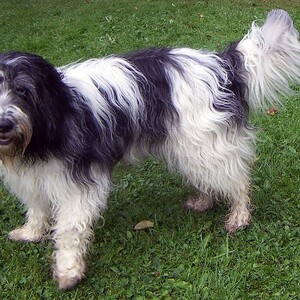
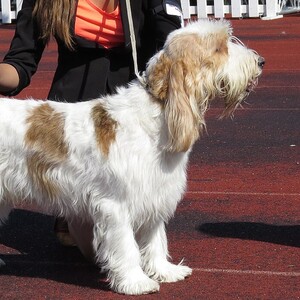
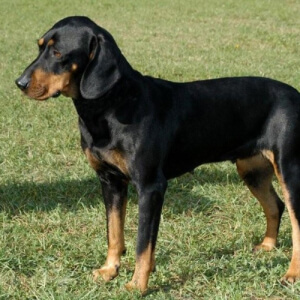
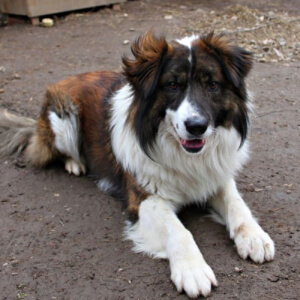
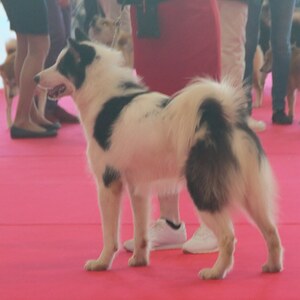
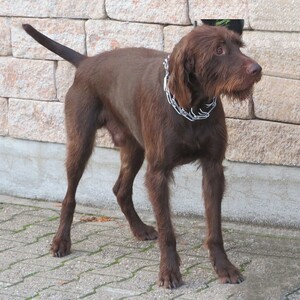
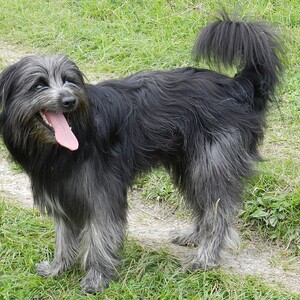
Long-haired Pyrenean Sheepdog. · A. Köppl / Wikimedia Commons, CC BY 3.0. Cropped and resized.
The Long-haired Pyrenean Sheepdog is a small to medium-sized, lean and very lively herding dog, with a long or semi-long coat somewhere between goat hair and sheep's wool. It herds sheep on the pastures of the Pyrenees, alongside the much larger Pyrenean Mountain Dog, which guards them. The standard describes it as a small dog that is brave, resourceful, full of initiative and totally devoted to its owner.
Quick facts
| Common name | Long-haired Pyrenean Sheepdog (Berger des Pyrénées) |
| Scientific name | Canis lupus familiaris |
| Country of origin | France |
| Official recognition | FCI, definitively since 28 January 1955 (group 1, sheepdogs, with working trial; standard no. 141); also recognised by the AKC |
| Lifespan | 17–19 years, according to the AKC |
| Size (males) | 42–48 cm at the withers (±2 cm); 7–14 kg according to the AKC |
| Size (females) | 40–46 cm at the withers (±2 cm); 7–14 kg according to the AKC |
| Coat type | Long or semi-long, between goat hair and wool |
| Common colours | Fawn, grey, blue harlequin, brindle, black |
| Energy level | Very high |
| Suited to an apartment? | Only with a great deal of exercise |
| Temperament | Brave, resourceful, full of initiative, devoted, stubborn |
| Tendency to aggression | Low; often suspicious of strangers |
| Good with children | Average |
| Good with other animals | Average |
| Genetic predispositions | Hip dysplasia, patellar luxation, PDA, epilepsy, choroidal hypoplasia, retinal atrophy |
- Primary category:Dog breeds
- Explore this animal's categories:
History and origin
The FCI standard says the breed comes from humble origins and was almost unknown to the official dog world until the beginning of the 20th century. The type varies greatly from one valley to another, in shape and coat, but its character and behaviour never change.
The first official standard was written between 1921 and 1925 by Bernard Sénac-Lagrange. Wikipedia says that, in the Pyrenees, it herds flocks of sheep alongside the much larger Pyrenean Mountain Dog, which is used as a guardian.
How the breed developed
- Early 20th century – It emerges from obscurity.
- 1921–1925 – Bernard Sénac-Lagrange writes the first standard.
- 28 January 1955 – The FCI recognises the breed.
- 26 March 2009 – The current FCI standard is published.
Breed rating
| Feature | Stars |
|---|---|
| Training and intelligence | ★★★★★ |
| Easy to train | ★★★★★ |
| Intelligence | ★★★★☆ |
| Independence | ★★★★☆ |
| Stubbornness | ★★★★☆ |
| Behaviour and temperament | ★★★★☆ |
| Affectionate with family | ★★★★★ |
| Friendly with children | ★★★☆☆ |
| Good with other dogs | ★★★☆☆ |
| Good with cats and other animals | ★★★☆☆ |
| Loyalty | ★★★★★ |
| Tendency to be aggressive | ★★☆☆☆ |
| Tendency to bark | ★★★★☆ |
| Needs and care | ★★★☆☆ |
| Shedding | ★★☆☆☆ |
| Needs frequent grooming | ★★☆☆☆ |
| Activity and lifestyle | ★★★★★ |
| Energy level | ★★★★★ |
| Daily exercise needs | ★★★★☆ |
| Suited to apartment life | ★★★☆☆ |
| Health and longevity | ★★★★★ |
| Life expectancy | ★★★★☆ |
| Predisposition to genetic diseases | ★★☆☆☆ |
| Working abilities and uses | ★★★★★ |
| Good herding dog | ★★★★☆ |
| Good companion dog | ★★★★★ |
Indicative rating: 5 stars means the highest level. It is based on the ratings the American Kennel Club gives the breed and on the FCI standard.
Physical characteristics
The AKC describes it as a tough, lean and lively herding dog, famous for its vigorous, flowing gait. The head is triangular, with an almost flat skull.
General appearance
The coat is long or semi-long, but always dense, almost flat or slightly wavy, thicker and woollier on the croup and thighs. In some dogs, the mixture of harsh and woolly hair forms cords (“cadenettes”) or felted tufts (“matelotes”), overlapping like roof tiles on the croup.
| Feature | Long-haired Pyrenean Sheepdog |
|---|---|
| Size | Small to medium |
| Height at the withers | males: 42–48 cm; females: 40–46 cm |
| Weight | 7–14 kg (AKC) |
| Coat | Long, between goat hair and wool |
| Head | Triangular |
| Gait | Vigorous, flowing |
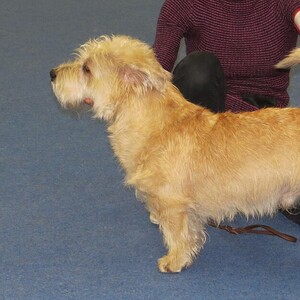
The accepted colours are fawn (with or without black shading), grey, blue merle with black (harlequin or slate), brindle and black, sometimes with a little white. Solid colours are preferred.
Training and socialisation
The standard describes it as a small dog that is brave, resourceful, full of initiative and totally devoted to its owner. It is stubborn by nature and needs firm control so that its energy is well channelled. It is often suspicious of strangers.
The AKC says it is very clever, energetic and easy to train, very attached to its owner and with an intuitive sense of what its owner wants. It herds flocks using its body, not its stare.
Tips for effective training
- Be firm and consistent. It is stubborn by nature.
- Give it a job. It has the highest need for mental stimulation.
- Socialise it from an early age. It is suspicious of strangers.
- Try dog sports. It loves intense activities.
Activity needs and lifestyle
The AKC says it is a very high-energy dog, always alert and ready for action. As many no longer herd flocks, they need other challenges: plenty of activity and a “job” are vital for the breed.
| Activity | How often | Why it matters |
|---|---|---|
| Running and intense play | daily | Very high energy |
| Brain games | daily | Mental stimulation |
| Herding or agility | weekly | Herding instinct |
Tips for a balanced life
- It suits very active people.
- Do not let it get bored.
- Teach it to be quiet from an early age.
Care and health
Coat and skin care
The AKC says it should be brushed weekly so the coat does not mat. Its tousled look comes from the double coat: the soft undercoat can mat, and the harsh topcoat can shed quite a lot.
Common health problems
The AKC says it is a healthy breed with a long life expectancy. Responsible breeders screen their dogs for:
| Condition | Description | Common symptoms |
|---|---|---|
| Hip dysplasia | The hip joint forms incorrectly and, over time, arthritis develops | Limping, difficulty getting up or jumping, hip pain |
| Patellar luxation | The kneecap slips out of place | Suddenly holds a hind leg up for a few steps, then uses it again |
| Patent ductus arteriosus (PDA) | A blood vessel of the heart does not close after birth | Heart murmur, tires quickly |
| Epilepsy | Repeated neurological seizures | Trembling, convulsions |
| Eye diseases | Choroidal hypoplasia and progressive retinal atrophy | Sees less and less well |
Other care
- Check the ears regularly.
- Work out the knots in the coat.
- Trim the nails regularly.
Diet and nutrition
The AKC says some dogs gain weight easily, so calories and weight should be watched.
Tips for a healthy diet
The table gives a starting estimate, calculated with the formula from the Merck Veterinary Manual. The first two calorie columns show the calories per day for a healthy adult dog. The last column shows what this means in dry food with 3,500–4,000 kcal per kilogram.
| Dog's weight | Calories per day (neutered) | Calories per day (not neutered) | Dry food per day (approximate) |
|---|---|---|---|
| 7 kg | 480 kcal | 540 kcal | 120–150 g |
| 10 kg | 630 kcal | 710 kcal | 160–200 g |
| 14 kg | 810 kcal | 910 kcal | 200–260 g |
- Give it its food in two meals a day.
- Adjust the portion to its level of effort.
- A dog is at the right weight when you can feel its ribs under the coat without pressing hard.
Foods to avoid
Some human foods are dangerous for dogs: chocolate, coffee, grapes and raisins, onions, garlic, xylitol (a sweetener used in chewing gum), macadamia nuts and alcohol.
Reproduction and development
Physical and emotional maturity
In dogs, sexual maturity usually comes between 6 and 12 months. Most breeds become adults at around 13–15 months.
Mating and pregnancy
Pregnancy lasts about 63 days, counted from ovulation. Mating a female on her first heat is not recommended. The FCI standard requires that only healthy dogs of typical breed appearance are used for breeding.
Caring for the puppies
In dogs, a litter has 5–6 puppies on average, and the number rises with the size of the breed. Socialisation starts in the first weeks: gentle handling, everyday noises and new people.
Interesting facts
- “Cadenettes” and “matelotes”. These are the names for the cords and tufts in its coat.
- It differs from valley to valley. The type varies a lot, but the character does not.
- It herds with its body. The AKC says it uses its body, not its stare.
- It lives a long time. The AKC gives 17–19 years.
- It works in a team. It herds the flock, while the Patou guards it.
Frequently asked questions
How does it differ from the smooth-faced variety?
It has long hair on its face; the smooth-faced variety has short hair on the head and a slightly longer muzzle.
How big does it get?
Males measure 42–48 cm and females 40–46 cm.
Is it suited to beginners?
It is stubborn and very energetic; it needs a firm, active owner.
How long does it live?
The AKC gives 17–19 years.