FalconInteresting facts and information
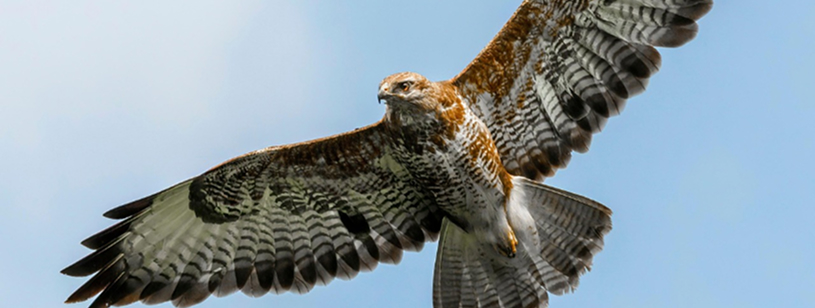
Falcons in the genus Falco are birds of prey with pointed wings and hooked bills. Species differ in size, hunting methods and food. The peregrine falcon (Falco peregrinus) is one example; its steep hunting dive is different from level flight.
Falcons occupy many regions and habitats. Conservation pressures differ between species, including habitat loss and capture.
Falconry is hunting with trained birds of prey. The history and species used differ between places and periods.
Quick facts
| Common name | Falcon |
| Scientific name | Falco spp. |
| Typical lifespan | Up to about 15-20 years in the wild, depending on species; longer in captivity |
| Length | About 20-65 cm (depending on species) |
| Wingspan | Varies by species; for example, about 95–115 cm in the peregrine falcon |
| Weight | About 50 g - 2 kg |
| Diet type | Carnivorous (birds, rodents, insects, reptiles) |
| Main predators | Eagles, owls and other predators can take falcons, eggs or young, depending on the species and setting. |
| Conservation status | Assess separately by species and population; different taxa and regions have different needs |
| Distribution | Worldwide except Antarctica |
| Living environment | Grasslands, deserts, mountains, forests, tundra and urban areas |
- Primary category:Birds
- Explore this animal's categories:
Interesting facts
- The fastest animal - In its hunting dive, the peregrine falcon can reach more than 300 km/h, faster than any other animal.
- Very sharp eyesight - Falcons can see much more detail at a distance than people and spot prey from far away.
- Long migrations - Peregrines that breed in the Arctic may travel more than 10,000 km to spend the winter in South America.
- A special "tooth" - Falcons have a notch on the upper bill, called the tomial tooth, which helps them kill prey with a bite to the neck.
- Catching birds in the air - Many falcons catch other birds in flight, using speed and their strong feet.
Records and remarkable features
- Falcons in the genus Falco are birds of prey with pointed wings and hooked bills. Species differ in size, hunting methods and food. The peregrine falcon (Falco peregrinus) is one example; its steep hunting dive is different from level flight.
Physical characteristics and unique adaptations
Falcons are skilled aerial hunters, with bodies built for speed, agility and precise attacks.
Essential physical adaptations
- Long, pointed wings - Built for speed, they let falcons accelerate quickly and make tight turns.
- A strong, hooked bill - With a notch called the "tomial tooth", which helps kill prey quickly.
- Strong feet and sharp talons - Used to strike and hold prey.
- Sharp eyesight - Large eyes with a very high density of light-sensitive cells allow falcons to spot small prey from far away.
- Powerful flight muscles - Give the strong wingbeats needed for fast chases.
- Breathing at high speed - Small bony cones in the nostrils of falcons are thought to help them breathe during fast dives.
Dimensions and variations between species
| Characteristic | Peregrine falcon (Falco peregrinus) | Saker falcon (Falco cherrug) |
|---|---|---|
| Body length | About 34-58 cm | About 47-57 cm |
| Weight | About 330-1,500 g (females are larger) | About 700-1,300 g |
| Wingspan | About 74-120 cm | About 97-126 cm |
| Plumage colour | Blue-grey back, black "moustache", pale underparts with dark bars | Brown with dark streaks and spots |
Habits and behaviour
Falcons usually live alone or in pairs. They are skilled hunters with different hunting techniques depending on the species.
Life Mode
- They are active by day and rely on their sharp eyesight to find prey.
- They are territorial and defend the area around their nest.
- Some species are long-distance migrants, while others stay in the same area all year.
- Many catch prey in the air, while others, such as kestrels, hover and drop onto prey on the ground.
Communication
- Calls - Falcons make loud, harsh calls, especially near the nest.
- Defending territory - They call and chase intruders away from the nest.
- Display flights - In courtship, males perform fast dives and acrobatic flights and bring food to the female.
Defence techniques
- Speed - Falcons can escape most predators with fast flight.
- Attacking intruders - They will boldly attack much larger birds, such as eagles or ravens, near their nest.
- Camouflage - Young falcons and some species have brown, streaked plumage that blends with the landscape.
Habitat and geographic distribution
Falcons live on every continent except Antarctica, in habitats from tundra and deserts to forests and cities.
Population distribution
| Region | Estimated population | Main species |
|---|---|---|
| North America | Peregrines recovered after the DDT ban | Falco peregrinus, Falco columbarius, Falco sparverius |
| Europe and Asia | Varies by species; the saker is endangered | Falco cherrug, Falco subbuteo, Falco tinnunculus |
| Africa and the Middle East | Declining in some areas | Falco biarmicus, Falco peregrinus pelegrinoides (Barbary falcon) |
| Australia and Oceania | Mostly stable | Falco cenchroides, Falco berigora |
Habitats
- Cliffs and mountains - Popular nesting sites, giving a good view and protection.
- Grassland and steppe - Good hunting areas with many small birds and rodents.
- Cities - Peregrine falcons nest on tall buildings, bridges and churches and hunt pigeons.
- Deserts and islands - The saker lives in dry steppes and semi-deserts, while Eleonora's falcon nests on Mediterranean islands.
Impact of environmental change
- Pesticides - Chemicals such as DDT caused thin eggshells and led to a dramatic fall in peregrine numbers in the past.
- Habitat loss - The loss of steppes and grassland affects species such as the saker.
- Climate change - Changes in climate can affect prey and migration.
- Illegal capture - Some species, such as the saker, are caught illegally for falconry.
Diet and feeding
Falcons are carnivores. Their diet depends on the species and habitat: many eat birds, while others eat rodents, insects or reptiles.
What do falcons eat?
| Food type | Specific examples |
|---|---|
| Birds | Pigeons, starlings, thrushes, ducks, waders |
| Rodents | Voles, mice, ground squirrels |
| Insects (for smaller species) | Grasshoppers, beetles, dragonflies |
| Reptiles (in dry areas) | Small lizards and snakes |
| Bats | Some falcons, such as the bat falcon, catch bats at dusk |
Hunting methods
- The stoop - The peregrine falcon (Falco peregrinus) dives from a great height to strike birds in flight.
- Low, fast chases - The saker falcon (Falco cherrug) often hunts ground squirrels and birds by flying low and fast over open land.
- Hovering - Kestrels, such as the American kestrel (Falco sparverius), hover in the air and then drop onto insects and rodents.
- Hunting in the air - Hobbies catch dragonflies and swallows in flight.
Reproduction and life cycle
Falcons are usually monogamous, and pairs may stay together for many years. In temperate regions, they breed in spring.
Breeding season
- It usually starts in March-April in Europe, depending on the species and climate.
- Males perform display flights and bring food to the females.
- Falcons do not build their own nests: they lay eggs in a scrape on a cliff ledge or building, or use the old nests of other birds.
Nest and chicks
| Characteristic | Details |
|---|---|
| Place of the nest | Cliff ledges, buildings, old nests of crows in trees, tree holes |
| Number of eggs | Usually 3-4, sometimes 2-6 |
| Incubation | About 28-35 days (mostly by the female) |
| Feeding chicks | The male hunts, and the female feeds the chicks; later both hunt |
| Fledging | Chicks can fly at about 4-6 weeks and depend on their parents for several weeks more |
Breeding of chicks
- The eggs are reddish-brown with dark speckles.
- The chicks are covered in white down and depend completely on their parents in the first weeks.
- Before their first flight, they exercise their wings near the nest.
- After leaving the nest, young falcons practise hunting near their parents before becoming independent.
Name and history
Origin of name
- The English word "falcon" comes from the Late Latin falco, which may be linked to falx, "sickle", perhaps because of the shape of the wings or talons.
- In falconry, the word "falcon" often means a female; the smaller male is called a "tiercel".
Taxonomic Classification
| Classification | Name |
|---|---|
| Kingdom | Animalia |
| Phylum | Chordata |
| Class | Aves |
| Order | Falconiformes |
| Family | Falconidae |
| Genus | Falco |
Evolution and fossils
- Fossils of the genus Falco date back several million years.
- Genetic studies show that falcons are more closely related to parrots and songbirds than to eagles, hawks and owls.
- Their similar hooked bills and talons evolved separately from those of eagles and hawks.
Cultural significance and mythology
Falcons have been admired for thousands of years for their speed and hunting skills, and they are important symbols in many cultures.
- Ancient Egypt - The god Horus was shown as a falcon or as a man with a falcon's head.
- Norse mythology - The goddess Freyja owned a cloak of falcon feathers that allowed the wearer to fly.
- Hungary - The Turul, a mythical bird of prey often shown as a falcon, is an ancient Hungarian symbol.
- Falconry - Hunting with trained falcons has been practised for thousands of years and was recognised by UNESCO as part of the intangible cultural heritage of humanity in 2010.
- National symbols - The falcon is the national bird of the United Arab Emirates, and the saker falcon is the national bird of Mongolia.
Conservation status and threats
Many falcon species are stable, but some, such as the saker falcon, are threatened by habitat loss, illegal capture and electrocution on power lines.
Conservation status
| Species | IUCN Status | Estimated population |
|---|---|---|
| Peregrine falcon (Falco peregrinus) | Least Concern | Recovered in many areas after the DDT ban |
| Saker falcon (Falco cherrug) | Endangered | Declined sharply |
| Barbary falcon (Falco peregrinus pelegrinoides) | Assessed as part of the peregrine falcon | Not well known |
| Gyrfalcon (Falco rusticolus) | Least Concern | Arctic species; sensitive to climate change |
Main threats
- Habitat loss - The loss of grassland and steppe reduces hunting areas.
- Pesticides - In the mid-20th century, DDT caused thin eggshells and a major decline in peregrine populations.
- Illegal capture - In some regions, falcons are captured illegally for falconry.
- Climate change - May affect food supply and migration.
- Collisions and electrocution - Power lines kill many falcons, especially sakers.
Protection measures
- Banning dangerous pesticides - After DDT was banned, peregrine populations began to recover.
- Nesting boxes and platforms - Used for peregrines in cities and for sakers on power line pylons.
- Release programmes - Captive-bred peregrines were released successfully in North America and Europe.
- Protecting nests - Some nest sites are guarded or closed to visitors during the breeding season.
- Tracking - Rings and GPS tags help scientists study falcon movements.
In popular culture
Literature and film
- "The Maltese Falcon" - Dashiell Hammett's 1930 detective novel, filmed in 1941 with Humphrey Bogart, is about the hunt for a valuable statuette of a falcon.
- Millennium Falcon - The famous spaceship of Han Solo in the "Star Wars" films.
- The Falcon - A Marvel Comics superhero who first appeared in 1969.
Mascots and symbols
- Sport - Teams such as the Atlanta Falcons use the falcon as their mascot.
- Rockets - SpaceX named its Falcon rockets after the Millennium Falcon.
- City wildlife - Webcams on peregrine nests on tall buildings are watched by people around the world.