SchapendoesCharacteristics, history, training and care
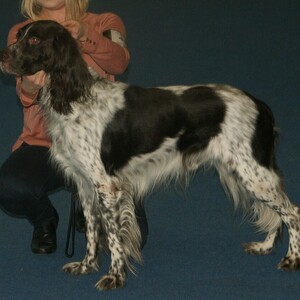
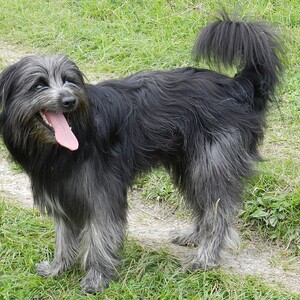
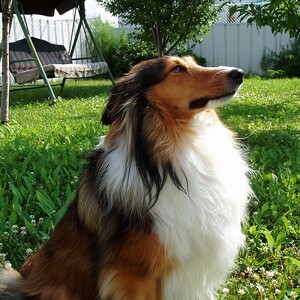
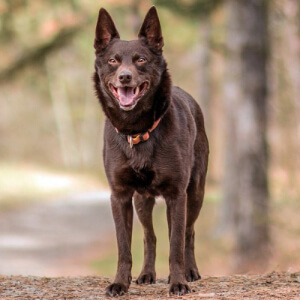
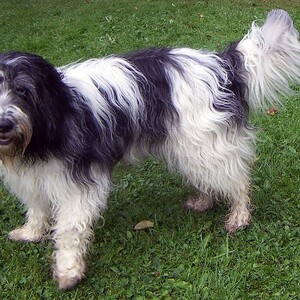
Schapendoes. · Caronna / Wikimedia Commons, CC BY-SA 3.0. Cropped and resized.
The Schapendoes is a medium-sized Dutch sheepdog, light and shaggy, with a long, slightly wavy coat that makes its head look bigger. Shepherds valued it for its tireless love of work and for its intelligence. The standard describes it as attentive, courageous, clever, alert, cheerful, lively and friendly.
Quick facts
| Common name | Schapendoes (Nederlandse Schapendoes) |
| Scientific name | Canis lupus familiaris |
| Country of origin | Netherlands |
| Official recognition | FCI, definitively since 17 May 1991 (group 1, herding dogs; standard no. 313); has an AKC breed profile |
| Lifespan | 12–15 years, according to the AKC |
| Size (males) | 43–50 cm at the withers; 12–25 kg according to the AKC |
| Size (females) | 40–47 cm at the withers; 12–25 kg according to the AKC |
| Coat type | Long, dense, slightly wavy, with undercoat |
| Common colours | All colours; blue-grey to black preferred |
| Energy level | High |
| Suited to an apartment? | Only with plenty of exercise |
| Temperament | Attentive, courageous, clever, cheerful, loyal |
| Tendency to aggression | Low |
| Good with children | Average |
| Good with other animals | Very good with other dogs, according to the AKC |
| Genetic predispositions | No specific diseases are listed in the sources used |
- Primary category:Dog breeds
- Explore this animal's categories:
History and origin
The FCI standard says that in the late 19th and early 20th centuries the Schapendoes was found everywhere in the heathland and sheep-farming regions of the Netherlands. It belongs to the large family of long-haired herding dogs with hairy heads and is related to the Bearded Collie, Puli, Polish Lowland Sheepdog, Bobtail, Briard and Bergamasco.
The AKC says its numbers fell sharply after Border Collies were brought in. Wikipedia says the breed almost disappeared during the Second World War and was rebuilt from the few survivors; the Dutch kennel club recognised it in 1952, and the first standard appeared in 1954.
How the breed developed
- Late 19th century – Found everywhere there were flocks of sheep.
- Second World War – The breed almost disappears.
- 1947 – The breed club is founded.
- 1952 – The Dutch kennel club recognises the breed.
- 17 May 1991 – The FCI recognises the breed.
Breed rating
| Feature | Stars |
|---|---|
| Training and intelligence | ★★★★★ |
| Easy to train | ★★★★★ |
| Intelligence | ★★★★☆ |
| Independence | ★★★☆☆ |
| Stubbornness | ★★★☆☆ |
| Behaviour and temperament | ★★★★★ |
| Affectionate with family | ★★★★★ |
| Friendly with children | ★★★☆☆ |
| Good with other dogs | ★★★★★ |
| Good with cats and other animals | ★★★☆☆ |
| Loyalty | ★★★★★ |
| Tendency to be aggressive | ★☆☆☆☆ |
| Tendency to bark | ★★★☆☆ |
| Needs and care | ★★☆☆☆ |
| Shedding | ★★★☆☆ |
| Needs frequent grooming | ★★★☆☆ |
| Activity and lifestyle | ★★★★☆ |
| Energy level | ★★★★☆ |
| Daily exercise needs | ★★★★☆ |
| Suited to apartment life | ★★★☆☆ |
| Health and longevity | ★★★★☆ |
| Life expectancy | ★★★★☆ |
| Predisposition to genetic diseases | ★★☆☆☆ |
| Working abilities and uses | ★★★★☆ |
| Good herding dog | ★★★★☆ |
| Good companion dog | ★★★★★ |
Indicative rating: 5 stars means the highest level. It is based on the ratings the American Kennel Club gives the breed and on the FCI standard.
Physical characteristics
The standard describes it as a herding dog of normal, harmonious build. Its abundant hair makes it look bigger than it is, especially the head.
General appearance
The coat is thick, with plenty of undercoat, and long, at least 7 cm on the hindquarters; it is not smooth but slightly wavy, never curly or silky. The hairs grow very densely, are fine and dry and tend to form tufts, which makes the dog look more voluminous.
| Feature | Schapendoes |
|---|---|
| Size | Medium |
| Height at the withers | males: 43–50 cm; females: 40–47 cm |
| Weight | 12–25 kg (AKC) |
| Coat | Long, slightly wavy |
| Head | Looks big because of the hair |
| Body | Light |
All colours are allowed; blue-grey to black is preferred.
Training and socialisation
The standard describes it as having an attentive and courageous character: it is clever, alert, cheerful, lively, friendly and spirited. It develops great affection and loyalty towards the people it knows.
The AKC gives it top marks for ease of training and for getting on with other dogs.
Tips for effective training
- Use rewards. It learns very easily.
- Give it work to do. Shepherds valued it for its love of working.
- Socialise it from an early age. It is attentive and alert.
- Try dog sports. It is agile and energetic.
Activity needs and lifestyle
The AKC says it needs a lot of exercise: an hour of running a day keeps it fit and prevents restlessness. Play in a fenced yard, walks several times a day and games indoors all help.
| Activity | How often | Why it matters |
|---|---|---|
| Running | an hour a day | Prevents restlessness |
| Walks | several times a day | Exercise |
| Herding or agility | weekly | Herding instinct |
Tips for a balanced life
- It suits active people.
- Set aside time for brushing.
- It copes well with bad weather.
Care and health
Coat and skin care
The AKC says that, besides weekly grooming, an occasional bath keeps it clean. The strong nails grow quickly and should be trimmed regularly, and the ears should be checked often.
Common health problems
The AKC says most dogs are healthy, and good breeders test their dogs genetically. As with any active herding dog, it is worth watching for:
| Condition | Description | Common symptoms |
|---|---|---|
| Hip dysplasia | The hip joint forms incorrectly and, over time, arthritis develops | Limping, difficulty getting up or jumping, hip pain |
Other care
- Work out the tangles in the coat.
- Check the ears regularly.
- Trim the nails regularly.
Diet and nutrition
The AKC says some dogs gain weight easily, so calories and weight should be watched.
Tips for a healthy diet
The table gives a starting estimate, calculated with the formula from the Merck Veterinary Manual. The first two calorie columns show the calories per day for a healthy adult dog. The last column shows what this means in dry food with 3,500–4,000 kcal per kilogram.
| Dog's weight | Calories per day (neutered) | Calories per day (not neutered) | Dry food per day (approximate) |
|---|---|---|---|
| 12 kg | 720 kcal | 810 kcal | 180–230 g |
| 17 kg | 940 kcal | 1,050 kcal | 240–300 g |
| 22 kg | 1,140 kcal | 1,280 kcal | 280–370 g |
- Give it its food in two meals a day.
- Adjust the portion to its level of effort.
- A dog is at the right weight when you can feel its ribs under the coat without pressing hard.
Foods to avoid
Some human foods are dangerous for dogs: chocolate, coffee, grapes and raisins, onions, garlic, xylitol (a sweetener used in chewing gum), macadamia nuts and alcohol.
Reproduction and development
Physical and emotional maturity
In dogs, sexual maturity usually comes between 6 and 12 months. Most breeds become adults at around 13–15 months.
Mating and pregnancy
Pregnancy lasts about 63 days, counted from ovulation. Mating a female on her first heat is not recommended. The FCI standard requires that only healthy dogs of typical breed appearance are used for breeding.
Caring for the puppies
In dogs, a litter has 5–6 puppies on average, and the number rises with the size of the breed. Socialisation starts in the first weeks: gentle handling, everyday noises and new people.
Interesting facts
- Shaggy relatives. It is related to the Bearded Collie, Puli and Bobtail.
- It looks bigger. Its abundant hair makes its head look bigger.
- Replaced by the Border Collie. Its numbers fell when Border Collies arrived.
- Saved after the war. Today's breed comes from a few survivors.
- An hour of running. The AKC says it needs an hour of running a day.
Frequently asked questions
What breeds is it related to?
The Bearded Collie, Puli, Polish Lowland Sheepdog, Bobtail and Briard.
How big does it get?
Males measure 43–50 cm, females 40–47 cm.
How much exercise does it need?
A lot: the AKC recommends an hour of running a day.
How long does it live?
The AKC gives 12–15 years.