Ca de BestiarCharacteristics, history, training and care
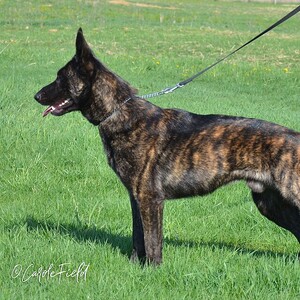
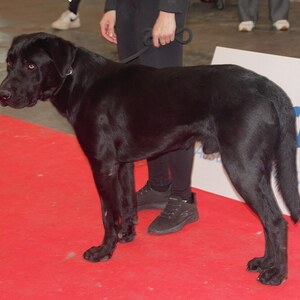
Ca de Bestiar (Majorca Shepherd Dog) · Canarian / Wikimedia Commons, CC BY-SA 4.0. Cropped and resized.
The Ca de Bestiar, or Majorca Shepherd Dog, is a large, solid black dog from the island of Mallorca in Spain. It guards flocks and country farmsteads. It is noble, intelligent and faithful to a single owner, but slow to accept strangers.
Quick facts
| Common name | Ca de Bestiar (Majorca Shepherd Dog) |
| Scientific name | Canis lupus familiaris |
| Country of origin | Spain (Mallorca, Balearic Islands) |
| Official recognition | FCI (group 1, sheepdogs; standard no. 321, published on 26 May 1982) |
| Lifespan | No published data for the breed; large breeds usually live 10–13 years |
| Size (males) | 66–73 cm at the withers |
| Size (females) | 62–68 cm at the withers |
| Weight | around 40 kg |
| Coat type | Short (the more common) or long |
| Common colours | Solid black or black with a white patch on the chest |
| Energy level | Moderate |
| Suited to an apartment? | No |
| Temperament | Noble, intelligent, docile, affectionate, faithful to a single owner |
| Tendency to aggression | Average; brave and quarrelsome, distrustful of strangers |
| Good with children | Good with the family, if socialised |
| Good with other animals | Average |
| Genetic predispositions | No breed-specific diseases are known |
- Primary category:Dog breeds
- Explore this animal's categories:
History and origin
The Ca de Bestiar is the traditional sheepdog of the island of Mallorca, in the Balearic Islands. Its origin is unknown. It is mentioned in older texts, but the first descriptions of it date from the 19th century.
It is one of the island's four recognised dog breeds, alongside the Ca de Bou, the Ca Mè Mallorquí and the Ca Rater Mallorquí. It is used with flocks or as a guard for country farmsteads.
How the breed developed
- 19th century – The first descriptions of the breed appear.
- 1980 – The Spanish Kennel Club approves the breed standard.
- 1982 – The FCI accepts the breed; the standard is published on 26 May 1982.
- 2001 – Spain's Ministry of Agriculture recognises it as a national breed.
- 2024 – A total of 507 dogs are reported.
- 2026 – The Spanish Kennel Club lists it among the 16 vulnerable Spanish breeds.
Breed rating
| Feature | Stars |
|---|---|
| Training and intelligence | ★★★★☆ |
| Easy to train | ★★★★☆ |
| Intelligence | ★★★★☆ |
| Independence | ★★★★☆ |
| Stubbornness | ★★★☆☆ |
| Behaviour and temperament | ★★★★☆ |
| Affectionate with family | ★★★★★ |
| Friendly with children | ★★★☆☆ |
| Good with other dogs | ★★★☆☆ |
| Good with cats and other animals | ★★★☆☆ |
| Loyalty | ★★★★★ |
| Tendency to be aggressive | ★★★☆☆ |
| Tendency to bark | ★★★☆☆ |
| Needs and care | ★★★☆☆ |
| Shedding | ★★★☆☆ |
| Needs frequent grooming | ★★☆☆☆ |
| Activity and lifestyle | ★★★☆☆ |
| Energy level | ★★★☆☆ |
| Daily exercise needs | ★★★☆☆ |
| Suited to apartment life | ★☆☆☆☆ |
| Health and longevity | ★★★☆☆ |
| Life expectancy | ★★★☆☆ |
| Predisposition to genetic diseases | ★★☆☆☆ |
| Working abilities and uses | ★★★★★ |
| Good sheepdog and guard dog | ★★★★★ |
| Good companion dog | ★★★☆☆ |
Indicative rating: 5 stars means the highest level. The breed has no AKC profile, so the rating is based on the description of temperament in the FCI standard.
Physical characteristics
It is a large dog, without exaggeration, of medium weight: well proportioned, rustic, strong, muscular and agile. Females may be slightly longer than they are tall.
General appearance
The fairly small, slightly almond-shaped eyes range in colour from rosemary honey to dark reddish. The small, triangular ears are folded. The tail, thick at the base, is not docked.
| Feature | Ca de Bestiar |
|---|---|
| Size | Large |
| Height at the withers | males: 66–73 cm; females: 62–68 cm |
| Weight | around 40 kg |
| Coat | Short or long |
| Eyes | Fairly small, slightly almond-shaped, lively |
| Ears | Small, triangular, folded |
The coat is solid black or black with a white patch on the chest. There are two coat varieties: short, the more common, and long.
Training and socialisation
The standard says it is a dog of great nobility, a one-person dog that is reluctant to accept attention from strangers. It is intelligent, docile and affectionate, but very shy and reserved while young.
It is faithful to its owner “unto death”, brave and quarrelsome. Early socialisation is very important.
Tips for effective training
- Socialise it early. When young it is very shy; new people and places help.
- Be gentle. It is sensitive, and the standard says its sentimentality “exceeds all imagination”.
- Be consistent. Clear rules make it feel secure.
- Be careful around other dogs. It is brave and can be quarrelsome.
Activity needs and lifestyle
It is an agile working dog, made for herding flocks and guarding farmsteads. It needs space and daily exercise.
| Activity | How often | Why it matters |
|---|---|---|
| Walks | daily | Exercise and socialisation |
| Time in a fenced yard | daily | It watches over its territory |
| Obedience exercises | a few minutes a day | Strengthen the bond with its owner |
Tips for a balanced life
- The fence must be solid.
- In summer the black coat heats up quickly: give it shade and water.
- It suits a house with a yard.
Care and health
Coat and skin care
The short-haired variety should be brushed once a week. The long-haired one needs brushing more often so that it does not mat.
Common health problems
There are no known hereditary diseases specific to the breed. The population is small, so genetic diversity matters to breeders.
Other care
- Trim the nails regularly.
- Check the ears and teeth once a week.
- Check for ticks after outings, especially in the black coat.
Diet and nutrition
Adjust the portion to the dog's actual weight and how much it moves.
Tips for a healthy diet
The table gives a starting estimate, calculated with the formula from the Merck Veterinary Manual. The first two calorie columns show the calories per day for a healthy adult dog. The last column shows what this means in dry food with 3,500–4,000 kcal per kilogram.
| Dog's weight | Calories per day (neutered) | Calories per day (not neutered) | Dry food per day (approximate) |
|---|---|---|---|
| 35 kg | 1,610 kcal | 1,810 kcal | 400–520 g |
| 40 kg | 1,780 kcal | 2,000 kcal | 440–570 g |
| 45 kg | 1,950 kcal | 2,190 kcal | 490–630 g |
- Give it its food in two meals a day to reduce the risk of bloat.
- Fresh water should always be available.
- A dog is at the right weight when you can feel its ribs without pressing hard.
Foods to avoid
Some human foods are dangerous for dogs: chocolate, coffee, grapes and raisins, onions, garlic, xylitol (a sweetener used in chewing gum), macadamia nuts and alcohol.
Reproduction and development
Physical and emotional maturity
In dogs, sexual maturity usually comes between 6 and 12 months, but in large breeds it can be delayed until about two years. The body also reaches its adult form later than in small breeds.
Mating and pregnancy
Pregnancy lasts about 63 days, counted from ovulation. Mating a female on her first heat is not recommended. The FCI standard requires that only healthy dogs of typical breed appearance are used for breeding.
Caring for the puppies
In large breeds, a litter has around 7 puppies on average. Socialisation starts in the first weeks: gentle handling, everyday noises and new people.
Interesting facts
- It seems to be thinking. The standard says that if you look into its eyes, you get the impression it is thinking.
- Faithful unto death. The standard describes it as faithful to its owner unto death.
- It has “rosemary honey” eyes. The standard compares the colour of its eyes to rosemary honey.
- Only a few hundred dogs. In 2024, 507 dogs were reported.
- One of four breeds from Mallorca. The island also has the Ca de Bou, the Ca Mè Mallorquí and the Ca Rater Mallorquí.
Frequently asked questions
What is a Ca de Bestiar?
The traditional sheepdog of the island of Mallorca, a large black dog.
How big does it get?
Males measure 66–73 cm and females 62–68 cm; they weigh around 40 kg.
Does it get on with strangers?
Not easily. It is faithful to a single owner and reserved with people it does not know.
Is it a rare breed?
Yes. In 2024, 507 dogs were reported, and the breed is considered vulnerable.