BriardCharacteristics, history, training and care
The Briard is a French herding dog with a long coat. It has also worked in guarding roles. Regular grooming, exercise, socialisation and consistent training are part of its care.
Quick facts
| Common name | Briard |
| Scientific name | Canis lupus familiaris |
| Country of origin | France |
| Official Recognition | Recognized by FCI; recognized by AKC in 1928 |
| Typical lifespan | About 10-12 years |
| Dimensions (Male) | About 62-69 cm / 30-40 kg |
| Dimensions (Female) | About 56-65 cm / 25-35 kg |
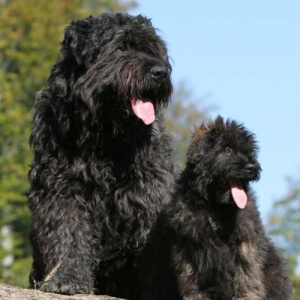
| Coat type | Long, coarse, slightly wavy |
| Common colours | Black, grey, or shades of fawn (tawny) |
| Energy Level | High |
| Suitable for an apartment? | Depends on exercise, training, health and the individual dog |
| Temperament | Loyal, intelligent, protective |
| Behaviour towards unfamiliar people and dogs | Individual behaviour varies; socialisation, training and management matter |
| Compatibility with children | Depends on the individual; adult supervision and suitable handling are essential |
| Compatibility with other animals | Depends on socialisation, prey drive and the animals involved |
| Health considerations | Hip dysplasia, eye diseases, bloat, ear infections |
- Primary category:Dog breeds
- Explore this animal's categories:
History and Origin
The Briard (Berger de Brie) is an old French sheepdog, used for centuries to guard and herd flocks.
Evolution of the breed
- Old origins - Long-haired French sheepdogs like the Briard are described in old French texts; the name comes from the Brie region east of Paris, although the breed was found in many parts of France.
- Famous owners - According to legend, Charlemagne and Napoleon had Briards, and Thomas Jefferson and the Marquis de Lafayette are said to have brought some to America; these stories are not well documented.
- A war dog - In the First World War, the French army used Briards as sentries, messengers and to find wounded soldiers.
- Recognition - The first breed standard was written in 1897, and the AKC recognised the Briard in 1928.
Breed Evaluation
The Briard is an excellent guardian and family dog, suited to active, consistent people who want a devoted companion. These are general editorial ratings, not measured scores; individual dogs vary.
| Characteristic | Stars |
|---|---|
| Training and Intelligence | ★★★★★ |
| Easy to train | ★★★★☆ |
| Intelligence | ★★★★★ |
| Level of independence | ★★★★☆ |
| Level of stubbornness | ★★★☆☆ |
| Behavior and Temperament | ★★★★★ |
| Affectionate with family | ★★★★★ |
| Friendly with children | ★★★★★ |
| Compatible with other dogs | ★★★☆☆ |
| Compatible with cats and other animals | ★★★☆☆ |
| Degree of loyalty | ★★★★★ |
| Tendency to be aggressive | ★★★☆☆ |
| Tendency to bark | ★★★★☆ |
| Needs and Care | ★★★★☆ |
| Shedding level | ★★★☆☆ |
| Requires frequent care | ★★★★★ |
| Activity and Lifestyle | ★★★★★ |
| Energy level | ★★★★★ |
| Daily exercise requirement | ★★★★★ |
| Suitable for apartment living | ★★☆☆☆ |
| Health and Longevity | ★★★☆☆ |
| Life expectancy | ★★★☆☆ |
| Predisposition to genetic diseases | ★★★★☆ |
| Work and Utility Features | ★★★★★ |
| Good guard dog | ★★★★★ |
| Good companion dog | ★★★★★ |
Physical Characteristics
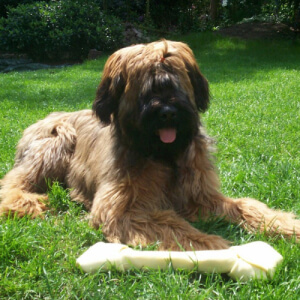
The Briard is a large, strong dog with a long coat and an elegant look.
General appearance
- A muscular, sturdy body with a proud posture.
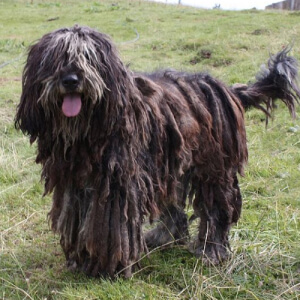
- A long, coarse, slightly wavy coat, often compared to goat hair, that protects it from bad weather.
- A large head with a beard, moustache and long eyebrows that partly cover the eyes.
- Ears covered with long hair, left natural in most countries and cropped in a few where this is legal.
- A long tail ending in a hook (a "crochet"), carried low.
| Characteristic | Briard |
|---|---|
| Size | Large (about 56-69 cm at the shoulder) |
| Weight | About 25-40 kg |
| Coat | Long, coarse, slightly wavy |
| Muzzle | Long, strong, bearded |
| Shedding tendency | Moderate |
| Build | Strong and athletic |
The Briard is an impressive dog, known for its long coat and protective nature, and suits people with space and time for training.
Training and Socialization
The Briard is intelligent but independent, so it needs consistent training and early socialisation to develop balanced behaviour.
Tips for effective training
- Start early - Briards should be trained and socialised from about 8-10 weeks.
- Positive methods - It responds best to food rewards, praise and cooperative training.
- Clear rules - As an independent dog, it needs clear, consistent exercises and rules.
- Socialising with people and animals - It can be reserved with strangers, so meeting many people, animals and places is essential.
- Managing protectiveness - The Briard naturally protects its family, so it should be guided not to become over-protective.
The Briard learns fast, but it needs a calm, consistent and patient owner.
Activity and Lifestyle Needs
The Briard is an active breed that needs daily exercise for its physical and mental balance.
| Activity | Recommended duration |
|---|---|
| Long walks | About 60-90 min |
| Interactive games | About 30 min |
| Obedience exercises | About 15-20 min |
| Dog sports (agility, tracking, herding) | A few times a week |
Recommendations for a balanced lifestyle
- Needs space - It is best in a house with a garden where it can move and patrol.
- Needs tasks and mental challenges - As a working dog, it needs interactive activities to prevent boredom.
- Not for a quiet lifestyle - Lack of activity can lead to destructive behaviour and anxiety.
- A great outdoor partner - Thanks to its stamina and intelligence, it does well on hikes and in dog sports.
The Briard is not ideal for apartments; it needs space and daily activity.
Care and Health
The Briard is a hardy breed, but it needs careful coat care and regular veterinary checks.
Fur and skin care
- Frequent brushing - Its long coat should be brushed thoroughly several times a week to prevent mats.
- Baths only when needed - The coarse coat tends to shed dirt, so frequent baths are not needed.
- Optional trimming - Some owners trim the hair around the eyes and feet for a tidier look.
Common health problems
| Condition | Description | Common symptoms |
|---|---|---|
| Hip dysplasia | A common inherited problem in large breeds | Difficulty walking, limping |
| Eye diseases | Including progressive retinal atrophy and congenital stationary night blindness; DNA tests are available | Poor vision, especially at night |
| Bloat (gastric torsion) | A serious emergency that may need surgery | Swollen belly, restlessness, drooling |
| Ear infections | Hairy ears can trap moisture | Scratching, bad smell |
Other aspects of care
- Weekly ear and eye checks - Long hair can cause irritation or infections.
- Joint care - Keeping a healthy weight is important, as the Briard is prone to hip problems.
- Meal planning should suit the individual dog. Feeding arrangements do not guarantee prevention of gastric dilatation and volvulus; discuss risk with a veterinarian.
The Briard is generally healthy, but it needs regular coat care and monitoring for breed-specific problems.
Diet and Nutrition
The Briard needs a balanced diet with good-quality protein to support its energy.
Recommendations for a healthy diet
Choose a complete, balanced diet suited to age, size and health. Plan home-prepared diets and supplements with a qualified veterinarian; raw pet food can carry harmful bacteria.
| Food type | Daily Amount (Adults) | Frequency |
|---|---|---|
| Premium dry food | Individual amount; follow a complete diet’s guidance and veterinary advice | 2 meals/day |
| Home cooked food | Individual amount; follow a complete diet’s guidance and veterinary advice | 2 meals/day |
| Raw food: bacterial contamination is a concern | Individual amount; follow complete-food guidance and veterinary advice | 2 meals/day |
Forbidden foods
Chocolate, grapes and raisins, onions and xylitol - toxic to dogs. / Cooked bones - can splinter and cause intestinal blockage. / Fatty or fried foods - can cause digestive problems and pancreatitis. / Overfeeding - the Briard can gain weight, which can lead to joint problems.
The Briard should get a balanced diet, without rich food or overfeeding.
Reproduction and Development
Breeding requires veterinary planning, suitable health screening and care for the mother and puppies. Pregnancy and birth can involve complications.
Physical and emotional maturity
- Physical maturity: The Briard reaches adult height at about 12-18 months, but continues to fill out until about 2 years.
- Emotional maturity: It can stay playful and energetic until about 3 years and needs ongoing training.
Mating and Gestation
- Breeding decisions require veterinary assessment of maturity, health and suitable screening; reaching a fixed age does not establish that breeding is appropriate.
- Duration of gestation: Approximately 58-68 days, usually about 63 days.
- Average number of puppies: Usually about 6-10 puppies.
Puppy care
- The first 3 weeks: Puppies depend completely on their mother for warmth and milk.
- Between 4-8 weeks: They begin to explore, and socialising with people and other animals is essential.
- Moving to a new home: When puppies go to their new homes, training should start as soon as possible.
Careful breeding, with health tests, helps produce healthy, well-developed Briards.
Curiosities and Interesting Facts
- An old sheepdog - The Briard is one of the oldest French herding breeds.
- Famous legends - Stories link the Briard with Charlemagne, Napoleon and Thomas Jefferson, but they are hard to prove.
- A war dog - In the First World War, Briards helped the French army find wounded soldiers on the battlefield.
- Double dewclaws - Like the Beauceron, the Briard must have double dewclaws on its hind legs.
- A medical first - Briards with an inherited form of blindness helped scientists test one of the first successful gene therapies for an eye disease, which later helped humans.
- A hooked tail - The end of its tail forms a hook called a "crochet".
- Rare in many countries - Although known in France and the USA, the Briard is uncommon in many other parts of the world.
The Dog in Popular Culture
The shaggy Briard is a symbol of rural France and has a special place in medical history.
Briard in modern media and culture
- Science - Research on Briards with inherited night blindness led to gene therapy that has restored some vision in people with a similar disease.
- Dog sports - The Briard takes part in herding trials, agility and obedience.
Importance in modern culture
- A companion for active people - It suits people who enjoy hiking, dog sports and outdoor activities.