Slovak CuvacCharacteristics, history, training and care
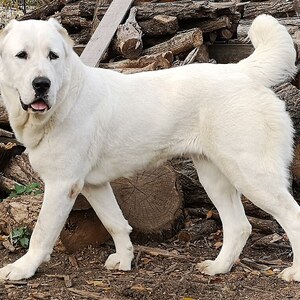
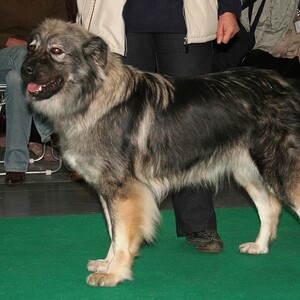
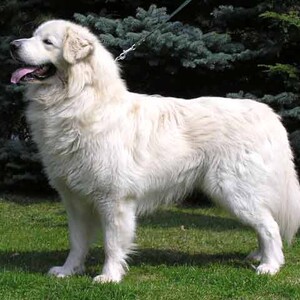
Slovak Cuvac. · Celbos / Wikimedia Commons, CC BY-SA 3.0. Cropped and resized.
The Slovak Cuvac (Slovenský čuvač) is a large white mountain dog from Slovakia, used for centuries as a sheepdog and flock guardian in the Tatra Mountains, and also to guard farms and borders. The FCI standard describes it as boundlessly faithful and courageous, always ready to drive off any intruder, even bears and wolves. By old tradition it is bred only in white, so that it can be told apart from wild animals at night.
Quick facts
| Common name | Slovak Cuvac (Slovenský čuvač) |
| Scientific name | Canis lupus familiaris |
| Country of origin | Slovakia |
| Official recognition | FCI, definitively since 9 November 1966 (group 1, herding dogs; standard no. 142); the AKC has had it in the Foundation Stock Service since 2009 |
| Lifespan | 11–13 years, according to the AKC |
| Size (males) | 62–70 cm at the withers; 36–44 kg |
| Size (females) | 59–65 cm at the withers; 31–37 kg |
| Coat type | Double: wavy topcoat, 5–15 cm, with a mane in males |
| Common colours | White |
| Energy level | Medium |
| Suited to an apartment? | No |
| Temperament | Faithful, courageous, protective |
| Tendency to aggression | Moderate towards intruders |
| Good with children | Moderate |
| Good with other animals | Good with the animals it guards |
| Genetic predispositions | No specific diseases are known; as in other large breeds, hip dysplasia |
- Primary category:Dog breeds
- Explore this animal's categories:
History and origin
The FCI standard says the group of white mountain dogs is thought to descend from Arctic wolves, whose Ice Age remains have survived in the mountains of Europe: the Caucasus, the Balkans (especially the Rhodopes), the Carpathians (especially the Tatras), the Abruzzi, the Alps and the Pyrenees. Mountain sheep farming in Slovakia has a very long tradition, and the čuvač, along with mountain sheep and Hutsul horses, was the backbone of the pastoral economy.
The standard adds that the Slovak mountain people were mostly free people who guarded the borders and paid their taxes in sheep's cheese. Their organisation, the “Wallachian Union” (Valašský opasok), based in Košice, did its service on the mountain pastures, always accompanied by the guard dogs of the Tatras.
How the breed developed
- Ancient times – A guard dog of the Tatra shepherds.
- 1965 – The current FCI standard.
- 9 November 1966 – The FCI recognises the breed.
- 2009 – The AKC enters it in the Foundation Stock Service.
Breed rating
| Feature | Stars |
|---|---|
| Training and intelligence | ★★★☆☆ |
| Easy to train | ★★★★★ |
| Intelligence | ★★★☆☆ |
| Independence | ★★☆☆☆ |
| Stubbornness | ★★★☆☆ |
| Behaviour and temperament | ★★★☆☆ |
| Affectionate with family | ★★★☆☆ |
| Friendly with children | ★★★☆☆ |
| Good with other dogs | ★★★★★ |
| Good with cats and other animals | ★☆☆☆☆ |
| Loyalty | ★★★☆☆ |
| Tendency to be aggressive | ★★★☆☆ |
| Tendency to bark | ★★★☆☆ |
| Needs and care | ★★★☆☆ |
| Shedding | ★★★★☆ |
| Needs frequent grooming | ★★★☆☆ |
| Activity and lifestyle | ★★★☆☆ |
| Energy level | ★★★☆☆ |
| Daily exercise needs | ★★★☆☆ |
| Suited to apartment life | ★★★★★ |
| Health and longevity | ★★★☆☆ |
| Life expectancy | ★★★☆☆ |
| Predisposition to genetic diseases | ★★★★☆ |
| Working abilities and uses | ★★☆☆☆ |
| Good guard dog | ★★★☆☆ |
| Good companion dog | ★★★★★ |
Indicative rating: 5 stars means the highest level. It is based on the ratings the American Kennel Club gives the breed and on the FCI standard.
Physical characteristics
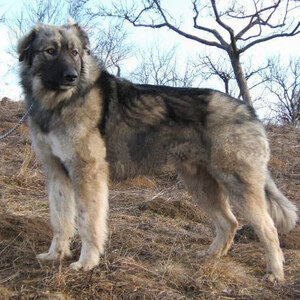
It is a large, sturdy dog with a strong, elongated head. Wikipedia says it is a close relative of the Hungarian Kuvasz. Males have an abundant mane.
General appearance
Apart from the head and legs, the hair forms a dense coat, with no parting along the back and no fringes on the tail or rump. The topcoat is 5–15 cm long, most wavy on the mane, and completely covers the undercoat.
| Feature | Slovak Cuvac |
|---|---|
| Size | Large |
| Height at the withers | males: 62–70 cm; females: 59–65 cm |
| Weight | males: 36–44 kg; females: 31–37 kg |
| Coat | Double, wavy |
| Colour | White |
| Type | Mountain dog |
The colour is white. A yellowish tinge at the base of the ears is permitted but not desired; distinct yellow patches are not permitted. The standard says that, by tradition, it is bred white so that it can be told apart from wild animals at night.
Training and socialisation
The standard describes it as boundlessly faithful and courageous, always ready to drive off any intruder, even bears and wolves. It is a natural guardian, reserved with strangers.
It needs early socialisation and calm, consistent training. The AKC also suggests activities for the mind, such as search games or learning tricks.
Tips for effective training
- Socialise it early. It is reserved with strangers.
- Be calm and consistent. It is an independent guardian.
- Give it a territory. It likes to guard.
- Check the fence. It patrols the yard.
Activity needs and lifestyle
The AKC recommends play in a fenced yard or walks several times a day. Hiking and swimming give it good exercise. As a flock guardian, it does not need intense running, but space and regular activity.
| Activity | How often | Why it matters |
|---|---|---|
| Walks | several times a day | Fitness |
| Guarding the yard | daily | Instinct |
| Hiking | occasionally | Stamina |
Tips for a balanced life
- It needs a large fenced yard.
- Trim its nails often.
- Brush it more often during shedding.
Care and health
Coat and skin care
The AKC recommends weekly brushing and an occasional bath. The nails grow quickly and are strong, so they should be trimmed regularly. The ears should be checked often. It sheds quite a lot.
Common health problems
The AKC says most dogs are healthy. No specific diseases are known; as with any large breed, it is worth watching for:
| Condition | Description | Common symptoms |
|---|---|---|
| Hip dysplasia | The hip joint forms incorrectly and, over time, arthritis develops | Limping, difficulty getting up or jumping, hip pain |
| Elbow dysplasia | The elbow joint develops incorrectly and arthritis appears | Limping on the front legs, especially after exercise |
| Gastric dilatation-volvulus (bloat) | The stomach fills with gas and may twist; this is a veterinary emergency | Swollen belly, trying to vomit without success, drooling, restlessness |
Other care
- Ask for the parents' hip tests.
- Trim the nails regularly.
- Do not let it run after a meal.
Diet and nutrition
The AKC recommends good-quality food suited to the dog's age, and attention to its weight.
Tips for a healthy diet
The table gives a starting estimate, calculated with the formula from the Merck Veterinary Manual. The first two calorie columns show the calories per day for a healthy adult dog. The last column shows what this means in dry food with 3,500–4,000 kcal per kilogram.
| Dog's weight | Calories per day (neutered) | Calories per day (not neutered) | Dry food per day (approximate) |
|---|---|---|---|
| 31 kg | 1,470 kcal | 1,660 kcal | 370–470 g |
| 37 kg | 1,680 kcal | 1,890 kcal | 420–540 g |
| 44 kg | 1,910 kcal | 2,150 kcal | 480–610 g |
- Split the food into two meals a day.
- Large-breed puppies need special food.
- A dog is at the right weight when you can feel its ribs under the coat without pressing hard.
Foods to avoid
Some human foods are dangerous for dogs: chocolate, coffee, grapes and raisins, onions, garlic, xylitol (a sweetener used in chewing gum), macadamia nuts and alcohol.
Reproduction and development
Physical and emotional maturity
In dogs, sexual maturity usually comes between 6 and 12 months, but in large breeds it can be delayed until about two years. The body also reaches its adult form later than in small breeds.
Mating and pregnancy
Pregnancy lasts about 63 days, counted from ovulation. Mating a female on her first heat is not recommended. The FCI standard requires that only healthy dogs of typical breed appearance are used for breeding.
Caring for the puppies
In large breeds, a litter has around 7 puppies on average. Socialisation starts in the first weeks: gentle handling, everyday noises and new people.
Interesting facts
- White for the night. So that shepherds could tell it apart from wild animals.
- Ready to face bears. The standard says it drives off both bears and wolves.
- Related to the Kuvasz. Wikipedia says they are close relatives.
- Paid in cheese. The Tatra shepherds paid their taxes in sheep's cheese.
- Many names. Tatra Chuvach, Slovak Cuvac, Tchouvatch.
Frequently asked questions
Why is it white?
By tradition, so that it can be told apart from wild animals at night.
How much does it weigh?
Males 36–44 kg, females 31–37 kg.
Is it a good guard dog?
Yes; the standard says it drives off any intruder.
How long does it live?
The AKC gives 11–13 years.