Polish Lowland SheepdogCharacteristics, history, training and care
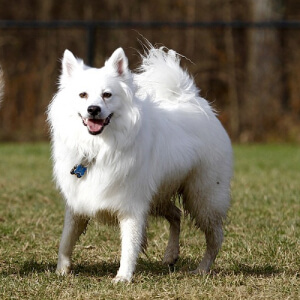
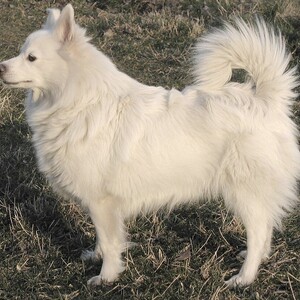
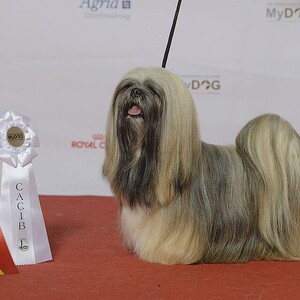
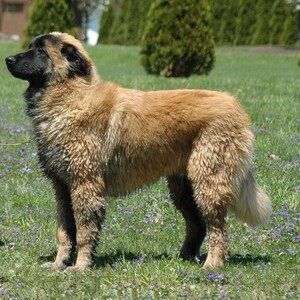
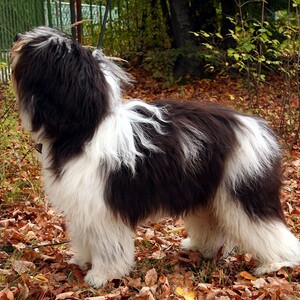
Polish Lowland Sheepdog. · Pleple2000 / Wikimedia Commons, CC BY-SA 4.0. Cropped and resized.
The Polish Lowland Sheepdog (PON) is a medium-sized herding dog, muscular and thickset, covered in an abundant, shaggy coat that falls over its eyes. The standard describes it as lively but balanced, alert, agile, intelligent, perceptive and with a good memory. It works as a sheepdog and guard, and in town it makes a very good companion.
Quick facts
| Common name | Polish Lowland Sheepdog (Polski Owczarek Nizinny, PON) |
| Scientific name | Canis lupus familiaris |
| Country of origin | Poland |
| Official recognition | FCI, definitively since 5 October 1963 (group 1, sheepdogs; standard no. 251); also recognised by the AKC |
| Lifespan | 12–14 years, according to the AKC |
| Size (males) | 45–50 cm at the withers; 14–23 kg according to the AKC |
| Size (females) | 42–47 cm at the withers; 14–23 kg according to the AKC |
| Coat type | Shaggy, harsh, dense, with a soft undercoat |
| Common colours | All colours and markings |
| Energy level | High |
| Suited to an apartment? | Yes, with plenty of exercise |
| Temperament | Lively, balanced, alert, intelligent, with a good memory |
| Tendency to aggression | Low; distrustful of strangers |
| Good with children | Good, according to the AKC |
| Good with other animals | Good, according to the AKC |
| Genetic predispositions | Hip dysplasia, eye diseases |
- Primary category:Dog breeds
- Explore this animal's categories:
History and origin
Wikipedia says the breed probably descends from the Puli, the Tibetan Terrier and other herding dogs and that, according to legend, it is one of the ancestors of the Bearded Collie.
Almost extinct during the Second World War, the breed was rebuilt mainly thanks to Dr Danuta Hryniewicz and her dog Smok (“Dragon”), the ancestor of every PON alive today, who sired the first ten litters in the 1950s. Smok set the type of the breed.
How the breed developed
- Second World War – The breed almost disappears.
- 1950s – The dog Smok sires the first ten litters.
- 5 October 1963 – The FCI recognises the breed.
- 7 August 1998 – The current FCI standard is published.
Breed rating
| Feature | Stars |
|---|---|
| Training and intelligence | ★★★★☆ |
| Easy to train | ★★★★☆ |
| Intelligence | ★★★★★ |
| Independence | ★★★★☆ |
| Stubbornness | ★★★★☆ |
| Behaviour and temperament | ★★★★☆ |
| Affectionate with family | ★★★★★ |
| Friendly with children | ★★★☆☆ |
| Good with other dogs | ★★★☆☆ |
| Good with cats and other animals | ★★★☆☆ |
| Loyalty | ★★★★★ |
| Tendency to be aggressive | ★★☆☆☆ |
| Tendency to bark | ★★★★☆ |
| Needs and care | ★★☆☆☆ |
| Shedding | ★★★★☆ |
| Needs frequent grooming | ★★★☆☆ |
| Activity and lifestyle | ★★★☆☆ |
| Energy level | ★★★★☆ |
| Daily exercise needs | ★★★★★ |
| Suited to apartment life | ★★★☆☆ |
| Health and longevity | ★★★★☆ |
| Life expectancy | ★★★★☆ |
| Predisposition to genetic diseases | ★★☆☆☆ |
| Working abilities and uses | ★★★★★ |
| Good herding dog | ★★★★☆ |
| Good companion dog | ★★★★★ |
Indicative rating: 5 stars means the highest level. It is based on the ratings the American Kennel Club gives the breed and on the FCI standard.
Physical characteristics
The AKC says it is not a big dog, but it is muscular and thickset, with a rectangular body covered from head to tail in a double coat: long and shaggy on top, soft and dense underneath.
General appearance
The abundant hair on the forehead, cheeks and chin makes the head look heavier than it is. The hair on the forehead falls over the eyes in a characteristic way. The coat may be straight or slightly wavy.
| Feature | Polish Lowland Sheepdog |
|---|---|
| Size | Medium |
| Height at the withers | males: 45–50 cm; females: 42–47 cm |
| Weight | 14–23 kg (AKC) |
| Coat | Shaggy, double |
| Eyes | Covered by hair |
| Body | Rectangular, muscular |
All colours and markings are accepted. Wikipedia says the most common are white, grey and brown, with black, grey or brown patches, and that the colours often lighten with age.
Training and socialisation
The AKC says the PON is an excellent house dog: it accepts other animals, is a gentle and tireless playmate for children, an alert watchdog and a quick learner.
However, it can be dominant, stubborn and suspicious of strangers, so early socialisation and puppy classes are strongly recommended.
Tips for effective training
- Start socialising it early. It can be suspicious of strangers.
- Be consistent. It can be dominant and stubborn.
- Use its memory. The standard says it has a good memory.
- Try dog sports. It does well at obedience, herding and agility.
Activity needs and lifestyle
The AKC says it is an athletic, energetic dog that needs plenty of exercise every day: at least an hour or two a day in a large, fenced yard. It enjoys long walks, hikes and dog sports with its owner.
| Activity | How often | Why it matters |
|---|---|---|
| Running in a fenced yard | 1–2 hours a day | High energy |
| Long walks or hikes | several times a week | Bonds with its owner |
| Dog sports | weekly | Mental activity |
Tips for a balanced life
- Set aside time for coat care.
- It copes well with bad weather.
- It suits active families.
Care and health
Coat and skin care
The AKC says the shaggy double coat needs a lot of care. A PON in full coat should be brushed thoroughly at least once a week; even with a short “summer” clip, it needs regular brushing so it does not mat.
Common health problems
The AKC says it is generally healthy, and responsible breeders screen their dogs for:
| Condition | Description | Common symptoms |
|---|---|---|
| Hip dysplasia | The hip joint forms incorrectly and, over time, arthritis develops | Limping, difficulty getting up or jumping, hip pain |
| Eye diseases | Inherited eye conditions | Watery eyes, poor vision |
Other care
- Clean the eyes hidden under the hair.
- Trim the hair between the toes.
- Check the ears regularly.
Diet and nutrition
The AKC says some dogs gain weight easily, so calories and weight should be watched.
Tips for a healthy diet
The table gives a starting estimate, calculated with the formula from the Merck Veterinary Manual. The first two calorie columns show the calories per day for a healthy adult dog. The last column shows what this means in dry food with 3,500–4,000 kcal per kilogram.
| Dog's weight | Calories per day (neutered) | Calories per day (not neutered) | Dry food per day (approximate) |
|---|---|---|---|
| 14 kg | 810 kcal | 910 kcal | 200–260 g |
| 18 kg | 980 kcal | 1,100 kcal | 240–310 g |
| 23 kg | 1,180 kcal | 1,320 kcal | 300–380 g |
- Give it its food in two meals a day.
- Treats count towards the daily portion.
- A dog is at the right weight when you can feel its ribs under the coat without pressing hard.
Foods to avoid
Some human foods are dangerous for dogs: chocolate, coffee, grapes and raisins, onions, garlic, xylitol (a sweetener used in chewing gum), macadamia nuts and alcohol.
Reproduction and development
Physical and emotional maturity
In dogs, sexual maturity usually comes between 6 and 12 months. Most breeds become adults at around 13–15 months.
Mating and pregnancy
Pregnancy lasts about 63 days, counted from ovulation. Mating a female on her first heat is not recommended. The FCI standard requires that only healthy dogs of typical breed appearance are used for breeding.
Caring for the puppies
In dogs, a litter has 5–6 puppies on average, and the number rises with the size of the breed. Socialisation starts in the first weeks: gentle handling, everyday noises and new people.
Interesting facts
- Smok, the “Dragon”. The ancestor of every PON alive today.
- Hidden eyes. The hair on its forehead falls over its eyes.
- A legendary ancestor. Legend makes it an ancestor of the Bearded Collie.
- Colours that fade. The coat often gets lighter as it grows up.
- PON. The name comes from the initials of its Polish name.
Frequently asked questions
What does PON mean?
The initials of its Polish name, Polski Owczarek Nizinny.
How big does it get?
Males measure 45–50 cm and females 42–47 cm; the AKC gives 14–23 kg.
Is it good with children?
The AKC says it is a gentle and tireless playmate for children.
How long does it live?
The AKC gives 12–14 years.