Dutch ShepherdCharacteristics, history, training and care
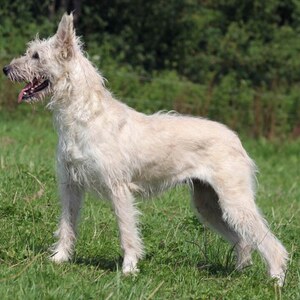
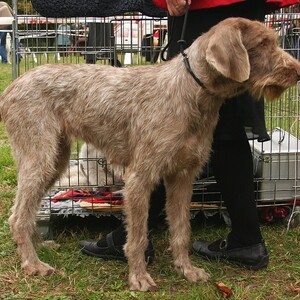
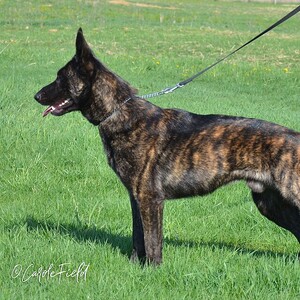
Dutch Shepherd. · CaroleField / Wikimedia Commons, CC BY-SA 4.0. Cropped and resized.
The Dutch Shepherd is a brindle herding dog from the farms of the Netherlands. It kept the sheep out of the crops, gathered the cows, pulled the milk cart and announced strangers. Today it works as a police dog, a search dog and a guide dog for the blind. It is very loyal, alert, active, independent and intelligent.
Quick facts
| Common name | Dutch Shepherd (Hollandse Herdershond) |
| Scientific name | Canis lupus familiaris |
| Country of origin | Netherlands |
| Official recognition | FCI, definitively since 11 May 1955 (group 1, sheepdogs, with working trial; standard no. 223); also recognised by the AKC |
| Lifespan | 11–14 years, according to the AKC |
| Size (males) | 57–62 cm at the withers |
| Size (females) | 55–60 cm at the withers |
| Weight | about 23–32 kg (Wikipedia) |
| Coat type | Short, long or rough, all with a woolly undercoat |
| Common colours | Golden or silver brindle |
| Energy level | Very high |
| Suited to an apartment? | Not really; it needs a lot of activity |
| Temperament | Loyal, alert, active, independent, intelligent |
| Tendency to aggression | Low; a vigilant watchdog |
| Good with children | Average |
| Good with other animals | Average |
| Genetic predispositions | Hip dysplasia; in long-haired dogs, thyroid problems |
- Primary category:Dog breeds
- Explore this animal's categories:
History and origin
The FCI standard says the Dutch Shepherd was originally the dog of shepherds in the countryside. It kept the flocks away from crops by patrolling the edges of roads and fields, accompanied the sheep to pastures, markets and ports, kept the chickens out of the garden, gathered the cows for milking, pulled the milk carts and alerted the farmers when strangers came.
By around 1900, flocks of sheep had almost completely disappeared from the Netherlands. Its qualities made it suitable for training, so it became a police dog, a search and tracking dog and a guide dog for the blind. The first standard dates from 12 June 1898. Wikipedia says that in 1914 it was decided to accept only brindle, to distinguish it from the German and Belgian shepherds.
How the breed developed
- 12 June 1898 – The first standard is written; any colour is accepted.
- Around 1900 – The flocks disappear; the dog becomes a police and search dog.
- 1914 – Only brindle is accepted.
- 1940s–1950s – The breed comes close to disappearing.
- 11 May 1955 – The FCI recognises the breed.
- 21 December 2019 – The current FCI standard is published.
Breed rating
| Feature | Stars |
|---|---|
| Training and intelligence | ★★★★★ |
| Easy to train | ★★★★★ |
| Intelligence | ★★★★★ |
| Independence | ★★★★☆ |
| Stubbornness | ★★★☆☆ |
| Behaviour and temperament | ★★★★☆ |
| Affectionate with family | ★★★★★ |
| Friendly with children | ★★★☆☆ |
| Good with other dogs | ★★★☆☆ |
| Good with cats and other animals | ★★★☆☆ |
| Loyalty | ★★★★★ |
| Tendency to be aggressive | ★★☆☆☆ |
| Tendency to bark | ★★☆☆☆ |
| Needs and care | ★★★★☆ |
| Shedding | ★★★☆☆ |
| Needs frequent grooming | ★★☆☆☆ |
| Activity and lifestyle | ★★★★☆ |
| Energy level | ★★★★★ |
| Daily exercise needs | ★★★★★ |
| Suited to apartment life | ★★☆☆☆ |
| Health and longevity | ★★★★☆ |
| Life expectancy | ★★★★☆ |
| Predisposition to genetic diseases | ★★☆☆☆ |
| Working abilities and uses | ★★★★★ |
| Good working and guard dog | ★★★★★ |
| Good companion dog | ★★★☆☆ |
Indicative rating: 5 stars means the highest level. It is based on the ratings the American Kennel Club gives the breed and on the FCI standard.
Physical characteristics
The Dutch Shepherd is a medium to large dog with a strong, well-muscled body, built to run after the flock all day. There are three coat types: short-haired, long-haired and rough-haired.
General appearance
The almond-shaped, slightly slanting eyes are dark. The medium-sized ears are carried high and erect when the dog is alert. The tail reaches the hock; at rest it hangs down, and in movement it is carried raised, but never curled.
| Feature | Dutch Shepherd |
|---|---|
| Size | Large |
| Height at the withers | males: 57–62 cm; females: 55–60 cm |
| Weight | about 23–32 kg |
| Coat | Short, long or rough |
| Eyes | Almond-shaped, dark |
| Ears | Erect, medium-sized |
The only accepted colour is brindle. The base colour is golden (from light sand to chestnut red) or silver, and the stripes are visible all over the body. Too much black is not wanted, a black mask is preferred, and large white markings on the chest or legs are not wanted.
Training and socialisation
The standard describes it as very loyal and reliable, always alert, active, independent, persevering and intelligent, eager to obey and with the true temperament of a shepherd dog. It works gladly alongside its owner and carries out the tasks it is given on its own.
The AKC says it enjoys challenges and does best with short sessions, without much repetition. Without training, it becomes very independent and starts making its own decisions.
Tips for effective training
- Keep sessions short. The AKC says a lot of repetition bores it.
- Give it a job. It does not want to be a dog left at home, but a partner.
- Do obedience training. Otherwise it makes its own decisions.
- Socialise it early. It is a vigilant watchdog.
Activity needs and lifestyle
The AKC says it was bred for hard work and plenty of it. It knows how to tell work, play and rest apart and adjusts its energy to match. It needs physical and mental exercise every day: running, dog sports, tracking or herding.
| Activity | How often | Why it matters |
|---|---|---|
| Running or long walks | daily | It can run all day |
| Dog sports or tracking | several times a week | Mental activity |
| Herding work | occasionally | Its basic instinct |
Tips for a balanced life
- It suits an active, experienced owner.
- The yard must be well fenced.
- Do not leave it alone for many hours.
Care and health
Coat and skin care
The AKC says the short coat needs only occasional brushing, but daily brushing during the moult in spring and autumn. The long coat is brushed about once a week. The rough coat is hand-stripped about twice a year.
Common health problems
The AKC says that, as a less well-known breed and thanks to Dutch breeding rules, the Dutch Shepherd is generally healthy. It is worth watching for:
| Condition | Description | Common symptoms |
|---|---|---|
| Hip dysplasia | The hip joint forms incorrectly and, over time, arthritis develops | Limping, difficulty getting up or jumping, hip pain |
| Thyroid problems | Occur in the long-haired variety | Weight gain, dull coat, tiredness |
Other care
- Check the ears and teeth weekly.
- Trim the nails if they do not wear down on their own.
- Check for ticks after outings in nature.
Diet and nutrition
The AKC says that, as a natural athlete, it needs good-quality food in an amount suited to its activity level.
Tips for a healthy diet
The table gives a starting estimate, calculated with the formula from the Merck Veterinary Manual. The first two calorie columns show the calories per day for a healthy adult dog. The last column shows what this means in dry food with 3,500–4,000 kcal per kilogram.
| Dog's weight | Calories per day (neutered) | Calories per day (not neutered) | Dry food per day (approximate) |
|---|---|---|---|
| 23 kg | 1,180 kcal | 1,320 kcal | 300–380 g |
| 28 kg | 1,360 kcal | 1,530 kcal | 340–440 g |
| 32 kg | 1,510 kcal | 1,700 kcal | 380–490 g |
- Split the food into two meals a day.
- Increase the portion on days of hard exercise.
- A dog is at the right weight when you can feel its ribs without pressing hard.
Foods to avoid
Some human foods are dangerous for dogs: chocolate, coffee, grapes and raisins, onions, garlic, xylitol (a sweetener used in chewing gum), macadamia nuts and alcohol.
Reproduction and development
Physical and emotional maturity
In dogs, sexual maturity usually comes between 6 and 12 months, but in large breeds it can be delayed until about two years. The body also reaches its adult form later than in small breeds.
Mating and pregnancy
Pregnancy lasts about 63 days, counted from ovulation. Mating a female on her first heat is not recommended. The FCI standard requires that only healthy dogs of typical breed appearance are used for breeding.
Caring for the puppies
In large breeds, a litter has around 7 puppies on average. Socialisation starts in the first weeks: gentle handling, everyday noises and new people.
Interesting facts
- Brindle only. Since 1914 only brindle has been accepted, to distinguish it from the German and Belgian shepherds.
- Three coat types. There are short-haired, long-haired and rough-haired Dutch Shepherds.
- It pulled the milk cart. On the farm, it also pulled the milk carts.
- A police dog. After 1900 it became a police dog, a search dog and a guide dog for the blind.
- Still rare. Wikipedia says it is still a rare breed today.
Frequently asked questions
How does it differ from the Belgian Malinois?
Mainly in colour: the Dutch Shepherd is always brindle.
How big does it get?
Males measure 57–62 cm and females 55–60 cm; they weigh about 23–32 kg.
Is it easy to train?
Yes, it is very intelligent and eager to obey, but it needs short, varied sessions.
How long does it live?
The AKC gives 11–14 years.